The discourse surrounding Artificial Intelligence has been dominated by a single, electrifying metric: capability. We talk about parameters, processing speed, and the sheer scale of models—the breathtaking potential of AGI, the ability to write code, diagnose diseases, and generate photorealistic art. This focus on "what AI can do" has created a potent mix of excitement and existential dread. We are constantly measuring the potential risk, assuming that if the capability exists, the risk is imminent.
But as AI systems move out of the lab and into the critical infrastructure of our global economy—managing power grids, advising judicial decisions, and directing supply chains—a critical pivot must occur. The true, systemic risk is not the AI’s capability itself; it is our collective failure to manage, govern, and observe it.
The next frontier in AI safety is not about building a more powerful AI; it is about building a more robust, accountable system around the AI. We must shift our focus from the raw power of the model to the integrity of the entire operational stack. We need guardrails, governance frameworks, and real-time observability to ensure that these powerful tools remain aligned with human intent and ethical boundaries.
The Pivot: From Capability Anxiety to Systemic Risk
For years, AI risk was treated as a single, monolithic problem: "Will the AI become too smart and lose control?" While existential risk remains a valid area of research, the immediate, actionable risks we face today are far more mundane, yet far more damaging. These risks are operational, systemic, and rooted in human oversight failures.
When we focus solely on capability, we overlook the critical failure points: data poisoning, model drift, and the amplification of historical bias.
Consider a loan approval algorithm. Its capability might be flawless—it can process millions of data points instantly. But if the training data disproportionately represents successful applicants from a specific demographic, the model will learn that bias and perpetuate it at scale. The AI hasn’t gained malicious capability; it has merely optimized for the flawed data it was given.
Systemic risk, therefore, is the risk that a localized failure (like biased data or poor monitoring) cascades through an interconnected system, leading to widespread, costly, and often irreversible damage. This is why the focus must pivot from the intelligence of the system to the resilience of the system.


The Imperative of Governance: Building the Ethical Guardrails
Governance is the policy layer. It is the human, legal, and organizational structure that dictates how AI is developed, deployed, and monitored. If capability is the engine, governance is the chassis, the brakes, and the steering wheel. Without robust governance, the most advanced AI is merely a highly efficient liability.
Effective AI governance requires moving beyond mere compliance checklists. It demands a proactive, risk-based approach that treats AI systems not as software, but as complex, adaptive entities requiring continuous stewardship.
Key pillars of modern AI governance include:
1. Transparency and Documentation: Every AI system must come with a "Model Card" that details its intended use cases, known limitations, training data sources, and performance metrics across various demographic groups. This forces accountability before deployment.
2. Regulatory Alignment: Global regulations (like the EU AI Act) are setting a global standard: risk categorization. High-risk applications (e.g., hiring, credit scoring, critical infrastructure) must undergo rigorous pre-market assessment. Governance must integrate legal counsel and ethical review boards directly into the MLOps pipeline.
3. Bias Mitigation Frameworks: Governance must mandate the auditing of training data for representational bias, historical bias, and measurement bias. This is not a technical fix; it is a policy mandate requiring diverse human expertise to validate the data inputs.
By establishing these governance layers, organizations move from asking, "Can we build this?" to asking, "Should we build this, and if so, how do we prove it is safe?"
Observability: Seeing the Black Box in Real-Time
The most technically challenging, yet most crucial, pillar is observability. Modern deep learning models are often criticized as "black boxes"—we know what input they receive and what output they generate, but the precise path of decision-making within billions of parameters remains opaque.
In critical systems, opacity is unacceptable. We need AI systems that are not only functional but explainable.
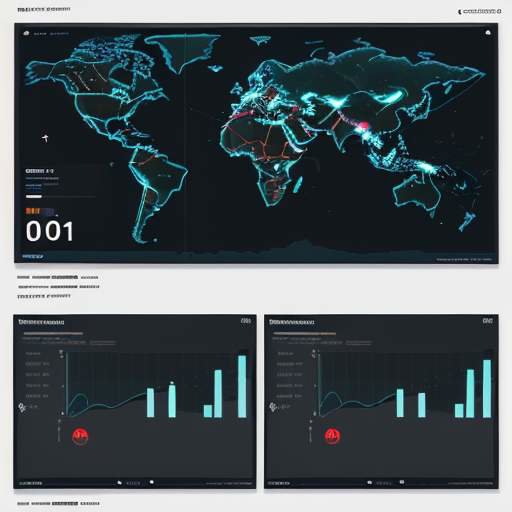
Observability in AI is the practice of monitoring the system’s internal state, performance, and decision-making process after deployment, in a live, production environment. This is fundamentally different from standard software monitoring, which usually checks uptime and latency. AI observability must track:
1. Model Drift: Over time, the real-world data distribution changes (e.g., economic conditions shift, consumer behavior changes). If the model was trained on pre-pandemic data, and is deployed post-pandemic, its predictive accuracy will inevitably degrade—this is model drift. Observability tools must constantly compare the incoming data distribution against the original training distribution and flag significant deviations immediately.
2. Feature Importance Tracking: We must know why the model made a decision. Did it rely on the applicant’s zip code (a potential proxy for race or income) or did it rely on their credit score? Explainable AI (XAI) techniques are essential here, providing human-readable justifications for the model’s output.
3. Input/Output Anomaly Detection: The system must be constantly looking for inputs that are statistically improbable or outputs that fall outside expected parameters. This is the technical mechanism for catching potential poisoning or adversarial attacks before they cause damage.
Control Mechanisms: Implementing Human Oversight and Safety Nets
Even with perfect governance and real-time observability, we cannot eliminate the need for human judgment. Control mechanisms are the safety nets—the explicit points where human expertise must intervene to veto, adjust, or override the AI’s decision.
This concept is embodied by the "Human-in-the-Loop" (HITL) approach. In high-stakes environments (medical diagnosis, autonomous vehicle decision-making), the AI should function as a highly sophisticated co-pilot, not the captain.
Implementing control requires several practical architectural shifts:
1. Defined Veto Points: For every critical decision point, the system must be engineered to pause and request human confirmation. The AI provides the recommendation; the human provides the ultimate authorization.
2. Red Teaming and Adversarial Testing: Control isn’t just about internal testing. Organizations must hire "Red Teams"—groups of ethical hackers and domain experts—whose sole job is to break the system. They test for edge cases, adversarial inputs (subtly manipulated data designed to confuse the AI), and systemic weaknesses that internal teams might overlook.
3. Cascading Failure Protocols: The system must be designed to fail gracefully. If the observability layer detects a critical drift or an unexplainable output, the system must automatically revert to a known, stable, and human-managed fallback mode, rather than continuing to operate in an unknown state.

The Future AI Stack: Integrating Trust and Ethics by Design
The ultimate evolution of AI development is moving away from treating safety, governance, and ethics as bolt-on features—as an afterthought—and instead integrating them into the foundational architecture. This is the principle of "Trust and Ethics by Design."
This means that the AI stack must be viewed as a holistic system, comprising several interdependent layers:
- The Data Layer: Governed by strict privacy and bias audits.
- The Model Layer: Trained with explainability constraints and robustness testing.
- The Monitoring Layer: Providing continuous observability for drift and anomalies.
- The Control Layer: Implementing mandatory human-in-the-loop veto points.
- The Governance Layer: Providing the overarching policy and accountability framework.
When these layers are fused, the system gains resilience. If the data layer introduces a bias, the monitoring layer flags the drift; the governance layer mandates a pause; and the control layer forces human intervention until the bias is corrected.
This integrated approach transforms AI from a powerful, unpredictable black box into a transparent, auditable, and accountable partner.

Conclusion: Mastering the System, Not Just the Algorithm
The current hype cycle has rightly focused our attention on AI’s breathtaking capability. We are dazzled by the output—the flawless code, the perfect image, the insightful prediction. But as professionals, policymakers, and consumers, we must develop a more sophisticated risk radar.
The real, immediate, and systemic risk in AI is not the intelligence itself, but the complexity of managing it. It is the risk of unobserved drift, ungoverned bias, and unconstrained deployment.
To truly harness the power of AI, we must stop asking, "How smart can we make it?" and start asking, "How safe, how accountable, and how observable must we make it?"
By prioritizing robust governance, implementing continuous observability, and embedding mandatory human control points, we can transition AI from a source of potential systemic shock into the most reliable, trustworthy, and transformative tool humanity has ever created. The future of AI is not defined by its parameters, but by the strength of the guardrails we build around it.