The telecommunications industry is undergoing a profound transformation that goes far beyond traditional voice and data services. As global connectivity becomes ubiquitous, mobile network operators (MNOs) are finding themselves at a critical juncture where they must diversify their revenue streams to maintain growth in a saturated market. The partnership between Circles and Airwallex represents a pivotal moment in this evolution, signaling a new era where telcos can seamlessly launch digibanking services on a global scale. This collaboration is not merely about adding a financial product; it is about fundamentally reshaping the customer relationship model for telecommunications providers. By leveraging open banking APIs and cross-border payment infrastructure, telcos can unlock significant value from their existing subscriber base without needing to build complex banking licenses from scratch.
The convergence of telecommunications and fintech has long been a topic of discussion within the industry, yet few partnerships have demonstrated such immediate potential for scalability as this one. Circles provides the necessary regulatory framework and banking license infrastructure, while Airwallex offers the robust payment rails required for international transactions. Together, they empower telcos to become full-service financial institutions in the eyes of their customers. This shift allows operators to capture value from every data point and transaction, turning connectivity into a comprehensive financial ecosystem. For telecommunications providers looking to expand their digital footprint, understanding the mechanics of this partnership is essential for strategic planning and future-proofing their business models against emerging competitors in the fintech space.


The Strategic Alliance Between Circles and Airwallex
To fully appreciate the impact of this partnership, one must first understand the distinct roles played by each entity. Circles is a global banking-as-a-service platform that enables businesses to launch their own digital banks with minimal friction. They handle the heavy lifting regarding compliance, licensing, and regulatory adherence across multiple jurisdictions. Airwallex, on the other hand, is a leading provider of cross-border payment solutions known for its speed, transparency, and ability to handle complex currency conversions. When these two entities join forces, they create a symbiotic relationship that addresses the two biggest pain points for telcos: regulatory complexity and international payment friction.
This alliance effectively removes the barriers that have historically prevented telecom operators from entering the banking sector. Traditionally, launching a bank required years of preparation, significant capital investment, and navigating a labyrinth of local regulations in every country of operation. Circles simplifies this by providing a pre-built infrastructure that can be deployed rapidly. Airwallex complements this by ensuring that once the money is in the account, it can move freely across borders with minimal fees and delays. For a telco like Vodafone, Orange, or AT&T, this means they can offer their customers a banking experience that feels native to their mobile app while maintaining the security and compliance standards required by global regulators.
The synergy between these two platforms is particularly potent in emerging markets where digital financial inclusion is a priority. Telcos often have the strongest distribution networks in these regions, reaching populations that traditional banks struggle to serve. By integrating Circles and Airwallex, telcos can offer banking services to unbanked or underbanked customers who already trust their mobile network brand. This trust transfer is crucial for adoption rates. Furthermore, the partnership allows for a modular approach where telcos can choose which features to activate based on local demand, whether it is savings accounts, credit facilities, or investment products.
Unlocking Revenue Streams for Telecommunications Providers
The primary motivation for telcos entering the digibanking space is revenue diversification. Mobile data plans and voice minutes are becoming commoditized, with price wars driving down average revenue per user (ARPU). Digibanking offers a high-margin alternative that can significantly boost profitability. Financial services typically carry much higher margins than connectivity services because they involve recurring fees, interest income, and transaction processing charges. By launching digibanking services, telcos can create a new revenue pillar that is less susceptible to the volatility of the data market.
Customer retention is another critical factor in this financial pivot. When a customer has their mobile plan, internet connection, and banking account all managed through a single interface, switching costs increase dramatically. This "stickiness" protects the telco from churn caused by competitors offering slightly cheaper data plans. Financial services also provide valuable data insights into customer behavior that can be used to tailor connectivity offers. For example, if a user frequently makes international payments, the telco can offer better exchange rates or travel bundles. This cross-selling capability is a direct result of the integrated ecosystem provided by Circles and Airwallex.
Moreover, the partnership enables telcos to monetize their existing customer base more effectively without acquiring new users. Every subscriber becomes a potential banking customer. The ability to onboard millions of users simultaneously through API integrations means that scaling the banking business is as easy as scaling the mobile network. This scalability is a key advantage over traditional banks that must physically open branches or hire large teams for each new market entry. The digital-first approach ensures that growth can be achieved rapidly, allowing telcos to capture market share before competitors can react.

Navigating Regulatory Landscapes and Compliance Standards
One of the most significant hurdles for telcos entering the financial sector is regulatory compliance. Banking is a highly regulated industry with strict requirements regarding anti-money laundering (AML), know your customer (KYC), and data privacy. Circles addresses this challenge by providing a compliant infrastructure that adheres to global standards such as PSD2 in Europe and local regulations in Asia and Latin America. This means telcos do not need to build their own compliance teams from scratch, which would be prohibitively expensive and time-consuming.
Airwallex further enhances this compliance posture by ensuring that cross-border transactions meet the necessary legal requirements for each jurisdiction. Cross-border payments are subject to varying regulations depending on the origin and destination of the funds. Airwallex’s network is designed to navigate these complexities automatically, reducing the risk of transaction failures or regulatory penalties. For telcos operating in multiple countries, this level of automation is essential for maintaining operational integrity. It allows them to focus on customer experience rather than worrying about whether a specific payment route violates local laws.
Data privacy is another critical component of this regulatory framework. Telcos already handle sensitive customer data regarding location and usage patterns. Integrating banking services requires even stricter adherence to data protection laws like GDPR. The partnership ensures that data flows between the telco network and the banking backend are encrypted and secure. This trust is paramount for customer adoption. If customers believe their financial data is not safe, they will not use the service regardless of how convenient it is. Circles and Airwallex work together to ensure that security protocols are embedded into the core architecture, making compliance a feature rather than an afterthought.
Building a Seamless Global Payment Ecosystem
The ability to move money globally is a key differentiator in the digibanking space. Traditional banks often charge high fees for international transfers and offer poor exchange rates. Airwallex specializes in solving these pain points by providing real-time currency conversion and low-cost payment rails. For telcos, this means they can offer their customers a superior experience when traveling or conducting business abroad. A customer can send money to a friend in another country instantly without the delays associated with SWIFT transfers.
This global reach is particularly valuable for businesses that use telco services. Small and medium enterprises (SMEs) often struggle with cash flow management and international payments. By offering digibanking services, telcos can provide SMEs with tools to manage their finances more efficiently. This could include multi-currency accounts, automated invoicing, and integration with accounting software. The ecosystem created by Circles and Airwallex allows for these advanced features to be built on top of the basic banking account. It transforms a simple mobile plan into a comprehensive business operating system.
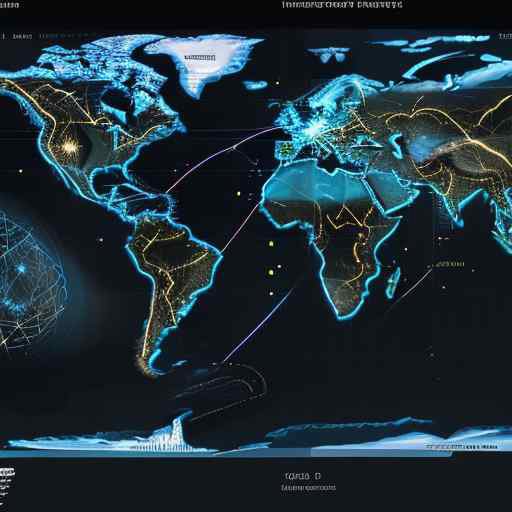
Furthermore, the global nature of this partnership allows telcos to expand into markets where they might not have a physical presence. A telco in Brazil can offer banking services to customers in Japan using Airwallex’s infrastructure. This capability is crucial for digital nomads and remote workers who need financial tools that work across borders. It also opens up opportunities for partnerships with other fintech companies looking to enter new markets. The telco becomes a gateway for innovation, bringing established brands into emerging ecosystems without the risk of building their own infrastructure from the ground up.
Enhancing Customer Experience Through Integrated Financial Services
The ultimate goal of any digibanking initiative is to improve the customer experience. Telcos have a distinct advantage here because they already own the mobile device interface through their apps. Integrating banking services directly into the mobile carrier app creates a seamless user journey. Customers do not need to download a separate banking app or remember multiple passwords. They can check balances, transfer money, and pay bills within the same environment where they manage their phone plan. This convenience is a powerful driver for adoption.
Personalization is another aspect of the customer experience that telcos are uniquely positioned to deliver. Because they have access to usage data, telcos can offer banking products that match the specific needs of their customers. For example, a student might be offered a savings account with rewards for paying tuition on time, while a business user might get access to credit lines based on their data usage patterns. This level of personalization builds loyalty and makes the financial service feel tailored rather than generic.
Security features can also be enhanced through integration. Telcos often have two-factor authentication systems that are already trusted by users. These can be leveraged for banking logins, adding an extra layer of security without requiring new hardware or complex setup processes. Biometric authentication like fingerprint scanning or facial recognition can be shared across services, making the login process faster and more secure. This holistic approach to security and convenience ensures that customers feel safe using their financial services while enjoying a frictionless experience.

Conclusion
The partnership between Circles and Airwallex marks a significant milestone in the evolution of telecommunications. It demonstrates that telcos are not just connectivity providers but can be comprehensive financial service platforms capable of competing with traditional banks. By leveraging this alliance, mobile network operators can unlock new revenue streams, improve customer retention, and navigate complex regulatory landscapes with ease. The ability to launch digibanking services globally without building physical branches or acquiring banking licenses from scratch is a game-changer for the industry.
As the digital economy continues to grow, the demand for integrated financial solutions will only increase. Telcos that embrace this transformation will be better positioned to capture value in an increasingly competitive market. The synergy between Circles’ regulatory infrastructure and Airwallex’s payment capabilities provides a robust foundation for this expansion. Ultimately, this partnership empowers telcos to serve their customers more holistically, offering everything from connectivity to financial management in one seamless ecosystem. For telecommunications leaders considering this path, the strategic advantages are clear: diversification, scalability, and enhanced customer loyalty. The future of digibanking lies in these partnerships that bridge the gap between communication networks and financial services, creating a new standard for how people interact with money in a connected world.