The living room has always been the heart of the home—a space for connection, entertainment, and relaxation. For decades, the television was the undisputed center of this experience. However, the relationship between the viewer and the screen has been undergoing a radical, silent revolution. We are moving far beyond the era of passive viewing, where the TV simply displayed what was broadcast or streamed. We are entering the age of the interactive television, powered by advanced artificial intelligence.
At the forefront of this transformation is Google TV, enhanced by the immense power of Gemini. Gemini, Google’s cutting-edge generative AI model, is not just another voice assistant; it is a contextual understanding engine. It allows the television to understand intent—the complex, nuanced desires of the user—rather than merely executing simple commands. This shift means the TV is evolving from a sophisticated display into a true, intelligent companion, capable of curating experiences, managing the home, and even facilitating real-time creative endeavors.
For those who think of the smart TV as a simple portal to streaming services, think again. Gemini is transforming the living room from a consumption hub into a dynamic, personalized entertainment ecosystem. This deep dive explores how generative AI is rewriting the rules of home entertainment, making the living room smarter, more intuitive, and infinitely more engaging than ever before.
The Evolution from Passive Screens to Intelligent Hubs
To truly appreciate the leap Gemini represents, we must first understand the journey of the modern television itself. Early smart TVs were impressive novelties, connecting to the internet and offering access to various apps. They represented a massive step up from basic cable boxes. However, these early systems were often siloed and rigid. If you wanted to watch a movie, you had to navigate through Netflix, Hulu, Disney+, etc., manually selecting the service, then searching, and finally playing. The process was fragmented, requiring the user to be the primary conductor of their own viewing experience.
The promise of the "smart" TV was always seamless integration, but the reality was often a frustrating web of menus and incompatible services. The AI challenge was always one of discovery and context. How do you build a system that can anticipate what you want to watch, even if you don’t know what you want yet?
Google TV, built on the foundation of Google’s vast ecosystem, has always aimed for a more unified experience. But with the integration of Gemini, this ambition gains a transformative superpower. Gemini doesn’t just search for "action movies." It understands the vibe of "a high-stakes action movie with a touch of 80s nostalgia, preferably set near a tropical location." It processes language, context, and emotional tone, making the TV feel less like a machine and more like a knowledgeable curator.
This evolution marks the end of the "app-hopping" era. The TV is becoming a single, unified brain for all media consumption, managing the complexity behind the scenes so the user can simply enjoy the content.

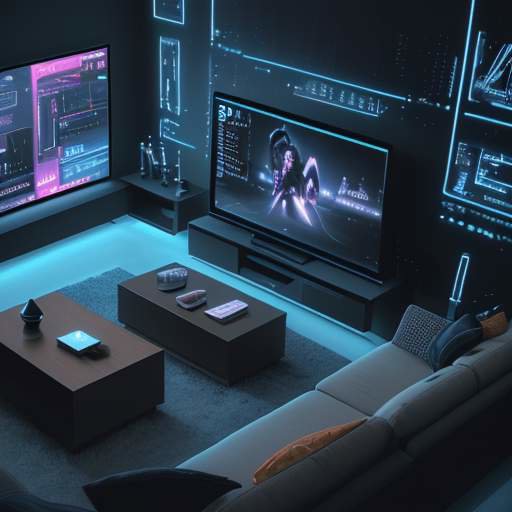
Understanding Gemini’s Contextual Power
At the core of this revolution is the power of Gemini. Generative AI, in simple terms, means AI that can create—it can generate text, images, code, and, crucially for the living room, experiences. Gemini’s integration into Google TV elevates the system from a simple command processor to a sophisticated conversational partner.
Unlike previous voice assistants that relied on keyword matching ("Play movie"), Gemini utilizes deep contextual understanding. It reads the surrounding conversation, understands the user’s mood, and cross-references this with billions of data points—from streaming catalogs to smart home routines.
Consider a scenario: You are settling in after a long day. Instead of saying, "Play something," you might say, "It’s been a rough week; I need something lighthearted that makes me laugh, maybe with a bit of mystery." A basic smart TV might suggest a comedy. Gemini, however, might analyze the mood (tired, needing distraction) and the genre (lighthearted, mystery) and suggest a critically acclaimed, low-stakes British comedy that also happens to be available on your subscribed platform, all while dimming the room lights slightly to enhance the cinematic mood.
This level of contextual intelligence is what separates a basic voice command from a true conversational experience. Gemini is the invisible layer of intelligence that makes the entire system feel effortless, intuitive, and deeply personalized. It is the difference between giving instructions and having a conversation.
Personalized Content Curation: Beyond the Algorithm
Perhaps the most visible and impactful transformation Gemini brings to the living room is in the realm of content discovery. The modern streaming paradox is that while we have infinite content, we suffer from decision paralysis. How do you choose from ten thousand titles?
Generative AI solves this by shifting the focus from content inventory to user intent.
Instead of being presented with endless rows of "Top 10 Trending Now," Gemini curates micro-experiences based on narrative prompts. You can ask the TV to build a viewing itinerary: "Show me a cinematic journey through the history of jazz, starting with early New Orleans recordings and ending with a modern fusion performance." The TV won’t just play a playlist; it will curate a viewing sequence, perhaps mixing historical documentaries, short film excerpts, and live music performances, creating a cohesive, educational, and entertaining narrative arc.
This capability extends beyond just film. It can blend music and video. You could ask it to generate a "visual soundtrack" for a specific mood—say, "The feeling of driving through a misty Pacific Northwest forest at dawn"—and the TV would generate a visual montage, paired with ambient, generative music, all tailored to your emotional input.
This level of deep, multi-modal curation means that the TV becomes less of a library and more of a magical, infinitely stocked concierge service.

Gemini as the Ultimate Home Orchestrator
The intelligence of Gemini doesn’t stop at the screen. Its true power lies in its ability to act as the central orchestrator for the entire smart home. The living room, in this vision, is no longer just a place to watch TV; it is a cohesive, responsive environment.
Previously, controlling a smart home required multiple apps and voice commands directed at separate devices (e.g., "Alexa, dim the lights." Then, "Google, play music."). The system was sequential and disjointed.
With Gemini, the TV becomes the single, intelligent brain that coordinates every element. The interaction is holistic. If you ask, "It’s time for movie night," Gemini doesn’t just start streaming. It executes a complex, multi-step routine:
- It checks the calendar and confirms no one has overlapping commitments.
- It sends a subtle notification to the kitchen hub: "Movie night starting in 15 minutes."
- It dims the main lights to 20% and adjusts the accent lighting to a warm, cinematic glow.
- It adjusts the thermostat to the optimal viewing temperature.
- It initiates the streaming service and begins the curated viewing experience.
This seamless, anticipatory control is the definition of true ambient computing. The technology fades into the background, allowing the human experience—the laughter, the suspense, the quiet contemplation—to take center stage. The TV is no longer just a receiver; it is the conductor of the entire home symphony.
Beyond the Screen: The Future of Interactive Viewing
Looking ahead, the integration of Gemini suggests a future where the line between passive viewing and active participation completely dissolves. We are moving toward truly interactive, generative entertainment.
Imagine watching a historical drama, and at a key moment, you can ask the TV, "What would the main character have said next?" Gemini could then generate a plausible, contextually accurate dialogue snippet, displayed on screen, allowing the user to engage in a real-time, narrative debate with the characters.
Or consider language learning. Instead of simply watching a foreign film with subtitles, you could ask Gemini to pause the movie and generate a mini-lesson on the specific dialect or idioms used in that scene, providing instant, contextual vocabulary training.
This shift makes the TV an educational tool, a collaborative playground, and a global window—all rolled into one. It empowers the viewer to be not just a spectator, but an active participant in the narrative, making the living room a perpetual learning and discovery environment.
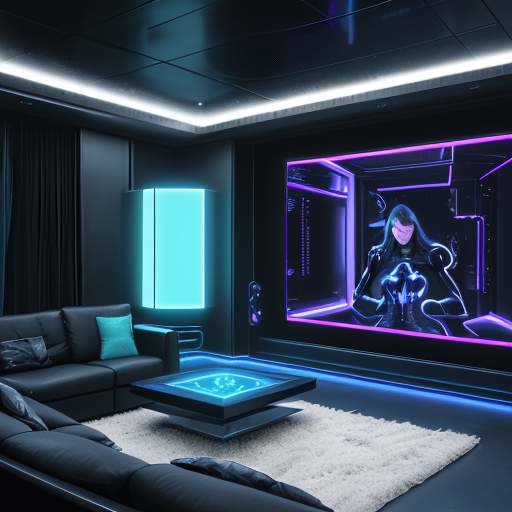
Conclusion: The Living Room, Reimagined
The arrival of Gemini on Google TV is more than just a software update; it is a fundamental paradigm shift in how we interact with media and technology at home. It marks the definitive end of the clunky, app-dependent, and passive viewing experience.
Generative AI has gifted the living room the ability to be deeply personalized, contextually aware, and universally connective. It orchestrates the perfect movie night, manages the complex rhythms of a modern smart home, and transforms the act of watching television into an active, engaging, and educational journey.
For consumers, this means a simpler, more magical, and more intuitive home entertainment center. For the industry, it means a complete reimagining of the "smart" device. The living room is no longer just where we watch TV; it is where we live, learn, and connect—and Gemini is the intelligence that makes it all possible. Get ready for the living room experience, redefined.