The history of technology is often defined by paradigm shifts—moments when a breakthrough capability fundamentally changes how humanity lives, works, and interacts. From the printing press to the internet, each revolution built upon the last, accelerating human potential. Today, we stand at the precipice of perhaps the most profound shift since the Industrial Revolution: the AI Industrialization Wave.
This wave is not merely about smarter software or faster chips; it is about the physical embodiment of intelligence. It is the moment when AI moves out of the cloud data centers and into our daily lives, into our factories, and into our homes. We are witnessing the transition from centralized, massive computing power to decentralized, highly efficient, and autonomous intelligence—the intelligence that lives on the edge.
The market indicators are staggering. Experts predict that the global robotics market, fueled by AI, will reach monumental valuations, potentially exceeding $375 billion. This isn’t a niche technological upgrade; it is a systemic overhaul of global labor, logistics, healthcare, and manufacturing. Understanding this wave requires us to trace its trajectory: from the theoretical promise of machine learning to the tangible reality of autonomous, intelligent machines.
The Shift to Edge Intelligence: Why Local Processing Matters
For decades, the prevailing model of AI was "cloud-first." Massive datasets were collected, processed in colossal data centers, and the resulting insights were streamed back to users. This model, while powerful, suffered from inherent limitations: latency, bandwidth dependency, and privacy concerns. Sending every piece of data—every video frame, every sensor reading, every voice command—to a distant cloud server and waiting for a response introduces delays and creates massive data pipelines that are both expensive and vulnerable.
The solution, and the critical pivot point of the current AI wave, is Edge Intelligence.
Edge computing dictates that processing power must move closer to the source of the data—the "edge" of the network. Instead of sending raw video feeds from a factory floor to a distant cloud, the AI processing unit embedded in a local camera or sensor analyzes the video on the spot. It identifies anomalies, counts objects, or detects human behavior in real-time, sending only the actionable metadata (e.g., "Anomaly detected at coordinates X, Y") rather than the entire raw data stream.
This shift is revolutionary. By processing data locally, we achieve near-zero latency, which is critical for real-time applications like autonomous vehicles, surgical robotics, and industrial quality control. Furthermore, it drastically improves data privacy, as sensitive information never has to leave the local network. Edge AI is the foundational layer that makes the next generation of physical, intelligent systems possible.

Robotics: The Physical Manifestation of AI
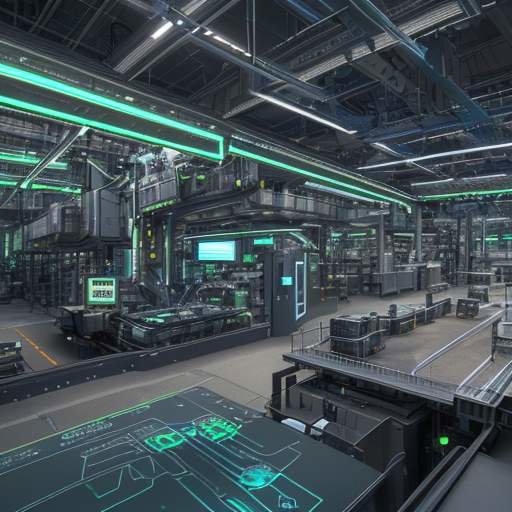
If Edge AI is the brain, robotics is the body. The convergence of advanced, low-power AI chips (like specialized NPUs and TPUs) with sophisticated mechanical engineering is what is driving the $375 billion market. Historically, robots were programmed for single, repetitive tasks—the assembly line arm that welds the same spot thousands of times. They were rigid, predictable, and lacked adaptability.
Modern AI-powered robotics, however, are fundamentally different. They are designed for generalization and adaptability. They don’t just perform a task; they understand the task.
Consider a warehouse robot. An older model could only move boxes from Point A to Point B. A modern, AI-powered robot, equipped with computer vision and reinforcement learning, can navigate a cluttered, dynamic environment, identify a misplaced item, retrieve it, and sort it according to a changing set of rules—all without explicit reprogramming. This ability to handle variability, or "unstructured environments," is the key differentiator.
This adaptability is transforming entire sectors:
- Logistics and Warehousing: Robots are moving beyond simple transport. They are now performing complex picking, sorting, and inventory management tasks, dramatically increasing throughput and reducing human error.
- Healthcare: Surgical robots, guided by AI, offer superhuman precision. Furthermore, companion and assistance robots are being developed to help elderly populations with daily living activities, addressing global demographic challenges.
- Manufacturing: Instead of just repetitive assembly, AI-powered cobots (collaborative robots) work alongside humans, handling the heavy lifting, the dangerous tasks, or the tedious quality checks, thereby augmenting human capability rather than replacing it entirely.
The Data Loop: From Intelligence to Action
The entire AI industrialization wave is powered by a continuous, self-improving data loop. This loop is the engine that drives the exponential growth of the robotics market.
The process works like this:
- Data Collection (The Edge): Sensors and cameras collect massive amounts of real-world data (e.g., a robot attempting to grasp a novel object).
- Local Processing (The AI): The edge AI unit processes this data, identifying the failure point (e.g., "Grip force was insufficient for this material").
- Model Refinement (The Cloud/Simulation): The failure data is securely transmitted (or simulated) to a central training environment. AI models are refined to account for the specific variables encountered.
- Deployment (The Edge): The improved model is pushed back down to the robot, making it smarter and more robust for the next task.
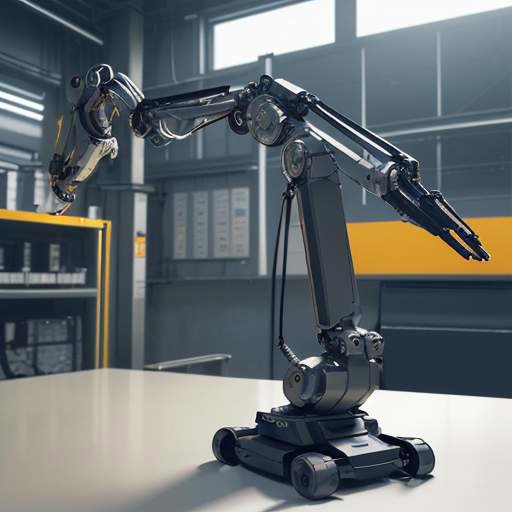
This closed-loop system means that every interaction, every success, and every failure contributes to the system’s collective intelligence. The system gets better the more it is used, creating a powerful, self-sustaining cycle of innovation that is unmatched by previous industrial cycles.
Addressing the Human Element: Policy and Workforce Transformation
The sheer scale of this industrialization wave cannot be discussed without addressing the human element. The transition to AI-powered robotics is not just a technological challenge; it is a profound socio-economic one.
The fear of job displacement is real and must be addressed head-on. However, history shows that technological revolutions do not eliminate work; they redefine it. The jobs of the future will not be those that are easily automated, but those that require uniquely human skills: creativity, complex emotional intelligence, critical thinking, and systems management.
This necessitates a massive global investment in education and retraining. We must shift our educational focus from rote memorization (which AI excels at) to fostering problem-solving, interdisciplinary thinking, and emotional resilience.
Furthermore, policy intervention is crucial. Governments, industry leaders, and academic institutions must collaborate to establish regulatory frameworks that:
- Ensure Ethical AI: Establishing guardrails for bias, transparency, and accountability in autonomous systems.
- Manage Data Ownership: Defining who owns the data generated by edge devices and how that data can be monetized ethically.
- Support Workforce Transition: Implementing universal basic skills training and safety nets for workers whose industries are being automated.
The goal is not to stop the wave, but to ride it responsibly, ensuring that the benefits of unprecedented productivity are distributed widely and equitably.
The Future Landscape: Hyper-Specialization and Autonomy
Looking ahead, the AI industrialization wave points toward two major trends: hyper-specialization and total autonomy.
Hyper-Specialization: AI systems will become incredibly deep in their knowledge base. Instead of a general-purpose AI, we will see highly specialized "AI agents" trained exclusively for specific, complex domains—a legal AI that can parse global case law, a material science AI that can predict novel alloys, or a medical AI that can diagnose rare diseases from complex genomic data. These agents will operate with near-human expertise, but with superhuman speed.
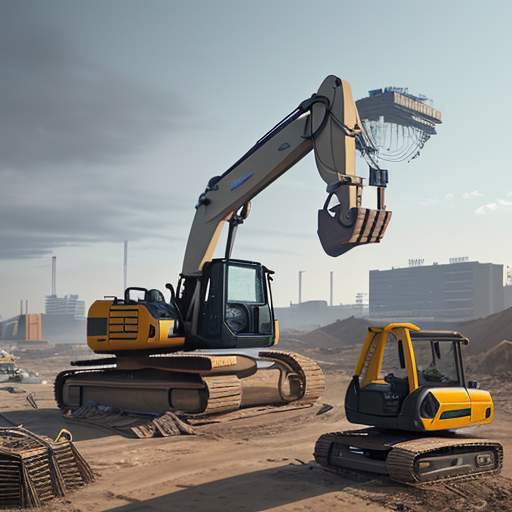
Total Autonomy: The ultimate goal is the fully autonomous system. Imagine a construction site where AI manages the scheduling, directs the robotic cranes, monitors the structural integrity via drone feeds, and orders necessary materials—all without human intervention. These systems will operate in complex, dynamic environments, managing resources and adapting to unforeseen variables in real-time.
This level of autonomy will unlock productivity gains previously considered science fiction, fundamentally changing the cost structure of goods and services. The cost of labor, in many sectors, will begin to be replaced by the cost of computation and energy.
Conclusion: Preparing for the Intelligent Age
The AI industrialization wave is not a distant possibility; it is an active, accelerating reality. We are moving beyond the era of mere digital intelligence and into the era of physical, embodied intelligence. The shift from cloud processing to edge computing, and the subsequent integration of AI into sophisticated robotics, represents a fundamental re-engineering of human capability.
The $375 billion robotics market is merely a reflection of the underlying shift: that intelligence is becoming a physical, deployable commodity.
For businesses, this means a mandate to rethink processes from the ground up, viewing automation not as a cost-cutting measure, but as a pathway to entirely new levels of service and product creation. For policymakers, it demands proactive governance to ensure that this immense power is harnessed ethically and equitably. And for individuals, it requires a commitment to lifelong learning, embracing the role of the adaptable, creative problem-solver.
The future is not just smart; it is physical, autonomous, and deeply integrated into the fabric of our daily lives. By understanding the mechanics of this wave—from the sensor to the server, from the cloud to the corner—we can move from passive observers to active architects of the Intelligent Age.