The year 2026 marks a turning point where hardware, software, and sustainability converge to reshape everyday life. Advances in artificial intelligence, flexible materials, and quantum‑level security have moved from research labs into consumer hands, making once‑futuristic concepts tangible. This post explores five pivotal trends that define the gadget landscape of 2026, illustrating how they interact to create a more intuitive, resilient, and responsible technology ecosystem.
AI‑Powered Wearables Redefine Health Monitoring
Wearable devices have evolved from step counters into continuous health companions. The latest generation embeds multi‑modal sensors — optical, electrical, and biochemical — that track heart‑rate variability, blood glucose, cortisol, and even early markers of respiratory illness. On‑device machine‑learning models process this data in real time, delivering personalized insights without cloud latency. A subtle haptic nudge alerts the wearer to irregular rhythms, while an integrated voice assistant can schedule a telehealth appointment instantly. Battery life now exceeds two weeks thanks to energy‑harvesting solar strips and ultra‑low‑power neuromorphic chips. The form factor has shrunk to a 6 mm‑thick band crafted from titanium‑ceramic composite, offering hypoallergenic comfort for 24/7 wear. Interoperability standards such as Health‑Data‑Mesh enable seamless sharing with electronic medical records, empowering clinicians with longitudinal views. Privacy is baked in through zero‑knowledge proofs, ensuring that raw biometrics never leave the device. As a result, preventive care shifts from reactive hospital visits to proactive lifestyle adjustments, fundamentally altering the patient‑provider relationship.


Foldable Displays Go Mainstream
Foldable screens have crossed the “early adopter” threshold, becoming the default form factor for flagship smartphones and portable workstations. Manufacturers now employ ultra‑thin glass (UTG) combined with a self‑healing polymer layer that eliminates crease visibility after 200,000 folds. The hinge mechanism uses a magnetic‑levitation design, providing a buttery‑smooth transition between phone and tablet modes while maintaining IP68 water resistance. Software ecosystems have matured: Android 16 and iOS 19 natively support multi‑window layouts, drag‑and‑drop across the fold, and adaptive UI scaling that preserves readability at any aspect ratio. Developers leverage a unified “Foldable‑First” SDK, enabling apps to reconfigure instantly when the device unfolds. In the enterprise space, a 10‑inch foldable replaces a laptop for field technicians, offering a full‑size keyboard attachment that magnetically snaps onto the lower half. Consumer pricing has dropped to the $999‑$1,299 range, making the technology accessible to a broad audience. Durability testing now includes extreme temperature cycles, dust ingress, and repeated drop simulations, guaranteeing a three‑year warranty. five‑year functional lifespan.

Ambient Computing: The Invisible Interface
Ambient computing dissolves the boundary between user and environment, turning spaces into responsive platforms. Ceiling‑mounted micro‑projectors cast interactive widgets onto any surface — kitchen counters, bathroom mirrors, office desks — while depth‑sensing cameras track gestures and gaze. Lightweight AR glasses, weighing under 30 grams, overlay contextual data such as recipe steps, navigation cues, or real‑time translation directly onto the wearer’s field of view. A central voice‑activated hub, powered by a low‑latency edge AI accelerator, orchestrates device coordination without cloud round‑trips. The system learns routines: lights dim when a movie starts, thermostat adjusts when the user leaves the room, and the coffee maker begins brewing as the alarm sounds. Privacy controls are granular; each sensor stream can be toggled locally, and data retention policies default to 24 hours unless explicitly extended. Energy consumption stays below 15 W per room thanks to event‑driven processing and ultra‑low‑power radios. This invisible layer of intelligence reduces cognitive load, allowing people to focus on tasks rather than device management.

Quantum‑Ready Consumer Devices
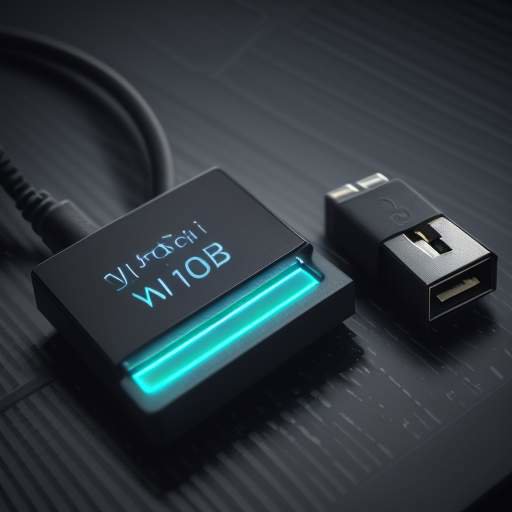
Quantum technology, once confined to national labs, now appears in consumer‑grade security accessories. A USB‑C dongle the size of a thumb drive houses a photonic integrated circuit that generates true random numbers at 10 Gbps and performs on‑the‑fly quantum key distribution (QKD) with compatible routers. The device implements the BB84 protocol over standard fiber or free‑space optical links, delivering provably secure session keys for messaging, banking, and VPN tunnels. Firmware is formally verified, and a tamper‑evident seal triggers an irreversible zero‑ization if physical intrusion is detected. An accompanying mobile app visualizes entropy flow in real time, letting users confirm that each encryption operation draws from a fresh quantum source. Compatibility extends to major operating systems via a standardized Quantum‑Crypto API, enabling developers to embed post‑quantum‑safe tunnels without rewriting code. Power draw remains under 200 mW, supplied entirely by the host port. As nation‑state actors advance quantum decryption capabilities, this plug‑and‑play solution offers a practical migration path for everyday users and small businesses alike.
Sustainable Gadgets: Circular Design Takes Center Stage
Environmental responsibility has become a design prerequisite rather than an afterthought. Leading manufacturers adopt modular architectures where battery, camera, processor, and display are click‑locked into a biodegradable polymer frame derived from mycelium‑based composites. Each module carries a digital passport — a blockchain‑anchored record of material provenance, carbon footprint, and repair history — enabling transparent resale and recycling. End‑of‑life collection points use AI‑guided robotic disassembly lines that recover >95 % of rare‑earth elements, feeding them back into new component production. Packaging shifts to mushroom‑grown foam and water‑soluble inks, eliminating single‑use plastics. Energy harvesting is embedded at the system level: kinetic harvesters in the frame convert typing vibrations into trickle charge, while transparent perovskite solar cells on the display bezel supplement battery life. Firmware updates are delivered via differential OTA patches, reducing bandwidth and extending device relevance to seven years. Consumer incentives include trade‑in credits tied to verified recycling, fostering a closed‑loop economy that aligns profit with planetary health.

Conclusion
The gadget ecosystem of 2026 demonstrates that breakthrough innovation thrives when intelligence, flexibility, invisibility, security, and sustainability intersect. AI‑driven wearables turn health data into actionable wisdom; foldable displays dissolve the phone‑tablet dichotomy; ambient computing weaves digital assistance into the fabric of our spaces; quantum‑ready accessories bring provable encryption to the masses; and circular design rewrites the lifecycle story of every device. Together, these trends empower users to live healthier, more productive, and environmentally conscious lives without sacrificing performance or privacy. As the next wave of research — neuromorphic processors, bio‑integrated interfaces, and decentralized compute — moves toward commercialization, the foundation laid today will accelerate tomorrow’s possibilities. Staying informed and adaptable ensures we harness these tools responsibly, shaping a future where technology amplifies human potential rather than merely consuming resources.