The meteoric rise of Generative AI (GenAI) has moved at a pace that has left many industries stunned. In less than two years, large language models (LLMs), image generators, and sophisticated coding assistants have moved from experimental research projects to essential tools for enterprises worldwide. However, behind every "magic" moment—every coherent paragraph generated by a chatbot or every photorealistic image rendered in seconds—lies a massive, physical reality: the infrastructure.
The demand for Generative AI is not just a software revolution; it is a hardware and infrastructure revolution of unprecedented proportions. To serve millions of concurrent users, cloud providers are fundamentally re-engineering their data centers, networking protocols, and power management systems. This transition from "general-purpose" cloud computing to "AI-centric" infrastructure is the defining challenge of the modern tech era.

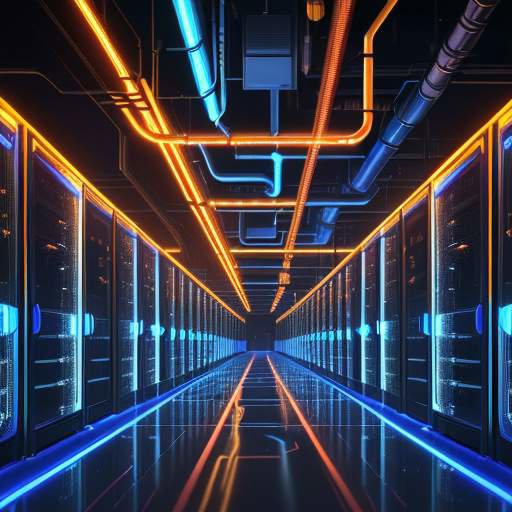
The Compute Crunch: From CPUs to GPU Superclusters
The primary driver behind the infrastructure overhaul is the sheer computational intensity of training and running large-scale models. Traditional cloud computing relied heavily on Central Processing Units (CPUs), which are excellent at handling a wide variety of tasks sequentially. However, GenAI requires massive parallel processing to handle the billions of parameters within a neural network.
This has led to the "GPU Era." Cloud providers like AWS, Microsoft Azure, and Google Cloud have spent billions acquiring and integrating high-end Graphics Processing Units (GPUs), specifically the NVIDIA H100 and the upcoming Blackwell architecture. These chips are designed specifically for the matrix multiplications that form the backbone of deep learning.
But it isn’t just about having enough chips; it’s about organizing them into "superclusters." A single LLM cannot be trained on one machine. It requires thousands of GPUs to work in perfect synchrony. To achieve this, cloud providers are building specialized clusters where the physical distance between server racks is minimized to reduce latency, and high-density power delivery is maximized to keep the chips running at peak performance.
The Networking Backbone: Solving the Interconnect Bottleneck
If GPUs are the engines of the AI revolution, networking is the fuel line. One of the biggest hurdles in scaling GenAI infrastructure is the "interconnect" problem. When a model is distributed across thousands of GPUs, the data must move between those chips at lightning speed. If the network is slow, the GPUs sit idle, wasting expensive compute cycles.
To solve this, cloud providers are moving away from standard Ethernet for internal cluster communication in favor of specialized technologies like InfiniBand and RDMA (Remote Direct Memory Access). These protocols allow data to move from one server’s memory to another’s without involving the CPU, drastically reducing latency.

Furthermore, cloud providers are investing in "Optical Switching." By using light instead of electricity to move data across the data center, they can achieve higher bandwidth and lower power consumption. This infrastructure is essential not just for the initial training of a model, but for the "inference" phase—where the model actually answers a user’s prompt. As the number of AI users grows, the need for high-bandwidth, low-latency networks becomes the primary differentiator between a scalable AI service and a failing one.
Powering the Beast: Energy, Cooling, and Sustainability
The physical reality of AI is heat. The high-performance chips required for GenAI consume an enormous amount of electricity and generate intense amounts of heat. Traditional air-cooling systems, which have sufficed for standard web hosting, are no longer adequate for the "power density" of modern AI racks.
Cloud providers are now pivoting toward advanced cooling solutions, such as "Liquid Cooling" or "Immersion Cooling." In these systems, and in some cases, the server components are directly cooled by circulating fluids, which are far more efficient at heat transfer than air. This allows for much denser packing of hardware, meaning more compute power can be packed into a smaller physical footprint.
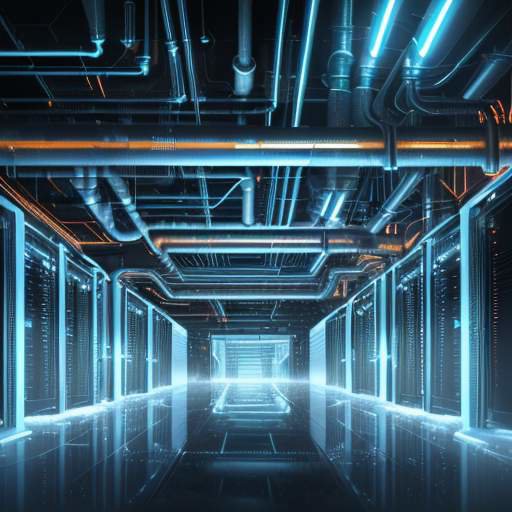
Furthermore, the energy demand of AI has forced cloud providers to rethink their energy sources. Many are now investing heavily in small modular nuclear reactors (SMRs) or dedicated renewable energy farms to ensure a steady, carbon-neutral power supply. The "AI Factory" concept means that a modern data center is as much a power plant and a cooling facility as it is a computing hub.
The Rise of the "AI Factory" and Edge Inference
While the massive superclusters are necessary for training models like GPT-4, the future of the infrastructure lies in "Inference at Scale." Once a model is trained, it needs to be deployed where the users are. This has led to the rise of the "Edge."
Edge computing involves placing smaller, specialized AI inference nodes closer to the end-user—in cities, cell towers, or even within local networks. By processing data locally, cloud providers can reduce the "round-trip" time for a request, making AI interactions feel instantaneous. This also reduces the cost of backhauling massive amounts of data to a central hub.

By diversifying their infrastructure into both "Core" (for training) and "Edge" (for inference), cloud providers can offer a more resilient and scalable service. This hybrid approach ensures that as GenAI moves into real–time applications—such as autonomous driving, real-time translation, and interactive robotics—the underlying infrastructure can handle the load without breaking a sweat.
Software Orchestration: The Brain of the Machine
Even the most powerful hardware is useless without an intelligent way to manage it. The "software layer" of the cloud is undergoing a massive transformation to accommodate AI. Traditional container orchestration tools like Kubernetes are being optimized specifically for GPU scheduling and memory management.
Cloud providers are developing specialized software stacks that can automatically "bin-pack" AI workloads. This means the system can detect when a specific task needs more GPU memory or faster interconnects and move it to the optimal hardware in real-time. This level of automation is crucial because human operators cannot manually manage the thousands of moving parts in an AI-driven data center.

Furthermore, "Multi-Tenancy" in the AI era is becoming more complex. Cloud providers must ensure that one company’s massive training job doesn’t interfere with another company’s inference requests. This requires sophisticated "virtualization" of the GPU itself, allowing a single physical card to be sliced into multiple virtual instances for different users. This optimization allows cloud providers to maximize their ROI on expensive hardware while providing a seamless experience for their customers.
Conclusion: The Infrastructure as the Foundation of Intelligence
The rise of Generative AI is not just a story of clever algorithms and massive datasets; it is a story of industrial-scale engineering. To make GenAI a reality, cloud providers have had to reinvent the very foundation of how data is processed, moved, and cooled.
We are moving toward an era where the "Cloud" is no longer a generic utility but a specialized engine designed specifically for the demands of artificial intelligence. By investing in high-performance silicon, advanced networking protocols, innovative cooling systems, and intelligent software orchestration, cloud providers are building the "AI Factories" of the 21st century.
As we move forward, the winners in the AI race will not just be those with the best models, but those who can provide the most reliable, scalable, and efficient infrastructure to run them. The infrastructure is the silent backbone of the revolution, and its evolution will dictate how far the capabilities of AI can go in our daily lives.