For the past decade, the prevailing mantra of the technology sector was "Software is eating the world." We lived in an era where the primary barriers to entry were code complexity and user experience. If you could write a clever algorithm or build a seamless interface, you could scale a business to millions of users almost instantly. However, as we have entered the era of Generative AI and Large Language Models (LLMs), a fundamental shift is occurring. The "software-first" narrative is colliding with the hard reality of physics.
We are transitioning from an era of digital abundance to an era of physical scarcity. To train, deploy, and maintain the models that power modern intelligence, we no longer just need clever code; we need massive amounts of electricity, specialized silicon, and sprawling physical infrastructure. The "gold" of the 21st century is no longer just the algorithm—it is the underlying infrastructure that allows those algorithms to run at scale.


The Silicon Moat: The Scarcity of Advanced Chips
The first pillar of this infrastructure reality is the hardware layer. In the early days of the internet, general-purpose processors (CPUs) were sufficient for most tasks. However, the training of LLMs requires massive parallel processing capabilities that only specialized chips—primarily GPUs and TPUs—can provide. This has created a massive "moat" around companies that can secure these components.
The manufacturing of these chips is not just a matter of design; it is a feat of extreme engineering. The production of sub-5nm chips requires highly specialized machines (EUV lithography) and fabrication plants (fabs) that cost billions of dollars to build. Because the supply chain for these high-end semiconductors is so concentrated, the "compute" available to a company becomes a direct indicator of its power in the AI race. When a startup cannot secure enough H100s or their successors, they are not just limited by their code; they are physically unable to scale their model’s parameters. This has turned chip production into a geopolitical and economic cornerstone, where the ability to manufacture high-end silicon is as vital as the ability to write the training weights.

The Power Crunch: Energy as the Ultimate Constraint
If silicon is the engine of the AI revolution, electricity is the fuel. This is perhaps the most overlooked transition in the current tech landscape. Training a single large-scale model can consume as much electricity as hundreds of homes use in a year. When you move from training to inference—where millions of users interact with a model simultaneously—the energy demand becomes constant and massive.
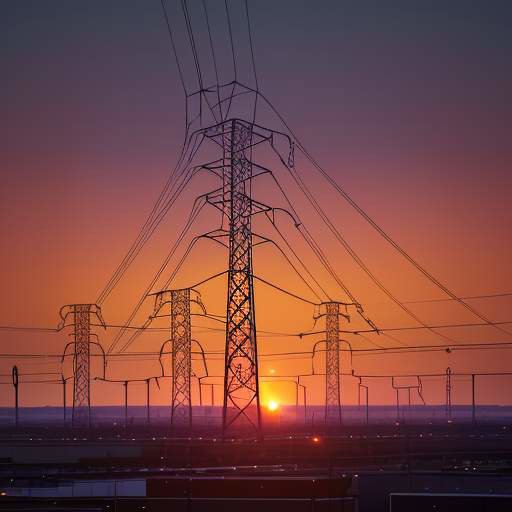
We are currently witnessing a "Great Power Crunch." Data centers are beginning to strain local power grids, leading to a desperate search for sustainable and abundant energy sources. This has sparked a renewed interest in nuclear energy, Small Modular Reactors (SMRs), and dedicated renewable energy farms specifically for the tech sector. The companies that will dominate the next decade are those that can secure "base-load" power—steady, reliable electricity that doesn’t fluctuate with the weather. In this reality, a data center’s proximity to a high-voltage power grid or a dedicated energy source is a primary competitive advantage. The transition from "Cloud" as an abstract concept to "Grid" as a physical requirement is one of the most significant shifts in modern industrial strategy.
The Data Center Bottleneck: Space and Cooling
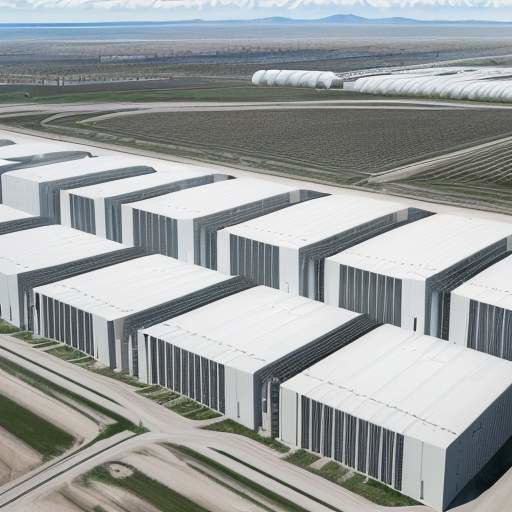
Beyond power and chips lies the physical geography of data. A "cloud" is not a nebulous entity; it is a collection of massive buildings filled with humming machines that generate immense amounts of heat. As AI models grow larger, the density of these machines increases, necessitating revolutionary cooling techniques.
Traditional air cooling is becoming insufficient for the high-density racks required by modern AI clusters. The industry is moving toward liquid cooling and immersion cooling, where servers are submerged in non-conductive fluids to dissipate heat. This transition requires specialized plumbing, infrastructure, and real estate that can accommodate such systems. Consequently, the "land grab" for data center sites is intensifying. Cities and regions are beginning to evaluate their ability to host these facilities based on their ability to provide massive amounts of water for cooling and stable land for expansion. The physical footprint of AI means that the geography of the internet is being redrawn by the requirements of thermodynamics.
The Impact on LLMs and the Road to AGI
How does this reality of scarcity change the roadmap for Artificial General Intelligence (AGI)? For years, the prevailing strategy was "brute force": make the models bigger, feed them more data, and run them on more GPUs. However, the physical constraints of power and silicon are forcing a pivot toward efficiency.
We are seeing the rise of Small Language Models (SLMs) that are optimized to run on local hardware or at the "edge" (on phones and laptops). This is a direct response to the high cost and energy intensity of running massive models in the cloud. Furthermore, researchers are focusing on "inference-optimized" architectures that can deliver high-quality outputs with fewer FLOPs (floating-point operations). The goal is to move from "more is better" to "smarter is better." By reducing the amount of compute and power required for a single inference, developers can bypass some of the infrastructure bottlenecks. However, the push for AGI will still require massive "foundational" models, meaning the winners in the high-end space will be those who can most efficiently manage the heavy lifting of large-scale training while innovating on the efficiency of daily use.
The Industrialization of AI and Sovereign Infrastructure
Finally, we are seeing a shift toward "Sovereign Infrastructure." Nations are beginning to realize that compute power is a matter of national security and economic sovereignty. Just as nations once sought to secure their own energy grids and mineral supplies, they are now seeking to secure their own "compute clouds."
This has led to the rise of state-backed data centers and localized AI ecosystems. Instead of relying on a few global providers, nations want to ensure they have the physical infrastructure to run their own AI systems without being dependent on foreign entities. This industrialization means that the next phase of AI won’t just be about software startups; it will involve heavy industry, construction firms, energy companies, and government-level infrastructure projects. The "AI Revolution" is no longer just a Silicon Valley phenomenon; it is an industrial revolution that requires the same level of physical planning and resource management as the expansion of the rail systems or the electrification of cities in the 19th century.

Conclusion: The New Economic Reality
The era of "free" scale is over. We have entered an epoch where the primary constraints on progress are no longer just intellectual—they are physical. To build the next generation of intelligence, we must build the factories to make the chips, the grids to power the machines, and the cooling systems to keep them from melting.
The winners of the AI era will not necessarily be the ones with the most elegant code, but those who can navigate the complexities of the physical world. They will be the companies that secure the land, the power, and the silicon. We are moving into a period where "compute" is the currency of the modern age, and "power" is the ultimate gatekeeper. In this new landscape, the most successful innovators will be those who recognize that to build a digital future, they must first master the physical reality of the present. The AI revolution is not just happening in the cloud; it is being built on the ground, one server rack and one power line at a time.