The landscape of education has undergone seismic shifts over the past two decades. The rise of the internet, coupled with global events, has transformed the classroom from a physical room into a boundless digital space. Online learning, once viewed as a mere substitute for traditional education, has matured into a robust, global industry. At the heart of this transformation is Artificial Intelligence (AI)—a technology poised not just to assist, but to fundamentally redefine the relationship between student, tutor, and knowledge itself.
Online tutoring, historically reliant on the availability of human experts, is now entering a golden age of hyper-personalization. AI is moving beyond simple grading and basic Q&A; it is becoming a sophisticated cognitive partner, capable of diagnosing learning gaps, adapting curricula in real-time, and providing emotional and academic support at scale. For students, this means a level of tailored education previously reserved only for the most expensive, one-on-one private tutoring sessions. For educators and institutions, it means unprecedented efficiency and measurable improvements in student outcomes.
But what does this revolution actually look like? How will AI change the daily experience of a student learning calculus, or a professional mastering a new coding language, through a screen? This comprehensive look at the future of online tutoring explores the core technologies, the pedagogical shifts, and the immense potential AI holds for ensuring true, sustainable student success in the digital age.
The Shift from Information Delivery to Cognitive Coaching
Traditional education, even online, often operates on a "one-size-fits-all" model. A lecture is recorded, a module is uploaded, and the student is expected to absorb the material at a standard pace. While effective for foundational knowledge transfer, this model fails to account for the vast spectrum of individual learning styles, cognitive processing speeds, and prior knowledge gaps.
This is where AI shines. It shifts the role of the tutor from a mere information deliverer to a cognitive coach.
AI-powered tutoring systems do not just check answers; they analyze how the student arrived at the answer. They identify patterns of misunderstanding—the specific conceptual hurdle, the emotional roadblock, or the metacognitive weakness. For example, if a student consistently struggles with stoichiometry, an AI tutor won’t just point out the wrong calculation; it might realize the underlying issue is a weak grasp of unit conversion, and proactively dedicate five minutes of remedial practice on that specific skill, before returning to the main topic.
This level of diagnostic precision is revolutionary. It moves education from reactive (fixing mistakes after they happen) to proactive (preventing mistakes before they are made). The system essentially builds a dynamic, evolving profile of the student’s knowledge graph, ensuring that every piece of content delivered is optimally challenging, never too easy, and never too frustratingly difficult.
Hyper-Personalization: The End of the Average Student
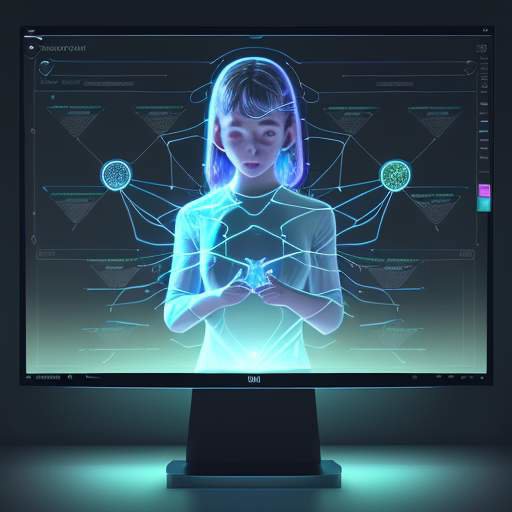
The concept of the "average student" is perhaps the most limiting assumption in educational theory. AI shatters this assumption. Hyper-personalization is the ability of the educational platform to adapt the curriculum, pace, medium, and even the tone of instruction based on real-time student performance and emotional state.
How is this achieved? Through sophisticated machine learning algorithms that analyze hundreds of data points simultaneously:
- Performance Data: Accuracy rates, time taken to answer, number of attempts.
- Behavioral Data: Time spent on specific modules, tendency to skip sections, optimal study time (e.g., does the student perform better at 8 AM or 8 PM?).
- Affective Data (The Future Frontier): Through integrated webcam analysis (with strict privacy controls), AI can monitor vocal tone, facial micro-expressions, and engagement levels. If the system detects signs of frustration, boredom, or anxiety, it can automatically adjust the lesson—slowing the pace, introducing a motivational break, or switching the medium from text to a video simulation.
This adaptive loop ensures that the learning experience is always in the "Zone of Proximal Development" (ZPD)—the sweet spot where the material is challenging enough to promote growth, but not so difficult as to induce despair.
AI Tutors vs. Human Tutors: A Collaborative Synergy
A common fear surrounding AI in education is the displacement of human tutors. This is a misunderstanding of the technology’s role. AI is not designed to replace the human element; rather, it is designed to augment it, making human tutors exponentially more effective.
Think of the AI tutor as the ultimate, tireless teaching assistant.
The AI handles the massive, time-consuming tasks: grading thousands of assignments, tracking granular progress data, identifying macro-level systemic weaknesses in the curriculum, and providing instant, foundational feedback 24/7.
This frees up the human tutor to focus on what humans do best: providing emotional intelligence, mentorship, complex critical thinking discussions, and moral guidance. The human tutor can now dedicate their time to high-impact, qualitative interactions—the deep, Socratic questioning that inspires genuine intellectual curiosity.
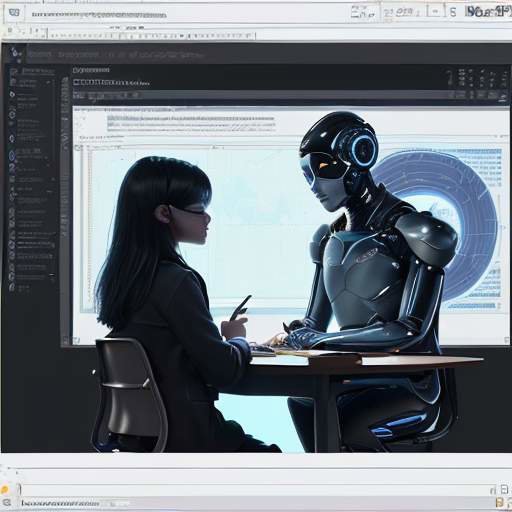
The future classroom is therefore a hybrid model: AI handles the data, the diagnostics, and the foundational repetition; the human tutor handles the inspiration, the empathy, and the philosophical debate. This synergy creates a safety net of support that is both scalable and deeply personal.
AI in Assessment and Skill Validation
One of the most challenging aspects of online learning is the integrity of assessment. How can an institution be certain that the work submitted by a student is genuinely their own, and that they have mastered the material without external help? AI is revolutionizing assessment through several key methods:
1. Proctored and Adaptive Testing: AI-powered proctoring goes far beyond simple webcam monitoring. It analyzes behavioral biometrics—typing rhythm, mouse movements, eye gaze patterns—to detect signs of distraction or unauthorized assistance. Furthermore, the tests themselves are adaptive; if a student answers a question correctly, the next question increases in difficulty; if they struggle, the system provides scaffolding or prerequisite review material immediately.
2. Natural Language Processing (NLP) for Essay Grading: Traditional essay grading is subjective and time-consuming. NLP models can now assess not just grammar and vocabulary, but the structural integrity of an argument, the coherence of the thesis, and the depth of critical thinking, providing instant, detailed feedback that guides the student toward higher-level academic writing.
3. Skill-Based Validation: Instead of relying solely on written exams, AI platforms are increasingly integrating simulations and practical, project-based assessments. A student learning engineering might have to operate a virtual machine under timed pressure, while a medical student might diagnose a virtual patient based on AI-generated symptoms—all monitored and graded by the system. This ensures that the assessment measures true competency, not just test-taking ability.
Addressing the Ethical and Pedagogical Challenges
While the potential is immense, the integration of AI into education is not without its ethical and practical hurdles. As professionals, we must address these challenges head-on to ensure the technology serves the student, rather than the other way around.
Data Privacy and Bias: The AI tutors require massive amounts of highly sensitive student data. Robust, transparent, and globally compliant data privacy frameworks (like FERPA and GDPR) are non-negotiable. Furthermore, AI models are only as unbiased as the data they are trained on. Institutions must rigorously audit these systems to ensure they do not perpetuate systemic biases related to race, socioeconomic status, or gender, thereby creating a digital divide in educational opportunity.
The Digital Divide: The promise of AI tutoring risks widening the gap between students with access to high-speed internet, advanced hardware, and digital literacy, and those who do not. Educational policy must prioritize infrastructure development and digital equity to ensure that AI becomes a democratizing force, not an exclusive one.
The Importance of Human Oversight: We must remember that AI is a tool, not an oracle. The human educator remains the essential guide, the ethical compass, and the source of inspiration. The curriculum must be designed not just for AI efficiency, but for human curiosity and emotional development.
Conclusion: Empowering the Next Generation of Learners
The future of online tutoring is not simply about putting more technology into the classroom; it is about fundamentally changing the nature of learning. AI is transforming education from a process of passive consumption into an active, deeply personalized journey of discovery.
By providing hyper-personalized pathways, automating complex diagnostics, and freeing human educators to focus on mentorship, AI is solving the most persistent problem in pedagogy: the inability to truly cater to the unique needs of every single learner.
For students, this means unprecedented access to world-class, tailored education, regardless of geography or economic background. For institutions, it means measurable, scalable improvements in academic outcomes and demonstrable proof of student mastery.
The partnership between human expertise and artificial intelligence promises a renaissance in education—one where student potential is not limited by the constraints of time, geography, or the limitations of traditional teaching models. The goal is clear: to build a resilient, adaptable, and deeply supportive learning ecosystem that empowers the next generation to not just adapt to the future, but to build it.