The journey of early childhood development is a period of breathtaking growth, marked by rapid cognitive, motor, and social milestones. For parents, educators, and pediatricians, this time is filled with immense hope, but also with profound anxiety. The stakes are incredibly high, and the need for early, accurate, and personalized support has never been greater. Historically, diagnosing developmental delays or learning disabilities relied heavily on time-consuming, resource-intensive assessments—a process that could often be slow, subjective, and geographically limited.
Today, however, a quiet revolution is unfolding, powered by Artificial Intelligence (AI). AI is moving beyond theoretical models and becoming a practical, indispensable tool in the hands of clinicians and educators. These AI-powered tools are fundamentally changing how we approach early learning support, transforming diagnosis from a reactive, retrospective process into a proactive, predictive, and highly personalized intervention strategy. They are not replacing human expertise; rather, they are augmenting it, providing unprecedented levels of data analysis and insight that were previously unimaginable.
This comprehensive exploration will delve into how AI is reshaping the landscape of early learning support, examining the core technologies, the clinical applications, and the ethical considerations that accompany this powerful technological shift.
The Shift from Observation to Predictive Analytics
Traditional developmental screening often involves standardized tests and behavioral observations. While these methods remain crucial, they are inherently limited by the time they take and the observer’s subjective interpretation. AI changes this paradigm by introducing the concept of predictive analytics. Instead of merely identifying a delay after it occurs, AI tools are designed to detect subtle, early markers of developmental risk—markers that might be invisible to the human eye or missed during a brief clinical visit.
How does this work? AI systems are trained on massive datasets encompassing everything from video recordings of a child’s play to vocal patterns, eye-tracking data, and physiological metrics. By analyzing these complex patterns, the AI can identify correlations between seemingly unrelated behaviors and known developmental trajectories. For instance, an AI might notice a subtle, consistent hesitation in a child’s gaze when asked to follow a sequence, correlating this pattern with early signs of executive function challenges, long before a formal diagnosis is warranted.
This predictive capability is revolutionary. It allows intervention to begin at the "tipping point"—the moment when small, manageable adjustments can prevent a significant developmental gap from forming. Early intervention is the single most effective strategy in developmental care, and AI is providing the earliest possible warning system.
AI in Diagnostic Tools: Analyzing Behavior and Speech
One of the most impactful areas where AI is making inroads is in the diagnosis of specific conditions, particularly those related to communication and neurodevelopment.
Speech and Language Analysis
Speech-language pathology is a field that benefits immensely from AI. Tools powered by Natural Language Processing (NLP) can analyze recorded speech samples with incredible granularity. They don’t just check if a child speaks; they analyze how the child speaks. AI can measure prosody (the rhythm and intonation of speech), articulation precision, vocabulary complexity, and even the emotional tone embedded in the voice.
For children suspected of having Autism Spectrum Disorder (ASD) or language processing disorders, AI can flag subtle deviations in vocal patterns or conversational turn-taking that might be missed by human assessment alone. These tools provide objective, quantifiable metrics, moving diagnosis away from anecdotal evidence toward hard data.
Eye-Tracking and Cognitive Assessment
Another powerful application involves eye-tracking technology combined with AI. By monitoring where and how long a child focuses their gaze, AI can assess cognitive functions like attention span, visual processing, and information retention. For example, when assessing reading comprehension, an AI can track if a child’s gaze jumps erratically across a page (suggesting difficulty maintaining focus) or if they consistently fixate on certain words (suggesting difficulty processing the overall meaning). This level of objective data provides clinicians with a much richer profile of the child’s cognitive strengths and weaknesses.
Personalized Intervention: The Tailored Learning Path
Diagnosis is only the first step; the true power of AI lies in its ability to guide intervention. The old model of intervention often involved a "one-size-fits-all" curriculum, which, while helpful, rarely maximized a child’s unique potential. AI changes this by creating hyper-personalized learning paths.
These systems function like sophisticated digital tutors. Based on the diagnostic data collected (e.g., "Child struggles with phonological awareness and sustained attention"), the AI doesn’t just recommend a book; it dynamically generates a curriculum. It adjusts the difficulty level, the modality (visual, auditory, kinesthetic), and the pace of the material in real-time based on the child’s immediate performance.
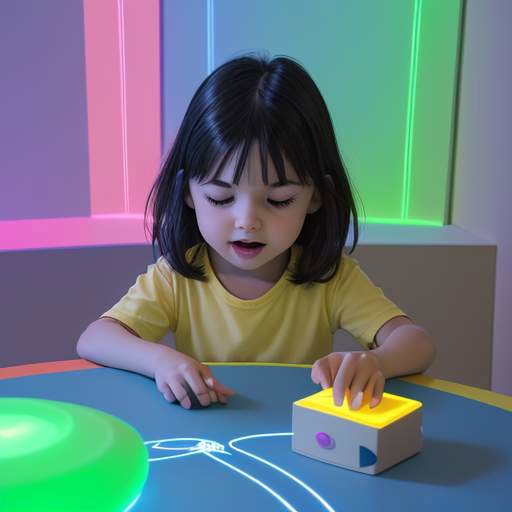
Imagine a child learning to count. A traditional method might use flashcards. An AI-powered system, however, might notice the child is highly engaged by physical movement. It would then dynamically shift the lesson to incorporate counting while jumping or stacking blocks, maximizing engagement and reinforcing the concept through the child’s preferred learning style. This adaptive learning capability ensures that every minute spent on intervention is maximally effective.
The Role of Wearables and Remote Monitoring
The integration of AI with wearable technology is perhaps the most exciting frontier. Wearable sensors—small, discreet devices worn by the child—can provide continuous, longitudinal data that is impossible to gather in a single clinic visit.
These devices can monitor things like sleep patterns, heart rate variability (which can correlate with stress or anxiety), gait analysis (for motor skill assessment), and even subtle changes in skin temperature or galvanic skin response. When combined with AI algorithms, this continuous stream of data paints a comprehensive, 24/7 picture of the child’s development.
For parents and caregivers, this means that developmental monitoring is no longer confined to the clinic hours. A parent can notice a change in their child’s gait pattern over several weeks, and the AI system can flag this subtle deviation, alerting the family and clinician to potential issues long before they become obvious to the naked eye. This shift empowers the entire family unit, turning parents into active, data-informed partners in the child’s development.
Ethical Considerations and the Human Element
While the technological advancements are breathtaking, it is crucial to approach AI in early learning support with a deep sense of ethical responsibility. AI is a tool, and like all powerful tools, it requires careful stewardship.
The primary concerns revolve around data privacy, algorithmic bias, and the risk of over-reliance.
Data Privacy: The data collected on young children is among the most sensitive personal information. Robust security protocols and strict adherence to privacy regulations (like HIPAA and GDPR) are non-negotiable. Parents must understand exactly what data is being collected, how it is being stored, and who has access to it.
Algorithmic Bias: AI models are only as good as the data they are trained on. If the training data disproportionately represents certain demographics (e.g., primarily white, middle-class, urban populations), the resulting AI model may perform poorly or even misdiagnose children from different cultural, socioeconomic, or ethnic backgrounds. Developers must actively work to ensure diverse, representative datasets to guarantee equitable outcomes for all children.
Maintaining the Human Connection: Most importantly, AI must remain a supportive assistant, not a replacement for human empathy. The warmth, intuition, and emotional connection provided by a skilled therapist, teacher, or parent are irreplaceable. The goal of AI is to provide the data and the diagnosis, allowing the human expert to focus their time and energy where it matters most: on compassionate, tailored interaction and building the crucial parent-child bond.

Conclusion: Preparing for the Intelligent Age of Learning
The integration of AI into early learning support represents a paradigm shift comparable to the invention of the standardized diagnostic test itself. We are moving toward an era of truly preventative and predictive care.
AI-powered tools are transforming the process by:
- Early Detection: Identifying developmental risks through subtle, quantifiable data markers.
- Precision Diagnosis: Providing objective, data-driven metrics for conditions like speech delay and cognitive challenges.
- Adaptive Intervention: Creating hyper-personalized learning paths that maximize engagement and efficacy.
- Continuous Monitoring: Offering 24/7 insights through wearable technology.
As these technologies mature, the focus must remain on ethical deployment, ensuring that AI serves to democratize access to high-quality care, regardless of geography or socioeconomic status. By embracing AI as a powerful co-pilot—a tool that augments human brilliance—we can ensure that every child receives the earliest, most precise, and most supportive intervention possible, giving them the best possible start in an increasingly complex world. The intelligent age of learning is here, and it promises a future where potential is recognized and nurtured from the very first moment.