
The space industry is undergoing a paradigm shift that goes far beyond simple transportation or communication relays. For decades, satellites were viewed primarily as passive pipes for data transmission, connecting ground stations to the internet backbone. However, a new wave of innovation suggests that the next frontier lies in active processing within orbit. Blue Origin has recently filed for datacenter satellites, signaling a bold move toward space-based AI compute tiers. This development comes amidst heightened regulatory scrutiny and FCC complaints involving SpaceX’s Starlink constellation. The implications are profound, touching on latency reduction, national security, and the very architecture of the global internet.

The Shift from Communication to Compute
Historically, the space race was defined by communication satellites that beamed television signals and voice data across continents. Companies like Iridium and OneWeb paved the way for low-earth orbit (LEO) connectivity, but their satellites were built to relay data, not to compute. They moved data from one point to another without processing it in space. This architecture introduces latency because data must travel all the way to a ground station before being processed by servers on Earth.
The rise of Artificial Intelligence has changed this equation. AI models require massive computational power, but training them is energy-intensive and slow. Inference, however, can be distributed. By moving compute capabilities into orbit, companies can reduce latency significantly for specific applications like autonomous vehicle navigation or high-frequency trading. Blue Origin’s filing suggests they intend to build these active processing nodes. This represents a fundamental architectural change where the satellite becomes not just a mirror for signals, but a brain for data.
Blue Origin’s Strategic Move and Technical Architecture
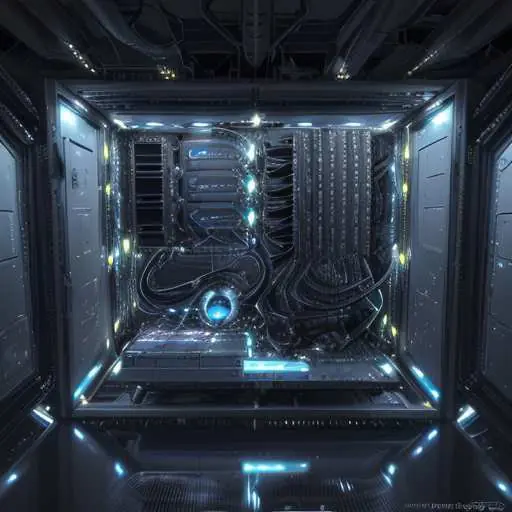
Blue Origin is leveraging its existing infrastructure to pivot into this new sector. The company has long focused on reusable rocketry with New Shepard and the New Glenn heavy-lift vehicle. Now, they are applying that vertical integration to orbital infrastructure. Their filing details a plan to deploy satellites equipped with ruggedized server racks capable of handling high-performance computing tasks in the harsh environment of space.
The technical challenges are immense. Cooling systems must function without gravity-assisted convection, requiring advanced liquid loops or sublimation cooling methods. Radiation hardening is also critical to protect sensitive electronics from cosmic rays that could corrupt data. Blue Origin’s approach involves integrating these systems into a modular design that can be launched on their own rockets or potentially shared with partners. This strategy aims to bypass the reliance on traditional launch providers, giving them more control over deployment schedules and costs.
The SpaceX FCC Context and Regulatory Friction
The timing of Blue Origin’s filing is not coincidental. It occurs against the backdrop of ongoing regulatory friction involving SpaceX. The Federal Communications Commission (FCC) has been grappling with complaints regarding Starlink’s spectrum usage and orbital debris concerns. SpaceX dominates the LEO market, but their density raises questions about interference and sustainability.
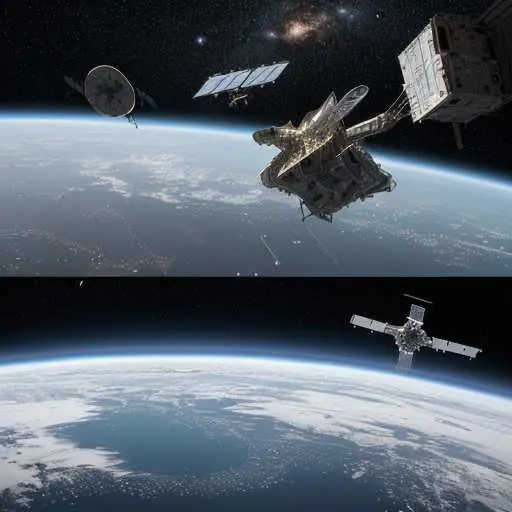
Blue Origin’s move can be seen as a strategic response to this landscape. By filing for their own datacenter satellites, they are positioning themselves as a viable alternative that offers different value propositions. While Starlink focuses on broadband internet access, Blue Origin is targeting the compute layer. This distinction is crucial because it avoids direct head-to-head competition in the consumer internet market while carving out a new niche in enterprise and industrial applications. The FCC must now evaluate whether these new satellites will interfere with existing networks or if they can coexist harmoniously within the crowded orbital environment.
Economic and Geopolitical Implications
The economic implications of space-based datacenters are staggering. Currently, cloud computing is centralized in massive data centers on Earth, often located in specific regions to optimize power grids and cooling. Moving this capability to space decentralizes the internet’s processing power. This could lead to a new economy where compute capacity is sold as a service from orbit.
Geopolitically, owning the next layer of the digital backbone is a matter of national security. Nations are increasingly viewing access to space as a strategic asset. If one country controls the majority of orbital compute, they hold significant leverage over global data flows. The US government has shown interest in maintaining leadership in this sector, potentially through partnerships with private companies like Blue Origin. This dynamic mirrors historical arms races but focused on information infrastructure rather than physical weaponry.

Future-Proofing the Digital Infrastructure
As we look toward the future, the convergence of AI and space infrastructure will define the next decade of technology. The ability to process data closer to its source reduces the load on terrestrial networks. This is particularly beneficial for remote regions where laying fiber optic cables is economically unfeasible. A satellite datacenter can provide both connectivity and processing power simultaneously.
However, challenges remain. Power generation in space is limited compared to Earth, requiring highly efficient solar arrays or potentially nuclear reactors. Waste heat management is also a critical engineering hurdle that must be solved before large-scale deployment. Despite these hurdles, the momentum is building. Blue Origin’s filing is just the beginning of a broader trend where private sector innovation drives the evolution of space infrastructure.

Conclusion
The filing by Blue Origin marks a pivotal moment in the history of satellite technology. It signals that the industry is ready to move beyond simple connectivity into active computation. While SpaceX faces regulatory challenges, competitors like Blue Origin are finding new ways to innovate within the same orbital environment. The race for space-based AI compute will likely shape the future of how we interact with digital services. As these technologies mature, they promise to make the internet faster, more resilient, and more distributed than ever before. The next chapter of the space age is being written today, one satellite at a time.



















Recent Comments