
The history of Artificial Intelligence has been a relentless march toward greater computational power. From the early days of expert systems running on mainframes to the massive data centers powering today’s large language models (LLMs), the cloud has been the undisputed central nervous system of AI. It promised limitless scale, unparalleled processing power, and the ability to train models on petabytes of data. For years, the cloud was the ultimate destination for intelligence.
However, as AI applications moved from academic theory into critical, real-world infrastructure—from autonomous vehicles navigating unpredictable streets to surgical robots performing delicate procedures—a fundamental limitation became glaringly obvious: the network.
The cloud, by its very nature, introduces latency. When a self-driving car needs to make a split-second decision, or a manufacturing robot needs to identify a microscopic defect, waiting for data to travel to a distant data center, be processed, and return is not just inconvenient—it is dangerous.
This realization has sparked the most profound paradigm shift since the rise of cloud computing: the decentralization of intelligence. The next frontier of AI is not simply more cloud, but smarter distribution. It is the powerful, synergistic convergence of Edge Computing and Embodied Robotics.
This convergence is fundamentally redefining what "intelligence" means in the modern technological landscape. It means moving processing power, decision-making, and physical action out of the centralized data center and directly into the environment itself—to the edge.
The Imperative Shift: Why the Cloud Edge is Necessary
To understand the revolution, we must first understand the limitations of the current model. While the cloud remains indispensable for training massive foundation models (requiring immense GPU clusters), it is inherently ill-suited for inference in time-critical scenarios.
Latency, the delay between a request and a response, is the primary enemy of real-time AI. In a traditional cloud setup, the data must follow this path: Sensor → Network → Cloud → Process → Network → Actuator. Even in the best network conditions, this round-trip time (RTT) introduces unacceptable delays.
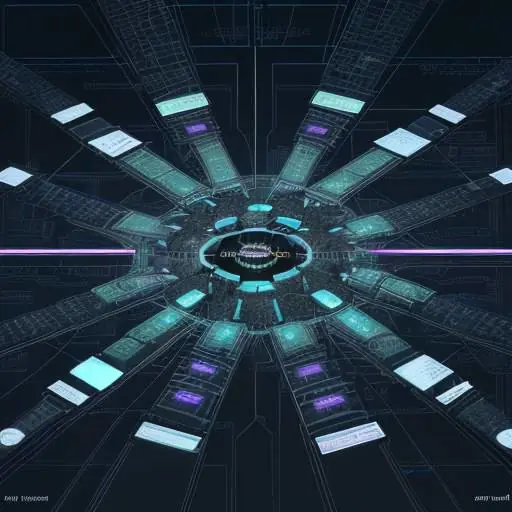
Edge computing solves this by bringing the processing power closer to the source of the data—the "edge." An edge device (like a specialized gateway, a smart camera, or the onboard computer of a robot) processes data locally. It filters, analyzes, and makes preliminary decisions before sending only the necessary, summarized, or actionable data back to the cloud.
This shift is not merely about speed; it is about resilience and bandwidth management. By processing locally, edge systems can operate autonomously when connectivity is intermittent or nonexistent, drastically reducing the strain on global network infrastructure. Edge AI allows intelligence to be situated.
Embodied Robotics: Giving AI a Body
If Edge Computing provides the localized brain, Embodied Robotics provides the physical body.
For decades, AI was largely confined to the digital realm—it was a sophisticated algorithm running on a screen. Embodied robotics changes the equation by merging the computational power of the edge with the physical dexterity of machines.
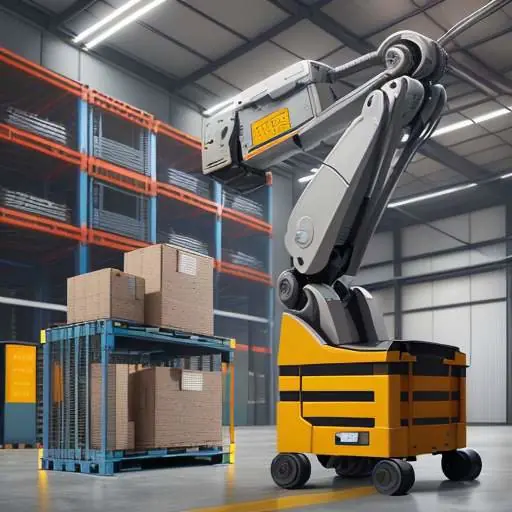
An embodied robot is not just a wheeled platform; it is a complex, multi-sensor system designed to perceive, reason, and act within a dynamic, unstructured physical environment. The robot’s body—its actuators, grippers, and locomotion systems—are integral parts of its intelligence. The ability to interact with the world (to grasp, to walk, to manipulate) generates a massive, rich dataset of physical interaction that is impossible to replicate purely through simulation.
This interaction is crucial. A robot doesn’t just process an image of a box; it calculates the optimal force and angle required to lift that specific box without damaging it. This requires real-time, continuous feedback loops—the very definition of edge processing.
The integration of advanced sensors (Lidar, high-resolution cameras, tactile sensors) with powerful, low-latency onboard processors allows robots to achieve unprecedented levels of autonomy. They move beyond simple, repetitive tasks and begin to engage in generalized task completion, adapting to unforeseen variables like spilled liquid, shifting obstacles, or unexpected human interaction.
The Synergy: Edge AI Meets Embodied Intelligence
The true revolution occurs at the intersection of these two fields. When Edge AI powers Embodied Robotics, the result is a decentralized, highly adaptable, and physically capable AI system. This synergy creates a closed-loop intelligence that is far more robust than any purely cloud-dependent system.
Consider the workflow:
- Perception (Edge): A robot’s local computer processes raw sensor data (e.g., identifying a misplaced tool in a dimly lit warehouse).
- Reasoning (Edge): The onboard AI model, optimized for low power consumption, determines the optimal path and grasping strategy based on real-time obstacle mapping.
- Action (Body): The robot’s actuators execute the plan with immediate feedback control.
- Optimization (Cloud/Edge): Only the successful action sequence and any novel environmental data (e.g., a new type of spill) are uploaded to the cloud for model refinement, while the robot continues operating autonomously at the edge.
This continuous, rapid cycle of perception-reasoning-action is the hallmark of next-generation AI. It transforms AI from a powerful analysis tool into an active, physical participant in the world.
Transformative Use Cases: Industries on the Verge of Disruption
The potential impact of this convergence is not theoretical; it is rapidly manifesting across critical global industries.
1. Healthcare and Medicine
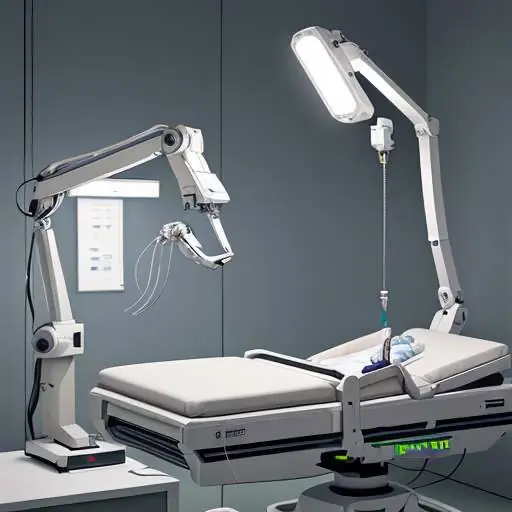
In surgery, robotic systems guided by edge AI can provide real-time augmented reality overlays, highlighting nerves or critical structures that might be obscured by tissue. These systems require zero latency and must function flawlessly, making them perfect candidates for localized, edge processing. Furthermore, autonomous robots are being deployed for sterilization and sample transport within hospital wings, operating independently of central network stability.
2. Manufacturing and Industrial IoT (IIoT)
Smart factories are adopting edge AI for predictive maintenance. Instead of waiting for a machine to fail, edge sensors monitor vibrations, temperature, and acoustic signatures in real-time. The localized AI detects minute anomalies, alerts human operators instantly, and can even trigger preemptive shut-downs, maximizing uptime and safety.
3. Autonomous Vehicles and Smart Cities
Autonomous vehicles are perhaps the most visible example. They cannot rely on a cloud connection to process a sudden pedestrian jaywalking or a construction worker waving a flag. All critical decision-making—perception, path planning, and emergency braking—must happen on powerful, localized edge computers within the vehicle itself. In smart cities, swarms of interconnected, edge-enabled robots can monitor infrastructure, manage traffic flow, and assist emergency services simultaneously, creating a truly responsive urban ecosystem.
4. Agriculture (AgriTech)
Robots equipped with edge AI are transforming farming. Instead of blanket spraying pesticides, these robots use localized computer vision to identify individual weeds or diseased plants, applying treatment only where necessary. This hyper-localized intervention drastically reduces chemical use, saves costs, and promotes sustainable farming practices.
The Challenges Ahead: Power, Standardization, and Ethics
While the promise is immense, the transition to a decentralized AI world is fraught with significant technical and ethical hurdles.
1. Computational Efficiency and Power Draw
The greatest physical challenge is power. Running complex, large-scale AI models (like those used in LLMs) requires enormous energy. Fitting this power into a small, rugged, battery-operated robot or a remote edge gateway is a monumental engineering feat. Researchers are intensely focused on developing specialized hardware accelerators (like NPUs and TPUs) that can deliver high computational density while consuming minimal power.
2. Data Heterogeneity and Standardization
The edge operates in wildly varied environments—from the sterile controlled climate of a hospital to the chaotic dust of a construction site. Developing AI models that are robust enough to handle this immense heterogeneity, while also adhering to standardized communication protocols, remains a massive undertaking.
3. Safety, Security, and Ethical AI
When intelligence is distributed, so are the risks. A decentralized system must be resilient to physical tampering, cyberattacks, and data corruption. Furthermore, the ethical implications are profound. Who is responsible when an autonomous robot makes a mistake? Establishing clear lines of accountability, ensuring data privacy at the point of capture, and developing "explainable AI" (XAI) that can justify its decisions are paramount before full adoption.
Conclusion: The Era of Situated Intelligence
The trajectory of AI is clear: it is moving from the abstract, centralized data center to the concrete, distributed physical world.
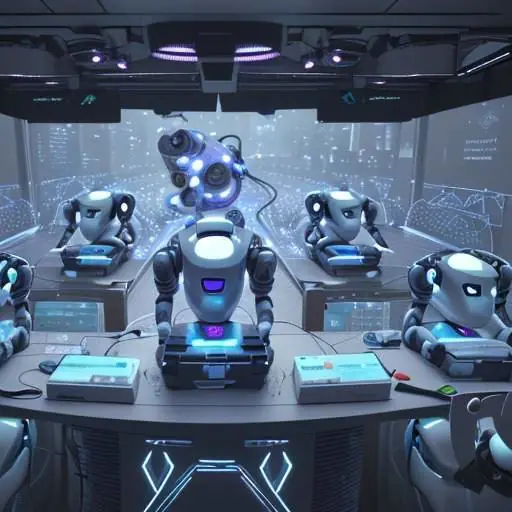
Edge computing provides the necessary infrastructure—the localized brainpower—while embodied robotics provides the physical manifestation—the hands and feet. Together, they are creating a system of "situated intelligence," where AI is not just an analysis tool, but an active, responsive agent.
We are moving beyond the concept of AI as a service (AIaaS) provided by a single cloud provider. We are entering the era of intelligence everywhere—a highly resilient, distributed network of processing power embedded into the fabric of our physical infrastructure.
The next decade will be defined by the race to miniaturize, optimize, and democratize this edge-to-body intelligence. For industries ranging from medicine to logistics, this convergence isn’t just an upgrade; it is the fundamental requirement for the next generation of human-machine interaction. The cloud is still powerful, but the future of true, real-time intelligence belongs to the edge.



















Recent Comments