
The educational landscape has always been a dynamic ecosystem, constantly shaped by technological revolutions. From the printing press democratizing knowledge to the internet connecting classrooms globally, learning has always evolved alongside human ingenuity. Today, we stand at the precipice of the next massive shift: the integration of Artificial Intelligence (AI).
When the conversation turns to AI in education, the immediate reaction for many is often a mix of excitement and apprehension. Will AI take over the classroom? Will the personalized guidance of a dedicated teacher become obsolete? These are natural fears, rooted in the profound value we place on human mentorship.
However, to frame AI as a replacement for educators is a fundamental misunderstanding of the technology’s potential. AI is not a substitute for the human element—the empathy, the nuanced judgment, the inspiration, and the ability to read a room that no algorithm can replicate. Instead, AI is a powerful, tireless, and highly sophisticated co-pilot for teachers and students alike. It is the ultimate administrative assistant, the tireless tutor, and the data analyst that allows human educators to do what they do best: teach, mentor, and inspire.
This comprehensive guide explores how AI is reshaping the classroom, detailing specific ways technology will support, amplify, and enhance the invaluable role of the human teacher, leading us toward an era of hyper-personalized, profoundly effective learning.
The End of One-Size-Fits-All Learning
For decades, the traditional classroom model, while effective for its time, struggled with inherent inefficiencies. Teachers, brilliant and dedicated as they are, are tasked with managing classrooms of diverse learners—some who grasp concepts instantly, some who need repetitive reinforcement, and many who learn best through kinesthetic or artistic means. The reality is that a single lecture must cater to a spectrum of needs, often leading to a "middle ground" experience that leaves both the struggling student and the gifted student feeling underserved.
AI fundamentally changes this equation by enabling true, scalable personalization.
AI-powered learning management systems (LMS) and adaptive tutoring platforms do not simply grade quizzes; they analyze how a student learns. They track patterns of engagement, identifying whether a student struggles with abstract concepts, procedural memory, or perhaps even time management. If a student consistently fails a math problem, the AI doesn’t just mark it wrong; it analyzes the preceding concepts and determines if the foundational gap lies in fractions, geometry, or basic arithmetic, and then generates micro-lessons specifically designed to fill that precise knowledge void.
This capability frees the teacher from the Sisyphean task of diagnosing every single student’s knowledge gap. Instead, the teacher becomes the architect of the learning experience, using AI-generated insights to guide small-group discussions, targeted interventions, and passion projects. The teacher moves from being a primary content deliverer to a high-level facilitator, coach, and emotional guide.
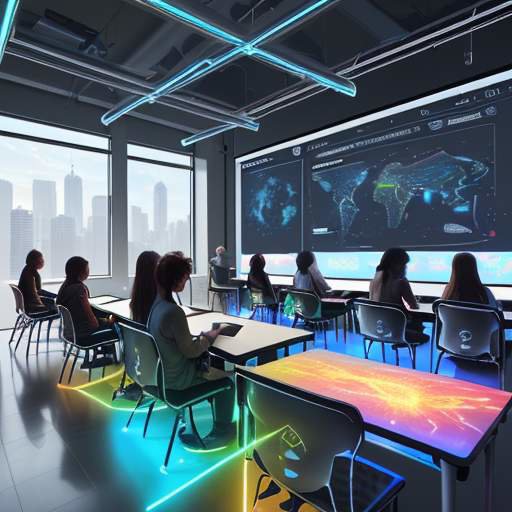
AI as the Ultimate Grading and Administrative Assistant
One of the most significant, yet least discussed, benefits of AI is the dramatic reduction of administrative burden on teachers. Grading, lesson planning, curriculum alignment, and parent communication consume an enormous amount of time—time that is often cited as the primary cause of teacher burnout.
AI is rapidly becoming the most powerful administrative assistant ever conceived.
1. Automated Assessment and Feedback: While AI can grade multiple-choice questions instantly, modern generative AI models are advancing to grade complex, open-ended assignments, including essays, coding projects, and even scientific lab reports. Crucially, the feedback provided by AI is not just a score; it is detailed, actionable, and immediate. It can point out structural weaknesses in an essay, suggest improvements to a scientific hypothesis, or identify inefficient code blocks, allowing the student to iterate and improve before the final deadline.
2. Curriculum Generation and Differentiation: Teachers can input a core learning objective (e.g., "Explain the causes of the French Revolution") and the AI can instantly generate five different versions of the lesson plan: one for visual learners, one for auditory learners, one that requires hands-on simulation, and so on. It can also source relevant, up-to-date primary sources, video clips, and interactive quizzes, saving hours of manual resource curation.
3. Parent and Stakeholder Communication: AI tools can synthesize complex student data—attendance records, test scores, behavioral notes, and engagement metrics—into concise, easily digestible reports for parents. Instead of sending a stack of papers, the teacher can generate a single, narrative summary: "Liam has shown exceptional growth in critical thinking this quarter, particularly when applying historical context to modern events." This makes communication targeted, professional, and less overwhelming for all parties involved.
By offloading the repetitive, time-intensive, and data-heavy tasks, AI doesn’t steal the teacher’s job; it gives the teacher back the most valuable commodity: time. Time to connect, time to mentor, and time to teach.
AI-Powered Mentorship: Beyond the Textbook
The true magic of AI lies in its ability to enhance the mentorship relationship—the core of the educational experience. Mentorship is about guiding potential, identifying strengths, and fostering resilience. AI helps teachers do this by providing unprecedented levels of insight into student emotional and academic profiles.
Consider the concept of "emotional intelligence" in the classroom. A human teacher is excellent at noticing a student who seems withdrawn or suddenly disengaged. AI amplifies this ability. By analyzing patterns of student interaction with learning materials (e.g., repeatedly revisiting a single paragraph, pausing excessively before answering a question, or showing a sudden dip in participation), AI can flag potential issues—not just academic ones, but indicators of anxiety, frustration, or undiagnosed learning differences.
This data doesn’t tell the teacher what to do, but where to look. It provides a highly accurate diagnostic map, allowing the teacher to intervene with empathy and precision.
Furthermore, AI can facilitate career path exploration in ways that were impossible before. A student interested in sustainable engineering might interact with an AI module that simulates the life cycle of a solar panel, linking physics principles to economic models and policy decisions. The AI doesn’t just provide facts; it creates complex, multi-disciplinary simulations that allow students to fail safely, learn from their mistakes, and test their passions in a virtual sandbox.
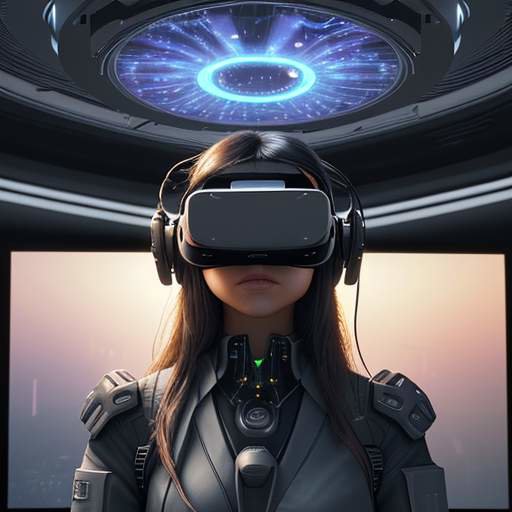
Addressing Equity and Access: The Global Classroom
One of the most profound societal impacts of AI in education is its potential to dramatically reduce the global achievement gap. Historically, the quality of education was heavily dependent on geographical location and socioeconomic status. The best resources, the most experienced teachers, and the most advanced curricula were concentrated in wealthy urban centers.
AI is inherently decentralized. A high-quality, adaptive learning module developed in Silicon Valley can be delivered via a simple tablet or low-bandwidth connection to a remote village in Sub-Saharan Africa or rural India.
This democratization of knowledge means that world-class, personalized tutoring is no longer a luxury reserved for the elite. AI tutors can provide immediate, patient, and expert instruction in subjects ranging from advanced calculus to local language preservation, overcoming the physical scarcity of highly qualified human instructors.
For teachers in underserved communities, AI serves as a force multiplier. It provides access to the latest pedagogical research, up-to-the-minute subject matter expertise, and best-practice models, effectively giving them resources that might otherwise require expensive professional development trips or specialized university access.
The Evolving Role of the Teacher: From Sage to Navigator
If AI handles the data, the curriculum mapping, and the initial tutoring, what is left for the human teacher?
The answer is the irreplaceable art of human connection and critical thinking cultivation. The role of the teacher is evolving from being the primary source of information (the "sage on the stage") to becoming the curator of knowledge, the facilitator of critical thought, and the emotional anchor (the "guide on the side").
The modern teacher must master skills that AI cannot replicate:
- Emotional Intelligence: Identifying when a student is struggling not because of a lack of knowledge, but because of stress, anxiety, or home life issues.
- Ethical Guidance: Leading discussions on the moral implications of new technologies, such as AI bias, data privacy, and genetic engineering.
- Inspiration: Providing the "Aha!" moment—the anecdote, the historical parallel, or the passionate discussion that ignites a lifelong curiosity.
- Complex Problem Framing: Teaching students how to ask better questions, rather than just providing the answers.
The teacher becomes the chief mentor, the chief motivator, and the chief ethical guide—a role that is profoundly human.

Conclusion: A Partnership for Progress
The integration of AI into education is not a threat to the teaching profession; it is a massive opportunity for professional liberation. It promises to lift the burden of repetitive tasks, allowing educators to dedicate their time and energy to the uniquely human aspects of their craft: nurturing curiosity, building character, and inspiring the next generation of thinkers and leaders.
The future classroom will not be a battleground between human wisdom and artificial intelligence. It will be a vibrant, synergistic partnership. AI will handle the data processing and the personalized drills, providing the scaffolding. The teacher will provide the emotional scaffolding, the ethical framework, and the vital spark of human creativity.
By embracing AI as a powerful tool, we do not diminish the value of the teacher; we elevate it. We allow the teacher to step into their most powerful role: that of the master mentor, guiding students not just through a curriculum, but through the complex, exciting, and profoundly human journey of becoming. The best learning experience of the future will be one where technology empowers the heart of the classroom—the teacher.


















Recent Comments