
Quantum physics is often described as the most counterintuitive branch of science, yet it underpins everything from the glow of your smartphone screen to the possibility of ultra‑fast, energy‑efficient computers. In this post we’ll journey through the core concepts that make quantum mechanics both baffling and beautiful. We’ll explore how particles can exist in multiple states at once, how they can instantaneously influence each other across vast distances, and how these strange properties are being harnessed to build the next generation of technology. By the end, you’ll have a clearer picture of the quantum world and why it matters for our everyday lives.
1. The Quantum Realm – Basic Principles
At the heart of quantum theory lies the idea that energy, matter, and information are quantized. Unlike classical physics, where objects have definite positions and velocities, quantum objects are described by a wavefunction—a mathematical entity that encodes probabilities. This wavefunction evolves deterministically according to the Schrödinger equation, but when we measure a system, the wavefunction “collapses” to a single outcome. This collapse is inherently probabilistic. A related but separate idea is the famous “uncertainty principle”: because position and momentum are complementary properties of a quantum state, they cannot both be sharply defined at the same time — a limit built into nature, not just into our measuring devices.
The quantization of energy is perhaps the most familiar quantum effect. Electrons in an atom occupy discrete energy levels; they can only absorb or emit photons that match the energy difference between these levels. This principle explains the colorful spectra of gases and the operation of lasers. It also underlies the stability of matter: without quantized energy states, electrons would spiral into the nucleus, collapsing atoms.

2. Wave‑Particle Duality and Superposition
One of the most striking features of quantum mechanics is wave‑particle duality: particles such as electrons and photons exhibit both wave‑like and particle‑like behavior depending on the experimental context. The classic double‑slit experiment demonstrates this duality vividly. When electrons pass through two slits, they produce an interference pattern characteristic of waves. Yet each electron is detected as a discrete dot on the screen, confirming its particle nature.
Superposition takes wave‑particle duality a step further. A quantum system can exist in a linear combination of multiple states simultaneously. For example, an electron in a hydrogen atom can be in a superposition of the 1s and 2s orbitals. Only when we measure the electron’s energy do we find it in one definite state. The superposition principle is the cornerstone of quantum computing, where qubits can represent both 0 and 1 at the same time, enabling massive parallelism.
3. Quantum Entanglement and Nonlocality
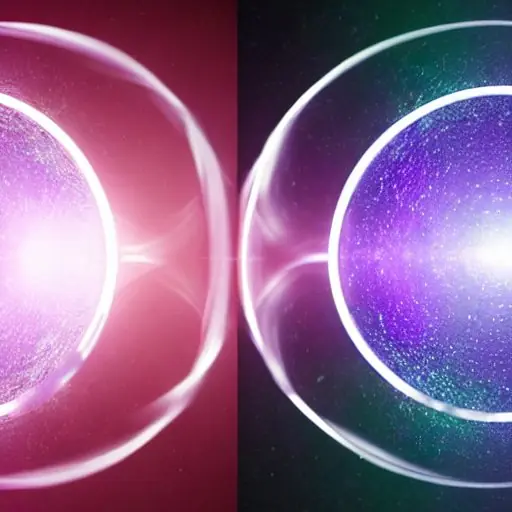
Entanglement is perhaps the most perplexing quantum phenomenon. When two particles interact, their quantum states become linked such that measurements on them show correlations that no classical explanation can reproduce, regardless of the distance separating them. These correlations appear instantly, but they cannot be used to send a message faster than light. This “spooky action at a distance,” as Einstein famously called it, has been experimentally verified in countless tests, including Bell’s inequality experiments.
Entanglement is not just a philosophical curiosity; it is a practical resource. Quantum key distribution protocols use the same principles to create cryptographic keys whose interception can be detected: BB84 sends single photons in randomly chosen polarization states, while protocols such as E91 use entangled photon pairs. In quantum teleportation, the state of a qubit can be transmitted from one location to another using entanglement and classical communication, a process that has been demonstrated over fiber networks spanning hundreds of kilometers.
4. Quantum Computing – Harnessing Superposition
Quantum computers exploit superposition and entanglement to perform certain calculations exponentially faster than classical machines. A quantum bit, or qubit, can exist in a superposition of 0 and 1, and multiple qubits can be entangled to form a high‑dimensional Hilbert space. Algorithms such as Shor’s factorization algorithm and Grover’s search algorithm demonstrate the potential speedups for cryptography and database search, respectively.
Current quantum hardware comes in various flavors: superconducting circuits, trapped ions, neutral atoms and photonic systems, while topological qubits remain at an early experimental stage. Each platform faces unique challenges—decoherence, error rates, and scalability—but progress is rapid. Companies like IBM, Google, and Rigetti are already offering cloud access to quantum processors, and research into quantum error correction is paving the way toward fault‑tolerant machines.

5. Quantum Field Theory – The Vacuum as a Sea
While non‑relativistic quantum mechanics treats particles as pointlike entities, quantum field theory (QFT) elevates fields to the fundamental objects. In QFT, particles are excitations of underlying fields that permeate all of space. The vacuum state is not empty but a seething sea of virtual particles that pop in and out of existence, a phenomenon known as vacuum fluctuations.
These fluctuations have measurable consequences. The Casimir effect, where two uncharged plates in a vacuum experience an attractive force due to altered vacuum modes, is a direct manifestation of quantum fields. Similarly, the Lamb shift—tiny energy level shifts in hydrogen—arises from interactions with vacuum fluctuations. QFT also provides the framework for the Standard Model of particle physics, which describes the electromagnetic, weak and strong interactions — unifying the first two into the electroweak force — while gravity remains outside it.

Conclusion
Quantum mechanics may defy our everyday intuition, but its principles are the bedrock of modern technology and the key to future innovations. From the stability of atoms to the promise of quantum computers, the strange behavior of particles at the smallest scales shapes the macroscopic world we inhabit. As research pushes the boundaries—whether by entangling more qubits, probing vacuum fluctuations, or developing new quantum sensors—we are steadily turning the abstract mathematics of quantum theory into tangible tools that could revolutionize computing, communication, and our understanding of reality itself. The quantum frontier is vast, and the journey has only just begun.



















Recent Comments