
The digital landscape has undergone a seismic shift over the last decade. The traditional "castle-and-moat" security model—where anything inside the corporate network was trusted and anything outside was viewed with suspicion—has collapsed under the weight of remote work, mobile device proliferation, and the rapid adoption of multi-cloud environments. In its place, Zero Trust (ZT) has emerged as the gold standard for modern cybersecurity. However, even Zero Trust is evolving. As cyber threats become more sophisticated, utilizing automated bots and advanced persistent threats (APTs), static Zero Trust policies are no longer sufficient. The next frontier in securing the cloud lies at the intersection of Artificial Intelligence (AI) and Knowledge Graphs. Together, these technologies are transforming Zero Trust from a reactive set of rules into a proactive, context-aware, and intelligent ecosystem.
The Limitations of Static Zero Trust Architectures
To understand where we are going, we must first examine the limitations of where we currently are. Traditional Zero Trust models often rely on "if-then" logic: If a user provides the correct password and an MFA token, then they are granted access to a specific resource for a set period. While this is significantly safer than the old perimeter model, it remains somewhat binary. It struggles to account for the nuances of behavior. For example, if a valid user logs in from a known device but suddenly begins downloading massive amounts of data at 3:00 AM from an unusual IP address, a static policy might still grant access because the "credentials" are correct.
In large-scale cloud environments, the sheer volume of data points—IP addresses, device IDs, geolocation data, and application logs—becomes overwhelming for human administrators to manage manually. This leads to "policy bloat," where rules become so complex and numerous that they create security gaps or hinder productivity. To solve this, the industry is moving toward dynamic policies that can adapt in real-time. This transition requires a system that doesn’t just check a badge at the door but constantly monitors the behavior of the person inside the building.
The Role of Artificial Intelligence in Behavioral Analytics
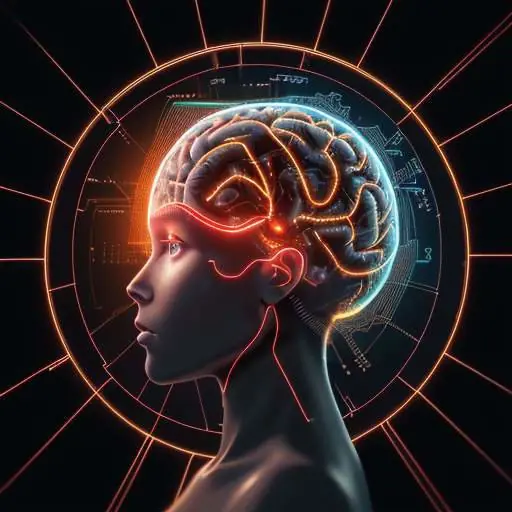
Artificial Intelligence is the engine that powers the "dynamic" part of modern Zero Trust. By leveraging Machine Learning (ML) and Deep Learning, security systems can move beyond simple rule-based checks to behavioral analytics. AI models are trained on massive datasets of "normal" user behavior to establish a baseline. When a user’s actions deviate from this baseline—even if they have the correct credentials—the AI can trigger an immediate challenge, such as an additional MFA prompt or a temporary lockout.
One of the most significant contributions of AI in this space is the reduction of "false positives." Traditional security systems often flag harmless activities as threats, leading to "alert fatigue" for security operations center (SOC) analysts. AI can correlate multiple low-level signals that, individually, might not trigger an alarm but, collectively, indicate a sophisticated attack. For instance, a slight change in typing cadence combined with a minor deviation in navigation patterns across a cloud application can be flagged as a potential hijacked session. By processing these nuances at scale, AI allows Zero Trust to become more surgical, protecting the network without hindering the user experience.
Knowledge Graphs: Mapping the Web of Relationships
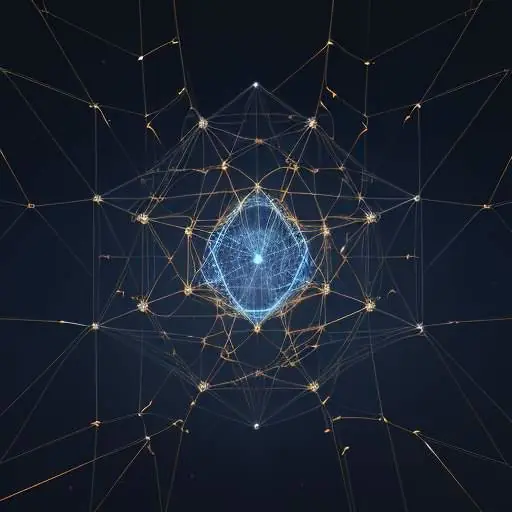
While AI provides the "brain" to analyze behavior, Knowledge Graphs provide the "map." In a typical cloud environment, data is often siloed. The identity management system knows who the user is; the asset management system knows what device they are using; the network logs know which IP they are coming from. These pieces of information are often disconnected. A Knowledge Graph solves this by creating a multi-dimensional map of entities and their relationships.
In a Knowledge Graph, every entity—a user, a laptop, a specific database, a geographic location, or a software license—is a "node." The "edges" between these nodes represent the relationships. For example, a Knowledge Graph doesn’t just know that "User A" is logged into "Server B." It knows that "User A" belongs to the "Accounting Department," is using a "Company-Issued MacBook," which is currently located in "Chicago," and is attempting to access a "Payroll Database" that typically only requires access during business hours. By mapping these relationships, the system gains a holistic view of the environment. This interconnectedness allows the security system to understand context instantly, making it much harder for an attacker to move laterally through a network because their "path" wouldn’t align with the established graph of normal relationships.
The Synergy: Context-Aware Security through AI and Graphs
The true evolution of Zero Trust occurs when AI and Knowledge Graphs are integrated. This combination creates what is known as "Context-Aware Security." When an access request hits the gateway, the system doesn’t just check a database; it queries the Knowledge Graph to understand the context of the request. Simultaneously, the AI evaluates the risk score of that specific transaction based on real-time behavior.
This synergy allows for "Just-In-Time" (JIT) and "Just-Enough-Access" (JEA) protocols to be enforced automatically. For example, if a user’s risk score increases—perhaps because they are accessing a sensitive file from an unusual location—the system can dynamically shrink the scope of their permissions. Instead of a full lockout, the user might only be allowed to view the document but not download or print it. This level of granularity is only possible when the system has a deep understanding of the relationship between the user and the data (provided by the Knowledge Graph) and the ability to calculate risk in real-time (provided by AI). This synergy effectively eliminates the "all-or-nothing" approach of traditional security, creating a fluid, responsive perimeter that adapts to the threat landscape as it evolves.
Implications for Modern Cloud Infrastructure
As organizations migrate to multi-cloud and hybrid-cloud environments, the complexity of managing security grows exponentially. Different cloud providers (AWS, Azure, Google Cloud) have different logging formats and identity protocols. A Knowledge Graph acts as a unifying layer, abstracting these differences into a single, coherent view of the organization’s digital footprint. It allows security teams to see "lateral movement" across different cloud environments—a major challenge in modern cyber defense.
Furthermore, this evolution enables more effective micro-segmentation. Instead of segmenting a network based on physical location or IP range (which are fluid in the cloud), organizations can segment based on identity and intent. By using AI to monitor these segments, the system can automatically isolate compromised workloads before they can infect the rest of the infrastructure. This "self-healing" aspect of the network is the ultimate goal of modern Zero Trust. It moves the burden of constant monitoring from human operators to automated systems that can react at machine speed, which is essential when defending against automated botnets and rapid-fire exploits.
Conclusion: The Future of Proactive Defense
The evolution of Zero Trust is a journey from static rules to dynamic intelligence. By integrating Artificial Intelligence and Knowledge Graphs, organizations are moving away from a "check-the-gate" mentality toward a continuous, context-aware verification process. AI provides the ability to detect subtle anomalies and calculate risk in real-time, while Knowledge Graphs provide the deep, relational context required to understand those anomalies within the broader scope of the organization’s operations.
In the era of cloud computing, where the perimeter is non-existent and the threat landscape is constantly shifting, this fusion represents the most robust defense available. It creates a resilient architecture where security is not a barrier to be bypassed, but an intelligent layer that understands the nuances of human behavior and the complexities of digital relationships. As we move forward, the organizations that successfully integrate these technologies will not only be more secure; they will be more agile, allowing their employees to work safely in an increasingly complex and interconnected world.



















Recent Comments