The Gulf Cooperation Council (GCC) nations have long positioned themselves as the technological hubs of the Middle East, driven by ambitious visions to diversify their economies beyond oil. Countries like the United Arab Emirates, Saudi Arabia, and Qatar have poured billions into building world-class datacentre infrastructure, aiming to become global leaders in artificial intelligence and cloud computing. However, the global landscape is shifting beneath their feet. Rising geopolitical tensions, supply chain disruptions, and the threat of cyber warfare are forcing these nations to reconsider their investment strategies. The era of relying solely on foreign hyperscalers is ending, replaced by a urgent push for sovereign AI and localized data processing. This article explores how geopolitical instability is fundamentally reshaping datacentre investments and driving the adoption of sovereign AI strategies across the Gulf region.
The Current Landscape of Gulf Data Infrastructure
The Gulf region currently hosts some of the most advanced datacentre clusters in the world. Major initiatives like NEOM in Saudi Arabia and the Masdar City projects in the UAE are designed to house massive computing power. These facilities are often built in partnership with global technology giants, relying heavily on imported hardware and international cloud services. While this approach offered rapid scalability, it introduced significant vulnerabilities. The region is increasingly aware that relying on external supply chains for critical infrastructure can be a liability during times of international conflict.

The current landscape is characterized by a mix of public-private partnerships and state-led initiatives. Governments are providing land, water, and energy subsidies to attract investment. However, the narrative is changing. Investors are now looking for security guarantees alongside financial incentives. The sheer scale of these investments, often exceeding billions of dollars, makes the region a target for disruption. Consequently, the focus is shifting from pure capacity building to security-first infrastructure. This means that future projects will require stricter compliance with national security protocols and potentially localized manufacturing of server components to reduce import dependency.
Geopolitical Threat Vectors and Supply Chain Risks
Geopolitical instability is not merely a background concern; it is a direct threat vector for digital infrastructure. The Middle East is a crossroads for global trade, but it is also a region prone to conflict. If a major power conflict were to disrupt shipping lanes or border stability, the supply of semiconductor chips and cooling equipment could halt operations. Furthermore, cyber warfare has become a primary tool of statecraft. A sophisticated cyberattack on a major datacentre could cripple national financial systems or government communications.
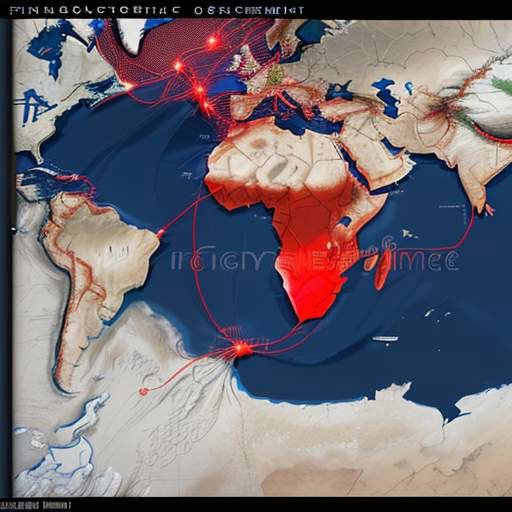
This reality is forcing Gulf nations to diversify their hardware suppliers. They are no longer willing to rely exclusively on a single vendor for their critical computing needs. Instead, they are seeking partners who can guarantee supply continuity even during geopolitical crises. This involves a strategic pivot towards multi-vendor environments and the development of domestic capabilities to repair and maintain hardware. The risk of data exfiltration is also paramount. If sensitive government data is stored on servers located in jurisdictions with conflicting laws, the risk of unauthorized access increases. This has led to a stricter interpretation of data residency laws, requiring sensitive data to remain within national borders.
Sovereign AI as a Strategic Imperative
Sovereign AI refers to the development and deployment of artificial intelligence systems that operate independently of foreign control or dependency. For the Gulf states, this is not just a technical preference but a national security imperative. Sovereign AI ensures that critical decision-making algorithms remain under national jurisdiction. This includes everything from financial fraud detection to public safety monitoring. By building sovereign AI, Gulf nations can protect their intellectual property and prevent foreign entities from influencing their internal policies through algorithmic manipulation.

Investing in sovereign AI requires significant R&D investment and local talent development. Gulf universities and research institutes are collaborating with local tech firms to train engineers capable of maintaining these systems. The goal is to create a self-sustaining ecosystem where AI models are trained on local data and deployed on local hardware. This reduces the latency issues associated with cloud connections and ensures data privacy. Furthermore, sovereign AI allows for customization to local cultural and legal contexts. Western models may not align with local values or regulations. By controlling the stack, Gulf nations can ensure their AI tools serve their specific societal goals without external interference.
Investment Shifts and Supply Chain Resilience
The investment landscape is undergoing a transformation. Previously, investors prioritized speed and cost-efficiency. Now, resilience is the primary metric. This shift is evident in the types of contracts being signed. Governments are demanding longer-term agreements that include clauses for supply chain transparency. Investors are also looking at on-site manufacturing capabilities. Instead of importing every component, some projects are exploring the assembly of servers within the region. This creates jobs and reduces the carbon footprint associated with shipping heavy hardware across oceans.
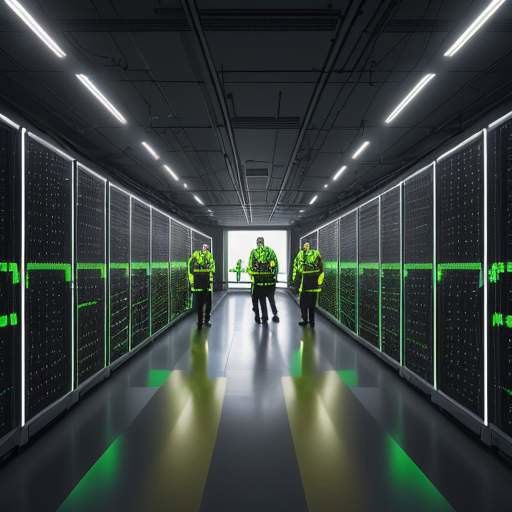
The financial models for these projects are also changing. Public funding is becoming more prevalent to subsidize the higher costs of secure infrastructure. Private investors are willing to pay a premium for security guarantees. This creates a new market segment focused on "secure-by-design" datacentres. These facilities are built with physical security layers that match the digital security layers. They are often located in hardened facilities with redundant power and cooling systems that can withstand extreme weather or physical threats. The investment strategy is moving from volume to value, prioritizing the quality and security of the infrastructure over the sheer number of racks deployed.
Energy Security and Stability in a Volatile World
Energy security is the backbone of any datacentre operation. The Gulf region is blessed with abundant solar and wind resources, making it an ideal location for green computing. However, the stability of the energy grid is crucial. Geopolitical instability can disrupt energy markets, leading to price volatility or supply shortages. Gulf nations are investing heavily in domestic energy production to mitigate this risk. This includes building massive solar farms directly adjacent to datacentre campuses.
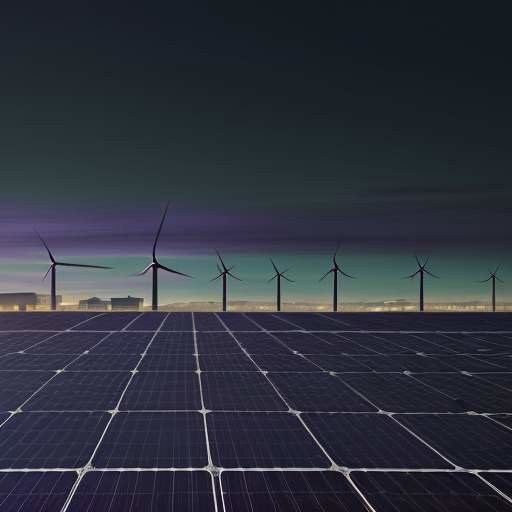
This integration of renewable energy with datacentre operations reduces reliance on imported fuel and insulates the operation from global energy price shocks. It also aligns with the region’s sustainability goals, such as Saudi Arabia’s Vision 2030. By generating their own power, Gulf nations can maintain control over their digital economy even if global energy markets become unstable. This self-sufficiency is a key component of their broader strategy for digital sovereignty. It ensures that their digital ambitions are not held hostage by external energy suppliers.
Conclusion
The geopolitical instability reshaping the Gulf region is not a temporary setback but a permanent structural change. It is driving a fundamental rethinking of how datacentres are built, operated, and secured. The Gulf nations are moving away from a model of dependency towards one of sovereignty and resilience. This involves investing in local talent, developing domestic AI capabilities, and securing energy and supply chains. While the costs are higher, the security benefits are deemed essential for the long-term stability of their digital economies. As the world becomes more fragmented, the Gulf’s ability to maintain independent digital infrastructure will define its future role in the global technology landscape. The transition is underway, and the stakes could not be higher.