
This article was published in 2012 and updated in October 2026.
Internet cafés have become rare in many countries, but public computers are still everywhere: in hotel business centres, libraries, airports, copy shops and schools. And almost everyone uses public Wi-Fi. Whenever you use a computer or network that isn’t yours, you can’t be sure it’s free from malware or that nobody is watching. These tips help you stay safe.
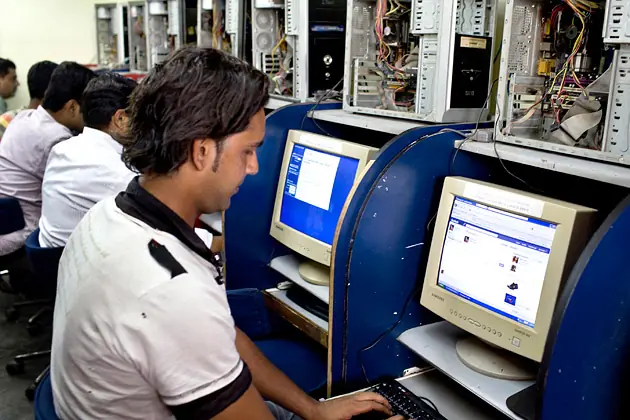
On a public computer
Avoid sensitive logins if you can
The safest rule: don’t log in to your bank, email or other important accounts on a public computer at all. Malware or a hidden keylogger can record everything you type. If you really have to, use your smartphone instead where possible.
Check for hardware keyloggers
Hardware keyloggers are small devices plugged in between the keyboard cable and the computer. They look like an adapter or extension piece. Take a quick look at the keyboard connection — if something looks odd, use a different computer.
Use private browsing and log out
Open a private or incognito window so the browser doesn’t keep your history, cookies and form entries after you close it. Never tick “remember me” or let the browser save your password. When you’re done, log out of every account and close all browser windows.
Use two-factor authentication
If someone steals a password you typed on a public computer, two-factor authentication — a code or confirmation on your phone — stops them from getting into your account. Change the password afterwards from your own device if you’re unsure.
Don’t leave files behind
Avoid saving documents to the public computer. If you need to print something, delete the file and empty the Recycle Bin and Downloads folder afterwards — or better, open it straight from a USB stick or cloud link and close it after printing. Be careful with USB sticks in public computers: they can pick up malware, so scan them on your own device.
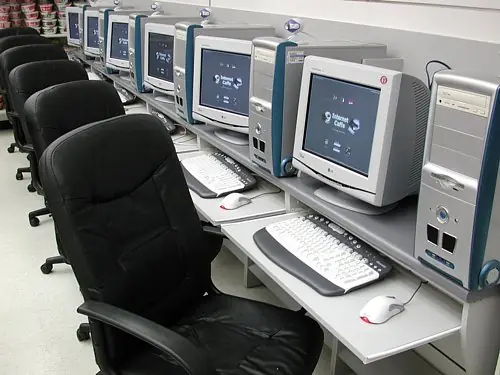
On public Wi-Fi
- Check the network name: ask staff for the correct name; criminals sometimes set up fake hotspots with similar names.
- Look for HTTPS: today almost all websites use encrypted HTTPS connections, which protect your data even on open Wi-Fi. Never ignore certificate warnings in your browser.
- Use your mobile data or a trustworthy VPN for banking and other sensitive tasks.
- Turn off file sharing and set the network to “Public” in Windows, so other devices can’t see your computer.
- Forget the network after use, so your device doesn’t reconnect automatically.
Watch out for phishing
Keep an eye out for fake login pages and links in emails or messages — a public computer with an outdated browser may not warn you. Type important addresses yourself instead of clicking links.
Follow these simple steps and you can use public computers and Wi-Fi without putting your personal data at risk.



















TracyAnn0312
Aug 06. 2012
Information about the safety of internet can be a good way in order for many people to be safe while they are in cafe. Thanks for sharing the wonderful information you have.
rlarkin
Aug 10. 2012
You are welcome
Amanda
Aug 06. 2012
Of course, the most important point is to delete all logos and passwords, because it won’t be very pleasant for anyone to know that there is someone who can enter your account on some websites
Peter
Aug 06. 2012
I don’t remember the last time I went into an internet cafe. People visiting these outlets nowadays are usually online gamers trying to play online computer games. There’re still some using the computers at these outlets for surfing, but the numbers are low or depends on which country I supposed. Nevertheless, precaution is always better than cure; the safety tips above are always worth reminding. Thanks!
craig
Aug 06. 2012
Some great tips there
If the browser you have also has private browsing or incognito mode it is worth using that so that your history is not tracked
rlarkin
Aug 10. 2012
Thanks, that’s right very straight forward incognito mode.
migisi
Aug 10. 2012
These are the really very useful tips and important also. Our password is the main and important but most of the cafe they do not use them. If we delete the history also our password can be track by the server by using many software. Its useful information.
Thanks for sharing this with us.
rlarkin
Aug 10. 2012
You are welcome.
Praveen
Aug 11. 2012
It is very useful & good knowledgeable post, i follow you instruction when i going in Internet Café..
rlarkin
Aug 18. 2012
Thank you, I’m glad you find it useful:)
Ash
Aug 13. 2012
Great post! I was on vacation and had to logon at an internet cafe to check emails, tweets etc. This article came in handy 😀
rlarkin
Aug 18. 2012
Nice to know that, Ash..It’s always better to be safe.
W at Off-Road Finance
Aug 23. 2012
Keyloggers in cafes are a serious problem. Especially in first world internet cafes, because the IDs and credit cards being stolen are very valuable.
rlarkin
Aug 28. 2012
Thank you, W at Off-Road Finance for the comment. Yes, Important information like banking, email username and passwords. It’s really advisable to follow safety when doing transactions outside.
Ara
Oct 24. 2012
very useful tips! my facebook and twitter got hacked before because i forgot to logout before leaving the internet cafe. argh! thank God i recovered it! So that another lesson learned, always logout if your using a public computer.