
The digital landscape is currently undergoing a metamorphosis unlike anything seen since the invention of the internet. At the epicenter of this tectonic shift sits a single company: Nvidia. While many recognize Nvidia as the titan of the gaming GPU market, its true dominance lies in its role as the primary architect of the AI revolution. In 2025 Nvidia put the demand for its Blackwell and Rubin chips at about $500 billion through 2026 — and in March 2026 raised that outlook to at least $1 trillion through 2027. With numbers like these, Nvidia is not just selling chips; it is fundamentally redesigning the architecture of the global cloud.
This massive capital expenditure by tech giants like Microsoft, Meta, and Alphabet isn’t just a speculative bet on "cool" technology. It is a foundational overhaul of how data is processed, stored, and utilized. We are moving away from a world of general-purpose computing toward an era of accelerated computing, where the cloud is no longer just a place to host websites—it is a massive, distributed engine for intelligence.

The Architecture of the AI Revolution: Beyond the GPU
To understand why Nvidia’s influence is so profound, one must understand the limitation of traditional computing. For decades, the Central Processing Unit (CPU) was the king of the data center, designed to handle a wide variety of tasks sequentially. However, the rise of Large Language Models (LLMs) and generative AI demanded a different approach: massive parallelism.
Nvidia’s Graphics Processing Units (GPUs) were originally designed to render pixels by performing thousands of simultaneous calculations. This architecture proved to be the perfect vehicle for training neural networks. When you multiply these calculations by trillions, the GPU becomes the only viable engine for modern AI. With the H100, the Blackwell generation and the new Vera Rubin platform announced in 2026, Nvidia has moved beyond being a component manufacturer; it has become the backbone of the "AI Factory."
This transition has changed the definition of hardware. We are no longer looking at "chips" as individual components but as "systems-on-a-chip" (SoCs) integrated with high-bandwidth memory (HBM3e) and high-speed interconnects like NVLink. These technologies allow thousands of GPUs to act as a single, massive supercomputer, enabling the training of models with hundreds of billions of parameters.
The $500 Billion Infrastructure Boom
The $500 billion figure comes from Nvidia itself: it is the demand the company saw for its Blackwell and Rubin data-center chips through 2026. At GTC in March 2026, CEO Jensen Huang raised the outlook to at least $1 trillion through 2027. Either number shows the sheer scale of the "arms race" currently unfolding among the world’s largest technology companies. Microsoft, Google, and Meta are pouring billions into capital expenditures (CapEx) specifically to build out AI-ready infrastructure. Why such a staggering amount? Because the cost of entry for competing in the AI space is now astronomical.
Training a state-of-the-art model like GPT-4 or Gemini requires thousands of GPUs running for months at a time. This requires not just the chips, but the physical infrastructure to house them: massive warehouses, specialized cooling systems, and reliable power grids. The cloud providers are essentially building "foundries" where the raw material is data and the finished product is intelligence.
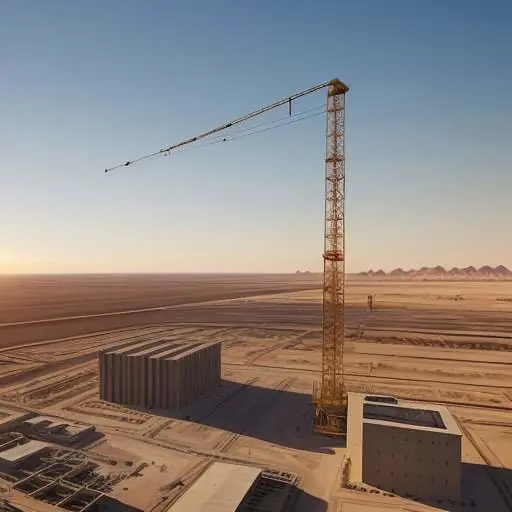
This investment cycle is creating a new economic reality for cloud providers. They are shifting their business models from "Cloud Storage" to "AI-as-a-Service." In this model, the value isn’t just in providing a server; it’s in providing the specialized compute power necessary to run inference at scale. This pivot ensures that Nvidia remains the primary gatekeeper of this new economy.
The Software Moat: Why CUDA is the Secret Weapon
If hardware were the only factor, Nvidia’s dominance might be more vulnerable. However, the company possesses a "moat" that is incredibly difficult for competitors to breach: CUDA (Compute Unified Device Architecture). CUDA is a parallel computing platform and programming model that allows developers to use NVIDIA GPUs for general-purpose processing.
For over a decade, developers have built their software stacks on CUDA. It has become the standard language for AI research and deployment. When a researcher develops a new algorithm for image recognition or natural language processing, they do so in an environment optimized for Nvidia’s hardware. To switch to a competitor’s chip would require rewriting massive amounts of code—a hurdle that many companies are unwilling to take.
This software ecosystem creates a "lock-in" effect. By providing the tools that make it easy for developers to build and deploy AI, Nvidia has ensured that their hardware is the path of least resistance. This synergy between hardware and software is what makes the $500 billion infrastructure push so lucrative; it isn’t just about selling a product; it’s about owning the ecosystem in which all modern AI lives.

From Data Centers to "AI Factories"
We are witnessing a fundamental shift in how we perceive the purpose of a data center. Traditionally, a data center was a warehouse for information—a place where bits were stored and retrieved. Today, these facilities are becoming "AI Factories." In this new paradigm, the goal is not just to store data, but to process it into something new: insights, content, and automated decisions.
This shift has profound implications for cloud computing. It means that the physical layout of these centers is changing. Cooling systems must be more robust to handle the extreme heat generated by high-density GPU clusters. Power requirements are skyrocketing, leading to partnerships between tech giants and energy companies to secure enough electricity to keep the "factories" running 24/7.
Furthermore, this transition is giving rise to "Sovereign AI." Nations are beginning to realize that compute power is a form of national currency. Just as countries seek to own their energy grids and telecommunications, they are now seeking to own their AI infrastructure. This means the $500 billion push isn’t just happening in Silicon Valley; it’s happening globally as nations build their own domestic "AI factories" to ensure technological independence.
The Energy Challenge and the Path to Sustainability
One of the most significant hurdles in the $500 billion push is the energy crisis. AI models are incredibly power-hungry. A single large-scale training run can consume as much electricity as a small city. As the demand for AI grows, the pressure on the electrical grid becomes a primary bottleneck for cloud providers.
Nvidia and its partners are responding to this by innovating in two areas: chip efficiency and cooling technology. Newer generations of chips are designed to provide more "flops" (floating-point operations) per watt. Simultaneously, data centers are moving away from traditional air cooling toward advanced liquid cooling systems, which can more effectively manage the heat generated by high-density GPU racks.

This focus on efficiency is not just about environmental responsibility; it’s a matter of economic viability. The cost of electricity is a major component of the Total Cost of Ownership (TCO) for cloud providers. By making AI more energy-efficient, Nvidia helps its customers maintain profitability while scaling their operations to meet the insatiable demand for AI services.
The Future: Edge Computing and Decentralized Inference
While the current focus is on massive, centralized "AI Factories," the next frontier of the $500 billion push lies in the distribution of that power. While training happens in the cloud, "inference"—the act of the AI actually answering a prompt or making a prediction—can happen anywhere.
This is where the future of cloud computing becomes truly expansive. We are moving toward a hybrid model where the heavy lifting (training) happens in Nvidia-powered data centers, but the daily interactions (inference) happen on "the edge." This includes smartphones, cars, industrial robots, and IoT devices.
To achieve this, Nvidia is developing technologies that allow high-performance AI to run on smaller, more efficient chips without sacrificing significant speed. This will lead to a world where the cloud is no longer a distant destination but an invisible layer integrated into every physical object. The $500 billion investment today is laying the groundwork for a world where intelligence is ubiquitous, and the "cloud" is simply the fabric that connects it all.

Conclusion: The New Era of Computing
Nvidia’s $500 billion infrastructure push is more than a corporate milestone; it is the cornerstone of the next industrial revolution. By providing the hardware, the software ecosystem (CUDA), and the architectural blueprint for "AI Factories," Nvidia has positioned itself as the indispensable architect of the modern age.
The transition from general-purpose cloud computing to specialized AI infrastructure will redefine how businesses operate, how governments function, and how humans interact with technology. While challenges regarding energy consumption and hardware scarcity remain, the momentum behind this shift is undeniable. We are moving toward a future where the cloud is no longer just a repository for our data—it is the engine of our collective intelligence, powered by a massive, unprecedented investment in the very silicon that makes it possible.
Sources: TechCrunch: Nvidia’s Blackwell and Vera Rubin projections reach $1 trillion (16 March 2026); Axios: Nvidia chips to reap $1 trillion, CEO says at GTC



















Recent Comments