
The digital revolution has reached a critical crossroads where the sheer volume of data generated by our daily lives—from smart thermostats and wearable fitness trackers to industrial sensors and autonomous vehicles—is outstripping the capacity of traditional centralized cloud computing. For years, the "Cloud" was the undisputed destination for everything. We sent data to a distant server, it was processed, and the result was sent back. However, as we move into the era of Artificial Intelligence (AI), this "round-trip" model is becoming a bottleneck.
Enter edge computing. By moving the processing power from centralized data centers to the "edge" of the network—closer to the devices where data is actually generated—we are unlocking a new frontier of intelligence. This shift isn’t just about speed; it’s about enabling real-time decision-making, ensuring data privacy, and managing the massive scale of the Internet of Things (IoT). In this article, we explore how edge computing is the backbone of the next generation of AI.

The Architecture of Proximity: Cloud vs. Edge
To understand why edge computing is revolutionary for AI, we must first distinguish it from traditional cloud computing. Cloud computing relies on massive, centralized hubs (like those operated by AWS, Azure, or Google). While these are incredibly powerful, they are geographically distant. When a piece of data travels to a server halfway across the globe and back, even a few hundred milliseconds of latency can be catastrophic in high-stakes environments.
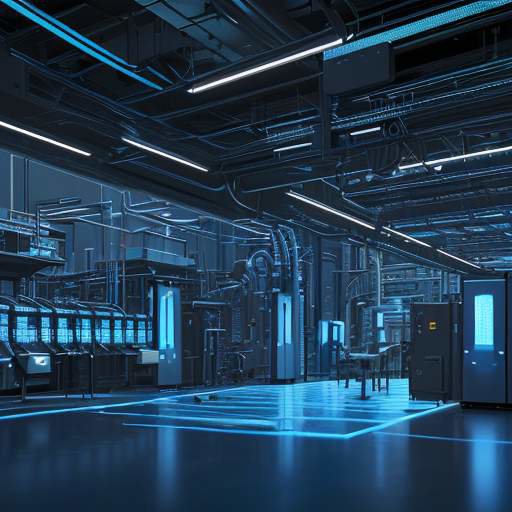
Edge computing decentralizes this process. It places "mini-data centers" or specialized processing hardware (like GPUs or TPUs) in local hubs—think cell towers, local exchanges, or even directly on the device itself. In the context of AI, this means the "inference" (the moment the AI makes a decision based on input) happens locally.
Instead of a smart camera sending high-definition video to a cloud server to determine if a person is trespassing, the edge device processes the video locally and only sends an alert when necessary. This architectural shift transforms the network from a "hub-and-spoke" model into a distributed web of intelligence, allowing for faster, more responsive systems.
The Latency Factor: Why Real-Time Matters
For many AI applications, "fast" isn’t just a luxury; it is a requirement for safety and functionality. This is where edge computing becomes the primary enabler of real-time AI. Consider the operation of an autonomous vehicle. A self-driving car must process millions of data points per second from LiDAR, cameras, and radar sensors to navigate complex urban environments.
If the car had to send every frame of its surroundings to a cloud server to decide whether to brake for a pedestrian, the delay (latency) could be the difference between safety and catastrophe. Edge computing allows the vehicle’s onboard computer to process these inputs instantly. By eliminating the "round-trip" to the cloud, edge computing provides the deterministic latency required for:
- Autonomous Vehicles: Instantaneous obstacle detection and path planning.
- Robotic Surgery: Real-time precision movements where a millisecond delay could be fatal.
- Industrial Automation: High-speed manufacturing robots that must react to sensor inputs in microseconds to prevent equipment damage.
- Augmented Reality (AR): Seamless overlay of digital information on the real world, requiring perfect synchronization between movement and display.

Data Privacy and the Security of Localized Processing
In our modern economy, data is the most valuable commodity, but it is also a significant liability. Regulations like GDPR in Europe and CCPA in California have placed strict limits on how personal data can be handled. When data is sent to the cloud, it passes through multiple networks and sits on servers that may be accessed by various entities, creating potential vulnerabilities.
Edge computing offers a "privacy-by-design" solution. By processing sensitive information locally, the raw data never has to leave the premises. For example, in a smart hospital, patient vitals can be monitored and analyzed by an AI on an edge server within the hospital’s local network. The system can provide real-time alerts to doctors without ever uploading private medical records to a public cloud.
Furthermore, edge computing reduces the "attack surface." Because the data is processed locally, it is less exposed to interception during transit. For corporations, this means they can leverage advanced AI analytics while maintaining absolute control over their proprietary data and intellectual property.
Bandwidth Optimization and Cost Efficiency
One of the most overlooked aspects of the AI revolution is the sheer cost of data transmission. As more devices become "smart," they generate massive amounts of data—often in the form of high-resolution video feeds or constant telemetry from thousands of sensors. Streaming all of this raw data to the cloud 24/7 is prohibitively expensive and can clog network infrastructure.
Edge computing acts as a filter. Instead of sending a continuous stream of "nothing" to the cloud, an edge device processes the data locally and only transmits the relevant information. For instance, in a smart city project with 1,000 security cameras, the edge units can analyze the footage locally and only upload a clip when a specific event (like a traffic accident or a security breach) is detected.
This "intelligence at the edge" significantly reduces bandwidth consumption. By filtering out the noise at the source, companies can save millions in cloud storage and data transfer fees while ensuring that their network remains clear for critical communications. This efficiency makes it economically viable to scale AI across thousands of locations simultaneously.

Powering the Internet of Things (IoT) Revolution
The true power of edge computing is most visible when it interacts with the Internet of Things (IoT). We are moving toward a world where everything—from streetlights to heart monitors—is connected. However, many IoT devices have limited power and processing capabilities. They cannot run complex AI models locally, but they also cannot wait for a cloud response.
Edge computing provides the "middle ground." It creates a localized infrastructure where clusters of IoT devices can communicate with a nearby edge gateway. This gateway has enough power to run sophisticated AI models that coordinate these devices. In a smart warehouse, for example, dozens of small robots might use an edge gateway to coordinate their movements, avoid collisions, and optimize paths in real way.
By decentralizing the intelligence, we enable a more resilient and scalable IoT ecosystem. If one edge node fails, only a small portion of the network is affected, rather than the entire system crashing because of a single point of failure in a distant cloud server. This localized resilience is vital for critical infrastructure like power grids and water treatment plants.
The Synergy of 5G and Edge Computing
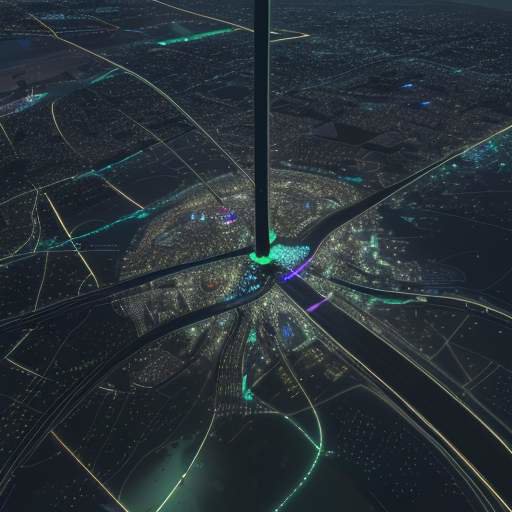
The marriage of 5G technology and edge computing is the catalyst that will bring these concepts to the mainstream. 5G provides the high-speed, low-latency wireless "pipes" necessary to connect devices, while edge computing provides the "brains" located close to those devices. Together, they create an environment where AI can operate at a scale and speed previously thought impossible.
In a 5G-enabled world, the distinction between "local" and "remote" begins to blur. A user in a remote area can access high-quality AI services because the 5G tower serves as an edge node, processing the request locally before it ever hits the global internet. This synergy is what will enable remote surgeries, real-time translation of voices in crowded streets, and truly autonomous transport systems.
Conclusion: The Future of Decentralized Intelligence
We are moving away from a world where "intelligence" is a destination you visit in the cloud; we are moving toward a world where intelligence is woven into the fabric of our environment. Edge computing provides the physical and logical infrastructure to make this possible. By solving the trilemma of latency, privacy, and bandwidth, edge computing allows AI to move out of the laboratory and into the real world—into our cars, our factories, our hospitals, and our homes.
As we continue to refine the hardware for edge processing and the algorithms for localized inference, the "Edge" will become the primary frontier for AI innovation. It is not just a technical shift; it is a fundamental reimagining of how machines perceive and interact with our world in real-time. The future of intelligence is no longer just in the cloud—it is right here, at the edge.



















Recent Comments