
The digital landscape is currently standing on the precipice of a revolution that could redefine the very foundations of cybersecurity. As we move toward an era where The Rise of Quantum Key Distribution (QKD): Securing Satellite Networks Against the Quantum Threat becomes a primary focus for global infrastructure, the stakes have never been higher. While many of us are familiar with the complexities of securing a local connection—much like how a user is setting up a home wireless network to protect personal data—the scale of the coming threat is astronomical. The advent of quantum computing poses a systemic risk to traditional encryption methods, necessitating a move toward physics-based security models that can withstand the processing power of tomorrow’s machines.
The Looming Shadow of Quantum Computing
To understand why we need QKD, we must first understand the "Quantum Threat." Traditional encryption relies on mathematical problems that are incredibly difficult for classical computers to solve, such as factoring massive prime numbers. However, a sufficiently powerful quantum computer could solve these problems in seconds. This isn’t just a theoretical concern for the distant future; it is a present-day risk for any sensitive data currently being transmitted over global networks.
From government secrets to private communications on a social network, the data we exchange today is vulnerable to "harvest now, decrypt later" attacks. Hackers can intercept and store encrypted data today, waiting for the day a quantum computer becomes available to crack the code. This looming cyber threat is driving the urgent need for a new standard of security that doesn’t rely on mathematical complexity alone, but on the fundamental laws of physics.
How Quantum Key Distribution Works
Quantum Key Distribution (QKD) is the primary defense against this looming era of decryption. Unlike standard encryption, QKD uses the principles of quantum mechanics to exchange cryptographic keys. Specifically, it utilizes photons—the smallest units of light—to transmit information. Because of the "observer effect" in quantum physics, any attempt by a third party to intercept or measure these photons would instantly alter their state, alerting the sender and receiver that the connection has been compromised.
This makes QKD a unique key feature in the world of cybersecurity. It doesn’t just make it harder for a hacker to crack a code; it makes it physically impossible to eavesdrop without detection. By integrating this into our global infrastructure, we can create a "tamper-evident" communication channel. While complex systems like a neural network rely on sophisticated algorithms to process information, QKD relies on the immutable laws of subatomic physics to protect that information. You can learn more about how the subatomic world works to see the science behind this transition.
The Role of Satellites in Global Security
While fiber optic cables are excellent for regional communication, they have limitations when it comes to global reach and scalability. This is where satellite technology becomes indispensable. As we move toward a more connected world, the demand for high-speed, secure data transmission across continents is skyrocketing. Whether it is providing high-speed internet via satellites or facilitating international trade, space-based infrastructure is the backbone of the modern age.
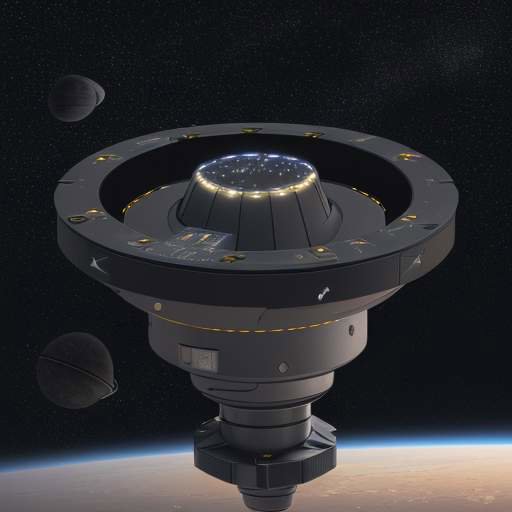
However, transmitting quantum keys over long distances via ground-based fiber optics can be difficult due to signal loss and environmental interference. Satellites provide a "free-space" path for photons. By sending quantum keys from a satellite to ground stations, we can establish secure links over thousands of miles instantly. This orbital infrastructure is essential for protecting critical communications that cannot risk even a millisecond of vulnerability.
Overcoming the Challenges of Satellite Communication
Implementing QKD in space isn’t without its hurdles. Space is a harsh environment where precision is everything. To maintain a stable quantum link, satellites must be perfectly aligned with ground stations to ensure that photons are not lost or scattered by the atmosphere. Furthermore, as we look toward the future of satellite phones, the integration of multi-purpose satellite systems—those that provide both standard communication and high-security QKD—becomes a priority for aerospace engineers.
The transition to these systems is also being influenced by geopolitical shifts. For example, some nations are already exploring specialized military satellite networks to ensure their communications remain secure against adversaries. By moving the "key" to a space-based platform, we create a decentralized and highly resilient network that is much harder to disrupt than traditional terrestrial infrastructure.
Securing the Future of Global Connectivity
The ultimate goal of QKD is to create a "Quantum Internet"—a network where the backbone of communication is protected by the laws of physics. This isn’t just about protecting government secrets; it’s about protecting every facet of our digital lives. From the security of a social media network where millions share personal data, to the integrity of financial systems and healthcare records, the need for "unhackable" links is paramount.
As we continue to innovate, these technologies will become more accessible. Just as we see advancements in how people track their families via GPS, the same drive for reliability and security is pushing satellite providers to adopt QKD as a standard feature. By securing the "highway" of space, we ensure that the data traveling across it remains private, regardless of how powerful computers become in the decades to come.

Conclusion: A New Era of Defense
The rise of quantum computing is an inevitable milestone in human technological progress. While it brings the potential for breakthroughs in medicine and materials science, it also presents a formidable challenge to our current methods of digital security. The Rise of Quantum Key Distribution (QKD): Securing Satellite Networks Against the Quantum Threat represents our most proactive and scientifically sound defense against this transition.
By moving our security protocols from the realm of "hard-to-solve math" to "physically impossible to intercept," we can build a foundation for the next century of communication. From the satellites orbiting above us to the devices in our pockets, the integration of QKD ensures that as our world becomes more connected, it also becomes more secure. We are not just building a better way to send keys; we are building a fortress for the information age.
















Recent Comments