
Gujarat has long been a magnet for heavy industry, ports, and renewable energy. In 2024 the state upped the ante with a landmark policy that earmarks 7.5 gigawatts (GW) of green power exclusively for artificial‑intelligence data centers. The move signals a clear intent: turn Gujarat into the world’s AI factory, where massive model training, inference, and research run on carbon‑free electricity. By coupling abundant solar and wind resources with aggressive fiscal incentives, the policy aims to attract global hyperscalers, domestic champions, and a new generation of AI startups — all while positioning India as a credible alternative to the traditional data‑center hubs of the United States, Europe, and East Asia.
Policy Overview: 7.5 GW of Dedicated Green Power
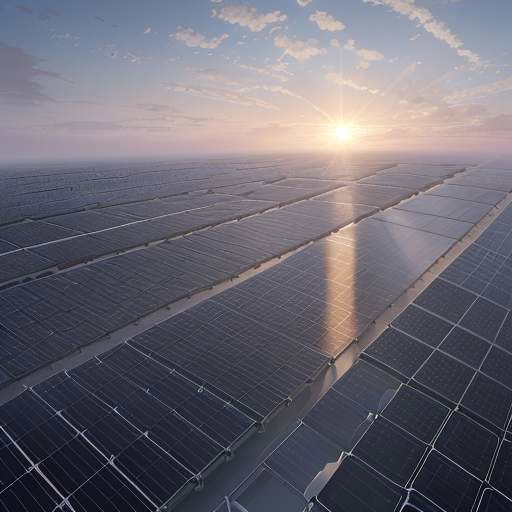
The core of the policy is a guaranteed allocation of 7.5 GW of renewable electricity — roughly the output of 15 large solar parks — reserved for AI‑focused data centers. The state government will sign long‑term power purchase agreements (PPAs) at a fixed tariff of ₹2.50 per kWh, well below the national average, and will fast‑track land acquisition in designated “AI Corridors” near the Gulf of Kutch and the Sabarmati river basin.
Eligibility criteria require applicants to commit a minimum 500 MW of contracted capacity, demonstrate a carbon‑neutral roadmap for the entire facility lifecycle, and allocate at least 30 % of compute capacity to open‑source AI research or public‑good projects. In return, the policy offers a 10‑year tax holiday, zero customs duty on imported GPUs and networking gear, and single‑window clearances for environmental, building, and telecom permits.
This framework mirrors the “green data‑center” mandates emerging in the EU and the US, but Gujarat’s scale — 7.5 GW — dwarfs most pilot programs. If fully subscribed, the corridor could host exascale‑class clusters capable of training trillion‑parameter models in weeks rather than months, giving India a strategic compute sovereign asset.

Green Energy Integration: Solar, Wind, and Storage Synergy
Gujarat’s geography delivers over 300 sunny days annually and consistent coastal winds, making it a natural renewable powerhouse. The policy mandates that each data‑center campus co‑locate on‑site solar photovoltaic (PV) arrays covering at least 40 % of its contracted capacity, supplemented by wind turbines for the remainder. To smooth intermittency, the state will subsidize grid‑scale battery storage — targeting 2 GW/8 GWh of lithium‑ion and emerging vanadium redox flow installations — and will fund green hydrogen electrolyzers for backup power and industrial heat reuse.
A novel “Energy‑as‑a‑Service” model lets operators purchase capacity credits rather than raw electrons, enabling dynamic load shifting: AI training jobs can be scheduled during peak solar output, while inference workloads run on stored energy at night. The Gujarat Energy Development Agency (GEDA) will operate a real‑time dashboard showing renewable generation, storage state‑of‑charge, and data‑center demand, allowing operators to optimize carbon intensity per compute job.
This integrated approach reduces the effective PUE (Power Usage Effectiveness) of participating centers to 1.15–1.20, well under the global average of 1.55, and positions Gujarat as a benchmark for carbon‑negative AI compute.

Infrastructure & Incentives: Building the AI Corridor
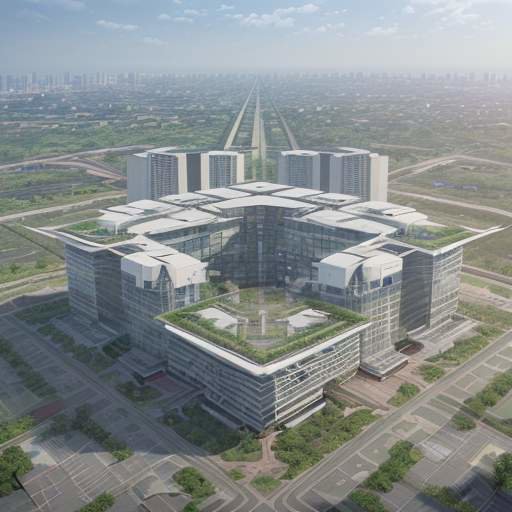
Beyond power, the policy creates a physical and digital backbone purpose‑built for AI workloads. The state will develop three “AI Corridors” — Kutch, Dahej, and Sanand — each equipped with:
- High‑capacity fiber rings (≥ 400 Gbps) linking to the National Knowledge Network and international submarine cables at Mundra and Pipavav ports.
- Modular data‑center shells pre‑certified for Tier‑IV reliability, allowing operators to deploy racks in weeks rather than years.
- On‑site water‑recycling plants using seawater desalination powered by the same renewable grid, eliminating freshwater draw.
Financial incentives include a capital subsidy of 15 % (capped at ₹200 crore per project), interest‑subvention loans at 4 % for green‑tech procurement, and export‑oriented duty drawbacks for AI models trained in Gujarat and sold globally. The policy also establishes a “AI Talent Fund” of ₹500 crore to subsidize PhD fellowships, upskilling bootcamps, and industry‑academic joint labs at IIT Gandhinagar, NIT Surat, and the newly formed Gujarat Institute of Artificial Intelligence.
A single‑window portal — “Gujarat AI Connect” — integrates land allotment, environmental clearance, power contract signing, and talent‑visa processing, cutting the typical setup timeline from 24 months to under 9 months.
Talent & Ecosystem Development: From Engineers to Entrepreneurs
Compute alone does not make an AI factory; human capital is the differentiator. Gujarat’s policy couples infrastructure with a multi‑layered talent strategy:
- Curriculum Alignment — The state education board will embed AI‑accelerated computing, renewable energy systems, and data‑center operations into undergraduate engineering syllabi from 2025.
- Industry‑Led Apprenticeships — Hyperscalers and domestic firms (e.g., Reliance Jio Infocomm, Tata Communications, and emerging unicorns) must reserve 10 % of new hires for graduates of the Gujarat AI Talent Fund programs.
- Startup Incubation — A ₹1,000 crore “AI Innovation Corpus” will provide seed grants, GPU credits, and mentorship to startups building domain‑specific models for agriculture, healthcare, logistics, and language preservation.
- Research Chairs — Ten endowed chairs at partner universities will focus on energy‑aware model compression, federated learning on edge grids, and carbon‑accounting for AI workloads.
Early pilots show promise: a joint lab between IIT Gandhinagar and a global GPU vendor reduced training energy for a 175‑billion‑parameter language model by 22 % using dynamic voltage scaling synchronized with solar forecasts. Such outcomes reinforce the narrative that green compute + local talent = competitive advantage.

Global Implications & Challenges: Can Gujarat Deliver?
If the 7.5 GW target materializes, Gujarat could supply ≈ 15 % of the world’s projected AI‑training compute demand by 2030, according to IDC estimates. This would rebalance geographic concentration, reducing latency for Asian and African markets and offering a politically stable, democratic alternative to data‑center clusters in authoritarian regimes.
However, several hurdles remain:
- Land & Water Conflicts — Large solar farms compete with agriculture; the policy’s desalination mandate mitigates water stress but raises cost questions.
- Grid Integration — The Indian national grid still suffers from transmission bottlenecks; dedicated corridors and storage must be built in lockstep.
- Policy Continuity — State elections could alter incentive structures; a central‑government “Green AI Mission” backing would provide durability.
- Talent Retention — Competing global hubs (Bengaluru, Hyderabad, Singapore) vie for the same engineers; sustained funding for the AI Talent Fund is critical.
- Supply‑Chain Risks — GPU and high‑bandwidth memory shortages persist; the policy’s customs‑duty waiver helps but does not solve global allocation constraints.
Addressing these will require continuous public‑private dialogue, transparent carbon‑accounting audits, and flexible regulatory sandboxes that let operators experiment with novel cooling, workload scheduling, and energy‑trading models.

Conclusion
Gujarat’s 7.5 GW Green AI Data Center Policy is more than a regional infrastructure plan — it is a strategic bet on the convergence of renewable energy and artificial intelligence. By locking in cheap, clean power, streamlining approvals, and investing heavily in human capital, the state aims to become the global factory floor for AI compute. Success would not only accelerate India’s digital sovereignty but also set a replicable template for carbon‑neutral high‑performance computing worldwide. The next few years will test whether policy ambition translates into operational reality, but the pieces — sun, wind, land, talent, and political will — are already aligning on the Gujarat horizon.



















Recent Comments