
For the past decade, the primary frontier of Artificial Intelligence has been digital. We have marveled at Large Language Models (LLMs) that can compose poetry, generate photorealistic images, and write complex code. While these achievements are monumental, they exist primarily within the confines of screens and servers. They are "brains" without "bodies."
However, a seismic shift is occurring. The next frontier of AI isn’t just about making computers smarter; it is about giving those smart brains physical forms to interact with the tangible world. This is the era of Embodied AI. When combined with sophisticated multi-robot control platforms, this technology is moving beyond the screen and into our warehouses, factories, farms, and hospitals. We are transitioning from "Information AI" to "Physical AI," where the goal is no longer just to process data, but to manipulate the physical world with human-like dexterity and autonomy.
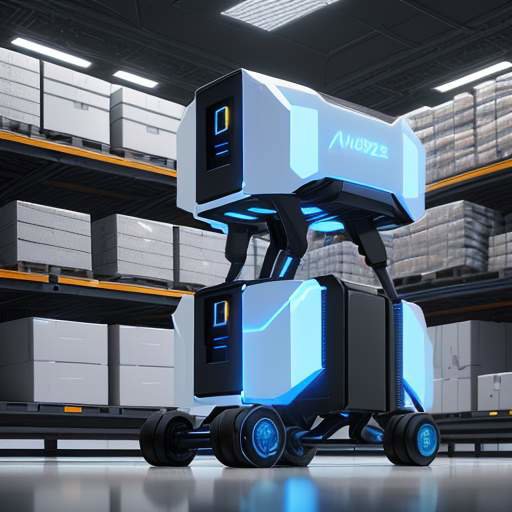
The Evolution from Digital Intelligence to Embodied AI
To understand why Embodied AI is such a game-changer, we must look at the limitations of traditional robotics. For decades, industrial robots were "pre-programmed." They were incredibly precise but lacked adaptability. If a part was moved two inches to the left, the robot would fail because it didn’t "see" the world; it simply followed a mathematical path.
Embodied AI changes this by integrating perception and action into a single loop. In this paradigm, an AI doesn’t just receive a command to "pick up a cup." It perceives the cup’s position, estimates its weight, understands the friction of the surface, and adjusts its grip in real-time. This is known as "grounding"—the process of linking abstract concepts (like "fragile") to physical sensations and visual cues.
By utilizing neural networks and foundation models, embodied AI allows robots to generalize. A robot trained on a diverse dataset of objects can identify and interact with a brand-new object it has never seen before. This leap from "scripted movement" to "intelligent interaction" is the fundamental shift that moves us away from static automation toward dynamic autonomy.
The Backbone: Multi-Robot Control Platforms
If Embodied AI provides the "brain" for an individual robot, multi-robot control platforms provide the "nervous system" and "orchestration" for a fleet. In modern industrial environments, a single robot is rarely enough. Efficiency is found in the collective.
Multi-robot control platforms are sophisticated software ecosystems that manage the coordination of dozens, hundreds, or even thousands of autonomous agents simultaneously. These platforms solve three critical problems:
- Path Planning and Collision Avoidance: In a busy warehouse, multiple robots must navigate shared spaces without colliding or creating traffic jams. Advanced algorithms calculate optimal routes in real-time, adjusting for moving obstacles like human workers or other robots.
- Task Allocation: A central "brain" (the platform) analyzes incoming orders and assigns tasks to the nearest or most capable robot. If one robot fails or runs low on battery, the system automatically reroutes its tasks to another unit in the fleet.
- Swarm Intelligence: Inspired by biological systems like ant colonies, these platforms allow robots to work together to achieve a common goal. For example, multiple small robots might collaborate to move a heavy pallet that no single robot could lift alone.
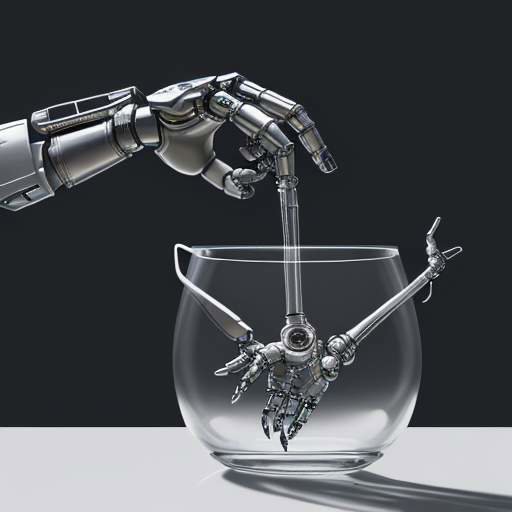
Overcoming the "Sim-to-Real" Gap
One of the greatest hurdles in physical automation has been the "Sim-to-Real" gap. Training a robot in the real world is slow, expensive, and potentially dangerous. If a robot crashes into a wall while learning how to navigate, it costs money and time.
To solve this, engineers use high-fidelity physics simulations. Robots can "practice" millions of maneuvers in a virtual world in a matter of hours. However, the transition to the real world is often messy because real-world physics—friction, lighting changes, and sensor noise—are harder to simulate perfectly.
Modern multi-robot platforms are closing this gap by using Digital Twins. A digital twin is a real-time virtual mirror of a physical space. By syncing the simulation with real-world data, robots can "pre-visualize" their environment. This allows for a hybrid learning model where the robot learns the basics in simulation and refines its skills in the real world, significantly accelerating the deployment of autonomous systems in unpredictable environments.
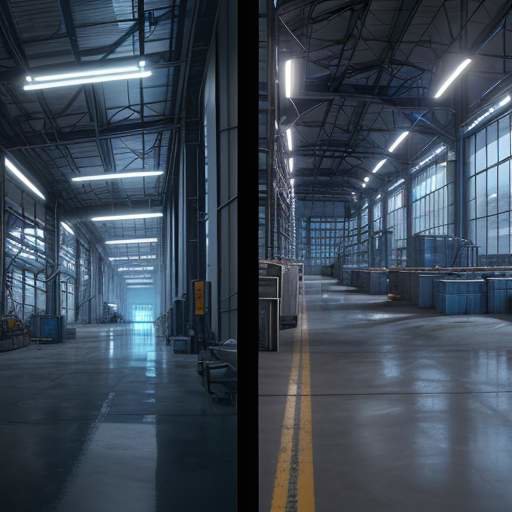
Real-World Impact: From Warehousing to Agriculture
The implications of these technologies are already manifesting across various sectors, moving beyond the "hype" into tangible industrial applications.
Logistics and Warehousing: This is the most immediate frontier. Companies are replacing traditional conveyor belts with fleets of AMRs (Autonomous Mobile Robots). Unlike conveyors, which are fixed, a fleet can be reconfigured overnight to accommodate different types of products or changing floor plans.
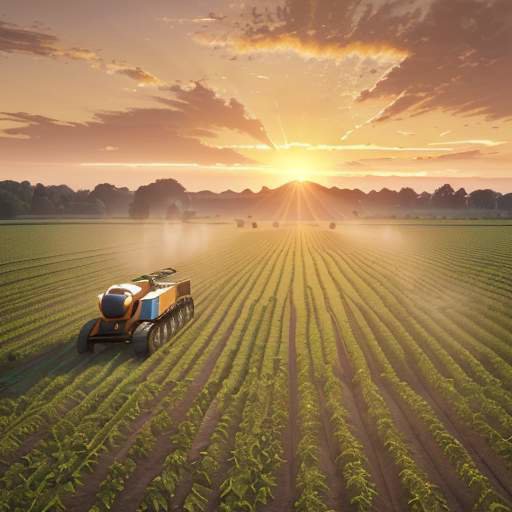
Precision Agriculture: In farming, multi-robot platforms enable "swarm" farming. Instead of one massive harvester, a fleet of smaller, autonomous robots can navigate fields to identify and pull weeds, spray specific pests, or harvest delicate fruits without damaging them. This reduces chemical usage and allows for 24/7 operation.
Manufacturing and Assembly: We are moving toward "flexible manufacturing." In traditional factories, changing a product line required weeks of retooling. With embodied AI, robots can be "re-tasked" via software updates. A robot that assembles car parts in the morning can be reprogrammed to sort and pack electronics in the afternoon because it understands the intent of the task rather than just following a fixed path.
The Human-Robot Collaboration (Cobots)
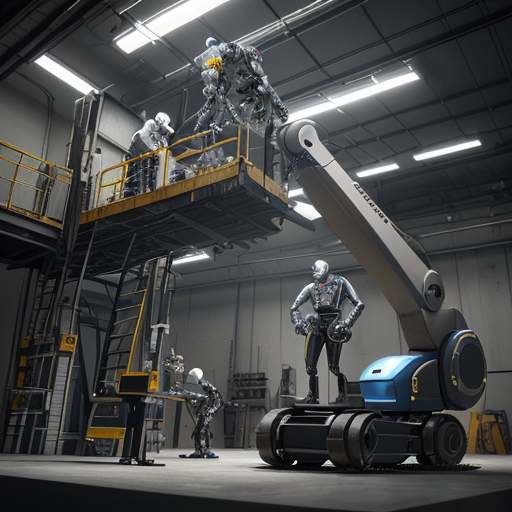
A common misconception is that robots are coming to replace humans entirely. In reality, the most successful implementations of embodied AI and multi-robot platforms focus on augmentation.
This gives rise to "Cobots"—collaborative robots designed to work alongside humans. In a cobot scenario, the robot handles the "3 Ds": tasks that are Dull, Dirty, or Dangerous. For example, in a manufacturing plant, a robot might hold a heavy, hot component in place while a human technician performs a delicate soldering task.
The multi-robot control platform ensures that these cobots can operate safely in human-centric spaces. Using advanced computer vision and LiDAR, the system creates "safety zones." If a human worker steps into the path of a robot, the system detects the movement in milliseconds and slows or stops the machine instantly. This synergy allows for a more productive workforce where humans are freed from repetitive strain and can focus on complex problem-solving and creative oversight.
The Road Ahead: Scaling the Vision
While the progress is staggering, several hurdles remain before full-scale autonomy becomes the global standard. These include:
- Edge Computing Power: Processing high-resolution video and complex AI models in real-time requires significant on-board computing power or ultra-low-latency 5G/6G connectivity.
- Standardization: For multi-robot platforms to work across different brands of hardware, the industry needs universal communication protocols (similar to how TCP/IP revolutionized the internet).
- Ethics and Safety: As robots move into public spaces—such as sidewalk delivery robots or hospital assistants—the legal and ethical frameworks regarding their "behavior" must be rigorously defined.
However, the trajectory is clear. We are moving away from a world where robots are isolated tools and toward a world where they are integrated, intelligent agents. By combining the "brain" of Embodied AI with the "coordination" of multi-robot platforms, we are creating a new infrastructure for the physical world.
Conclusion
The transition from "screen-based" AI to "embodied" AI marks one of the most significant milestones in the history of technology. We are no longer just teaching machines to think; we are teaching them to act, to perceive, and to interact with the physical world in ways that were once the sole province of biological organisms.
Multi-robot control platforms provide the essential infrastructure for this revolution, allowing individual "intelligent" units to function as a cohesive, scalable fleet. From the way we move goods across continents to the way we harvest food from the earth, these technologies are laying the groundwork for a new era of industrial productivity. The screen is no longer the boundary; it is merely the starting point. The future of automation is out there—in the warehouse, on the farm, and in the very fabric of our physical world.
















Recent Comments