
The era of "software-first" artificial intelligence is rapidly colliding with the hard reality of physical infrastructure. For the past few years, the narrative surrounding Artificial Intelligence (AI) has been dominated by algorithmic breakthroughs, the refinement of Large Language Models (LLMs), and the creative capabilities of generative tools. However, as we move from experimental prototypes to industrial-scale integration, a new bottleneck has emerged. The limiting factor for AI progress is no longer just the elegance of the code; it is the availability of massive amounts of electricity and the high-speed infrastructure required to move data across the globe.
We are entering an era where the winners of the AI race will not necessarily be the companies with the most creative prompts or the most elegant neural networks, but those who can secure the "physical" layers of the digital world. The transition from "Silicon Valley" as a hub of software innovation to a global battleground for power grids and fiber-optic dominance marks a pivotal shift in the technology landscape.
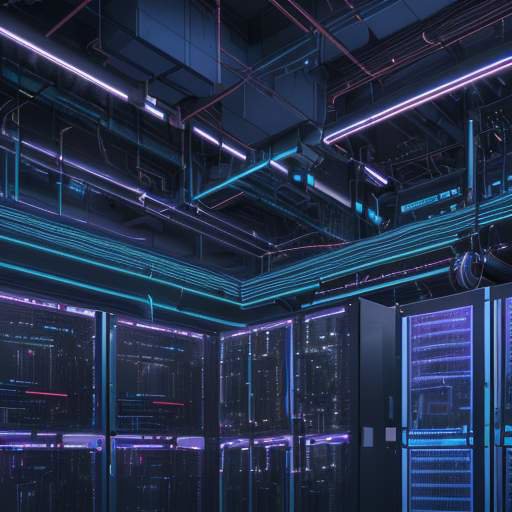
The Power Hunger of Modern Compute
To understand the scale of the problem, one must look at the energy consumption of modern GPU clusters. Training a frontier model like GPT-4 or its successors requires thousands of specialized chips (such as NVIDIA’s H100 or B200) running at peak capacity for months at a time. These machines do not just consume electricity to perform calculations; they generate immense amounts of heat that require industrial-grade cooling systems—another massive infrastructure demand.
The current electrical grids in many parts of the world were not designed to support the localized, high-intensity load of "hyperscale" data centers. When a tech giant decides to build a new training hub, it often requires a dedicated power substation or even the construction of new high-voltage transmission lines. This has led to a desperate scramble for energy sources that can provide consistent, 24/7 baseload power.
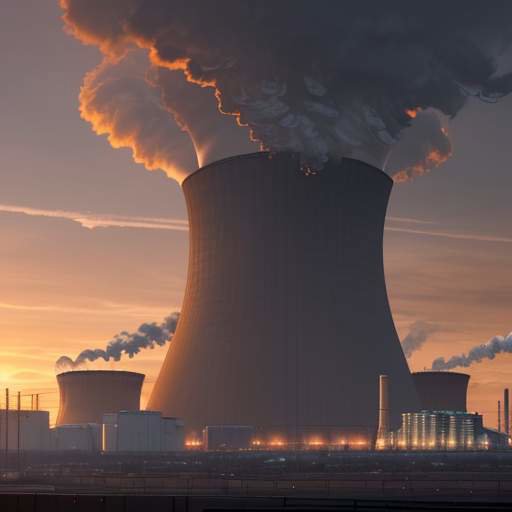
This reality is forcing a pivot toward nuclear energy and advanced geothermal systems. We are seeing tech giants sign long-term deals with nuclear power providers to ensure their AI ambitions aren’t throttled by the limitations of a standard municipal grid. The "Power Bottleneck" means that the next frontier of AI development is being fought in the halls of energy policy and the engineering of high-efficiency cooling systems.
The Connectivity Crisis: Beyond Just Bandwidth
While power is the fuel for the AI engine, connectivity is the nervous system. For AI to be useful on a global scale, data must move with minimal latency and maximum reliability. However, as the demand for real-time AI interaction grows—think of autonomous vehicles making split-second decisions or remote robotic surgery assisted by AI—the limitations of current internet infrastructure become glaring.
The bottleneck here is two-fold: bandwidth and latency. While we have more "bandwidth" than ever before, the physical distance that data must travel creates "lag." To solve this, the industry is pushing toward "Edge Computing," where processing happens closer to the end-user. But even edge computing requires a robust backbone of fiber-optic cables and 5G/6G cellular networks.

The race to lay more undersea cables and build out dense urban fiber networks is now a primary strategic goal. If a company wants to provide a seamless AI experience, they cannot rely on a congested public internet; they need a "fast lane" of infrastructure that ensures data packets aren’t lost or delayed. The infrastructure bottleneck means that the physical geography of the world—where cables are laid and where hubs are built—now dictates the reach of the digital intelligence.
Geopolitics and the Sovereignty of Infrastructure
Because power and connectivity are so fundamental to AI, they have become central pillars of national security and geopolitics. We are seeing a shift toward "Sovereign AI," where nations want to ensure that their AI capabilities are not dependent on foreign infrastructure or hardware. This means that countries are racing to build domestic data centers, secure their own energy grids, and establish independent telecommunications networks.
The "Silicon Curtain" is being reinforced by the physical reality of these requirements. A nation that controls the power grid and the fiber optic backbone essentially controls the ability of its citizens and industries to utilize advanced AI. This has led to a massive influx of government subsidies for domestic semiconductor manufacturing, but it also extends to the construction of "hard" infrastructure like high-voltage transmission lines and specialized cooling facilities.
The competition is no longer just about who has the best algorithm; it’s about who can build the most resilient and independent infrastructure. When a country invests in its own power grid and data pipelines, it creates a "moat" that protects its technological sovereignty against external pressures. The AI race is, in many ways, a race to see who can build the most robust physical foundation for their digital ambitions.
The Economic Shift: From Software to Hardware and Utilities
For the last decade, the "gold rush" of the internet was about software: apps, social media, and marketplaces. The AI era is shifting that value toward the "shovels" of the gold mine. Investors are beginning to realize that while an AI startup might have a brilliant product, the real wealth and stability lie in the infrastructure that makes those products possible.
This shift is visible in the massive investments being poured into data center real estate, specialized cooling technologies, and energy-efficient hardware (ASICs). Companies that provide the "plumbing" for the internet—the physical space to house servers, the cooling systems to keep them from melting, and the electricity to keep them running—are becoming some of the most valuable players in the ecosystem.

Furthermore, this shift impacts how AI companies are valued. A startup that can claim it has a "secured" supply of power and a dedicated high-speed connection is far more attractive to investors than one that is at the mercy of a crowded, aging municipal grid. The economic moat is no longer just intellectual property; it is physical property. The infrastructure bottleneck is forcing a consolidation where only those with deep pockets and long-term logistical planning can compete at the highest levels.
Innovation in Efficiency as a Response to Scarcity
The sheer difficulty of scaling power and connectivity has sparked a new wave of innovation in efficiency. Because "more" is becoming harder to get, engineers are looking for ways to do more with less. This has led to the development of specialized AI chips that are designed specifically for inference rather than general-purpose computing, significantly reducing the energy footprint per calculation.
Additionally, there is a massive push toward "Small Language Models" (SLMs). These models are designed to be efficient enough to run on local devices—smartphones, laptops, and industrial sensors—without needing to ping a massive, power-hungry cloud server for every query. By moving the intelligence to the edge, companies can bypass some of the connectivity bottlenecks while simultaneously reducing their overall energy consumption.
This "efficiency revolution" is a direct consequence of the infrastructure bottleneck. When the cost and difficulty of providing massive amounts of power and high-speed data become prohibitive, the smartest move is to build smarter systems. We are seeing a dual-track development: one path where the giants build massive, centralized "super-hubs" powered by nuclear energy, and another where decentralized, efficient AI runs on local hardware. Both paths are driven by the same underlying reality: the physical limits of our current infrastructure.
Conclusion: The Physicality of the Digital Future
The era of viewing AI as a purely ethereal, digital phenomenon is over. As we look toward the next decade, it is clear that the "intelligence" of the future will be inextricably linked to the "infrastructure" of the present. The transition from software-centric growth to infrastructure-centric competition marks a maturing of the technology sector.
The winners of the AI race will be those who recognize that code cannot run without power, and data cannot move without a path. They will be the ones who secure the land for data centers, the contracts for energy production, and the rights to the fiber-optic corridors. By addressing the infrastructure bottleneck today, these organizations will build the foundation upon which the next generation of artificial intelligence will stand. The future of AI is not just in the cloud; it is in the wires, the grids, and the very earth that houses the machines.




















Recent Comments