
This article was published in 2020 and updated in October 2026.
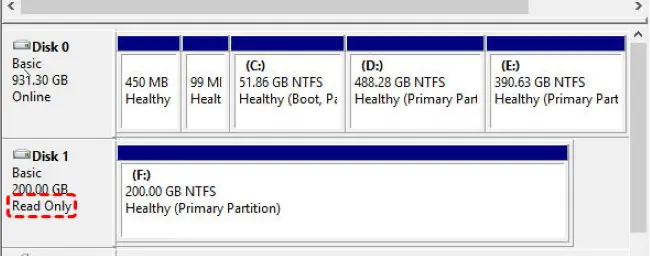
You try to save a file, install a program or delete something from your SSD, and Windows refuses with a message that the disk is write-protected or read-only. Your data is still readable, but you can’t change anything. This guide explains the common causes and how to fix an SSD that is stuck in read-only mode in Windows 11 and 10 (the steps also work in older versions).
First: back up your data
Before you try any fix, copy your important files from the SSD to another drive or a cloud service while you can still read them. Some SSDs switch to read-only mode on purpose when they are close to failing — in that case, the data on it may soon become inaccessible.
Step 1: Check the drive’s health
SSDs can only be written a limited number of times. When the flash memory is worn out, or the controller detects serious errors, many SSDs lock themselves into read-only mode to protect your data. Check the drive’s health with the manufacturer’s tool (for example Samsung Magician, Crucial Storage Executive or WD Dashboard) or the free CrystalDiskInfo. In Windows 11 you can also find an estimate of the remaining life under Settings → System → Storage → Advanced storage settings → Disks & volumes → Properties. If the health status is poor or the tool reports the drive as worn out, copy your data and replace the SSD — software fixes won’t help.
The manufacturer’s tool also shows whether a firmware update is available; updates sometimes fix bugs that cause unexpected read-only behaviour.
Step 2: Clear the read-only attribute with DiskPart
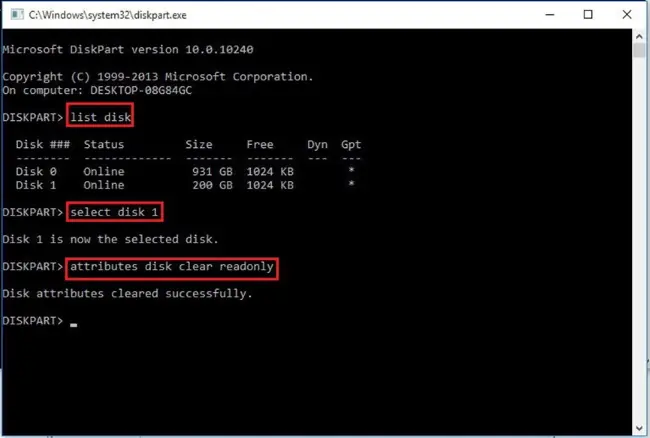
Windows can mark a disk or volume as read-only. You can remove this flag with the built-in DiskPart tool. Be careful: selecting the wrong disk can lead to data loss.
- Right-click the Start button and choose Terminal (Admin) or Command Prompt (Admin).
- Type
diskpartand press Enter. - Type
list diskand note the number of your SSD (check the size). - Type
select disk N, replacing N with that number. - Type
attributes disk clear readonly. - If a single partition is read-only, also run
list volume,select volume Nandattributes volume clear readonly. - Type
exitand restart the computer.
Step 3: Check the registry setting
A registry value can enforce write protection for storage devices. Only change it if it exists:
- Press Windows + R, type
regeditand press Enter. - Go to
Computer\HKEY_LOCAL_MACHINE\SYSTEM\CurrentControlSet\Control\StorageDevicePolicies. - If you find a value called WriteProtect, double-click it and change the value data from
1to0. - Restart the computer.
If the StorageDevicePolicies key doesn’t exist, this isn’t the cause — don’t create it.
Step 4: Check the file system with CHKDSK
File system errors can also cause read-only behaviour. Open Terminal or Command Prompt as administrator and run chkdsk X: /f, replacing X with the drive letter of your SSD. For the system drive (usually C:), Windows schedules the check for the next restart. CHKDSK can repair the file system, but on a failing drive it can also put extra strain on it — so make sure your backup is complete first.
Step 5: Format the SSD (last resort)
If the file system is badly corrupted, formatting the partition can make the SSD writable again. Formatting deletes all data on the partition, so only do this after backing up. You can format in File Explorer (right-click the drive → Format) or with Disk Management; third-party tools such as MiniTool Partition Wizard offer additional options. If the drive goes back to read-only mode after formatting, it is very likely failing and should be replaced. More background is available in MiniTool’s article on SSD read-only errors.
Summary
Whether it’s a Samsung, Crucial, Kingston, WD or any other SSD, read-only mode is either a software flag that you can clear or a warning sign that the drive is wearing out. Back up first, check the drive’s health, then work through the fixes above — and if the SSD is failing, replace it before it stops working completely.


















Sandy
Oct 17. 2020
I Got some good idea by reading this topic. Great information thanks for sharing such a nice blog
Sanjay
Oct 29. 2020
Great article. It is very useful and informative. Thanks a lot for sharing this post.
Jim Carrey Memy
Aug 10. 2022
This makes me somewhat upset. Im not saying you are responsible, personally I think that its those that arent motivated to change.