
The current era of Artificial Intelligence feels less like a steady progression and more like a sudden, explosive supernova. From the conversational capabilities of Large Language Models (LLMs) to the breathtaking generation of photorealistic images and videos, the "Generative AI" revolution is reshaping industries at breakneck speed. However, beneath the polished interfaces of ChatGPT or Midjourney lies a massive, gritty reality: the sheer amount of computational power required to train and run these models is staggering.
This demand has birthed a critical infrastructure backbone known as GPUaaS (Graphics Processing Unit as a Service). In this model, high-performance computing power is no longer a luxury reserved for tech giants with multi-billion dollar capital reserves; it is becoming a utility—on-demand, scalable, and accessible to any developer with a vision. This shift is the primary reason why the AI revolution is moving so fast.

The Scarcity of Silicon: Why GPUs are the Gold of the 21st Century
To understand why GPUaaS is so vital, one must first understand the hardware bottleneck. Traditional CPUs (Central Processing Units) are designed for general-purpose computing—handling a wide variety of tasks one after another. However, the math required to train a neural network involves billions of simultaneous calculations. This is where GPUs come in.
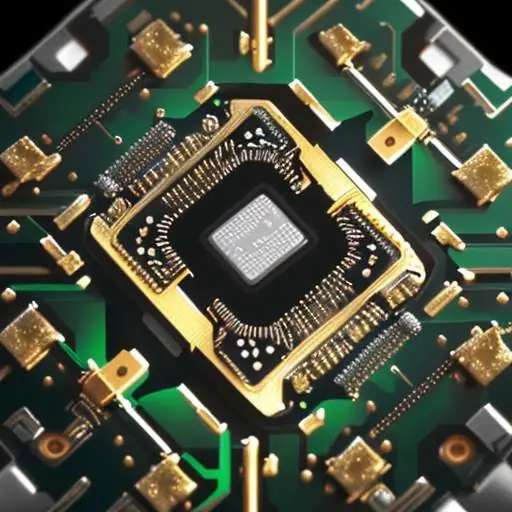
GPUs are designed for parallel processing. They can handle thousands of tasks simultaneously, making them the ideal engine for the matrix multiplications that underpin deep learning. Because of this, chips from manufacturers like NVIDIA and AMD have become the most sought-after commodities in the tech world. The demand for high-end chips, such as the H100 or B200, has far outpaced supply, creating a global shortage.
For many companies, purchasing these chips outright is impossible. A single high-end GPU can cost tens of thousands of dollars, and a cluster of them—required to train a frontier model—can cost millions. This "hardware wall" would effectively end the competition before it began if not for the rise of cloud-based delivery models. By moving the hardware into the cloud, companies can bypass the procurement nightmare and go straight to building their models.
Defining GPUaaS: The Infrastructure as a Service Model
GPUaaS is a subset of IaaS (Infrastructure as a Service) specifically tailored for high-performance computing. It provides users with access to GPU resources over the internet, allowing them to rent compute power for specific tasks like model training, fine-tuning, or inference.
Unlike standard cloud computing, which might just offer a virtual machine with a standard CPU, GPUaaS provides direct access to the specialized hardware needed for heavy lifting. This can be delivered through three primary channels:
- Hyperscalers: Giants like AWS, Google Cloud, and Microsoft Azure provide massive, multi-tenant environments where users can rent GPUs as part of their broader cloud ecosystem.
- Specialized GPU Clouds: Providers like Lambda Labs or CoreWeave focus exclusively on high-performance computing. They often offer better price-to-performance ratios because they optimize their entire infrastructure specifically for AI workloads.
- Peer-to-Peer and Decentralized Networks: Emerging platforms that attempt to aggregate underutilized GPU power from a distributed network of individual users or small data centers.
By utilizing these models, developers can choose the right "size" of compute for their specific needs, moving away from a one-size-fits-all infrastructure.
Training vs. Inference: Two Different Paths to Scale
One of the most significant benefits of GPUaaS is its ability to distinguish between the two main phases of an AI’s lifecycle: training and inference.
Training is the intensive process of "teaching" a model. It requires massive amounts of compute over long periods. For example, training a foundational model might require thousands of GPUs running in a tightly coupled cluster for months. This requires high-bandwidth interconnects (like InfineBand) to ensure that data flows between GPUs as fast as possible.
Inference, on the other hand, is the act of "using" the model once it is trained. When you ask ChatGPT a question, the model is performing inference. While still demanding, inference can often be performed on smaller, more cost-effective GPU clusters or even optimized edge devices.
GPUaaS allows companies to scale independently for these two needs. A startup might use a high-powered, specialized GPU cloud to fine-tune a model on their specific data (training/fine-tuning) and then migrate that model to a more cost-efficient, high-availability cloud environment for daily use by their customers (inference).
Democratizing Innovation for the Next Generation
Perhaps the most profound impact of GPUaaS is the democratization of AI. In the pre-GPUaaS era, only "The Big Tech" companies could afford to innovate at this scale. If you wanted to build a groundbreaking AI tool, you needed a massive capital expenditure (CapEx) budget just to buy the hardware before you even wrote your first line of code.
With GPUaaS, the model shifts from CapEx to OpEx (Operating Expenditure). Instead of buying a fleet of servers that depreciate every year, a startup can "rent" them. This lowers the barrier to entry significantly. A small team in a garage can now access the same raw computing power as a multinational corporation.
This shift allows for a more diverse ecosystem of innovation. It enables niche players to focus on specific use cases—such as AI for medical imaging, specialized legal research tools, or hyper-localized language models—without having to worry about the underlying hardware logistics. By abstracting the complexity of the hardware away, GPU leads the way in allowing software and creativity to take center stage.

The Role of Specialized Providers in the Ecosystem
While the major cloud providers offer stability and massive scale, a new wave of specialized GPU providers is carving out a significant niche. These providers often win by offering "bare metal" access or highly optimized environments specifically for machine learning.
Because they don’t have to support the same breadth of services as a general-purpose cloud (like web hosting or basic databases), they can optimize their networking, storage, and cooling specifically for high-intensity GPU workloads. This often results in lower latency and higher "compute density," meaning more work gets done per dollar spent.
Furthermore, these providers often offer more flexible pricing models. For instance, some offer "interruptible" instances—cheaper compute that can be reclaimed if another user needs it—which is perfect for long-running training jobs where a slight pause isn’t a dealbreaker. This nuance in service offering allows developers to optimize their costs precisely, ensuring that they aren’t paying for high-end features they don’t need while still getting the raw power they do.

Conclusion: The Infrastructure of the Future
The rise of GPUaaS is not just a trend in cloud computing; it is the foundational infrastructure of the generative AI revolution. By transforming high-end hardware into a scalable, accessible utility, GPUaaS has removed the primary barrier to entry for innovation. It allows developers to focus on what matters: creating better models, solving complex problems, and building tools that can enhance human capability.
As we look toward the future, the line between "the cloud" and "the AI" will continue to blur. We will see even more specialized hardware, more efficient interconnects, and more sophisticated ways to manage the massive data flows required for the next generation of intelligence. But through it all, the core principle remains: by making power accessible, we empower everyone to participate in the most significant technological shift of our time. The revolution isn’t just happening in the software; it’s being powered by the very silicon that gives it life.



















Recent Comments