
This article was published in 2012 and updated in October 2026.
People in remote areas and residents of big cities often share the same problem: poor mobile reception. In the countryside, the nearest mast may simply be too far away; in cities, thick concrete walls, energy-efficient coated windows and basements block the signal. The result is dropped calls, poor call quality and slow mobile data. A mobile repeater — also called a signal booster or cell phone amplifier — is one possible solution. Here’s what you need to know before buying one.
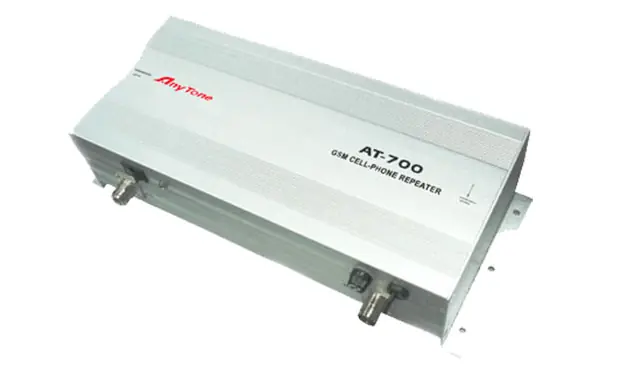
How a mobile repeater works
A typical repeater system has three parts:
- an outdoor antenna, mounted where the signal is strongest (often on the roof or an outside wall),
- the amplifier (repeater) itself, connected to the outdoor antenna by a coaxial cable,
- an indoor antenna that rebroadcasts the amplified signal inside your home, office or car.
The outdoor antenna picks up the signal from the mast, the repeater amplifies it and the indoor antenna passes it on to your phone — and the same happens in the other direction when you talk or upload data. Everyone within the indoor coverage area benefits, without any cables to the phone. Repeaters must support the frequency bands your mobile network uses; modern models cover several 4G and 5G bands.
Important: check whether repeaters are legal where you live
Repeaters transmit on the mobile operators’ licensed frequencies, and badly designed or installed devices can interfere with the network for everyone around you. Rules differ widely:
- In the US, consumer signal boosters are allowed if they are FCC-certified and registered with your mobile carrier.
- In the UK, only certain approved static boosters are licence-exempt; other repeaters are illegal to use.
- In Germany and many other EU countries, operating your own repeater without the network operator’s permission is generally not allowed.
Cheap boosters from online marketplaces often don’t meet these rules. Always check with your national regulator or mobile operator before buying.
Alternatives that often work better
- Wi-Fi calling: almost all modern phones and operators support calls and texts over your home Wi-Fi — usually free and the simplest solution indoors.
- Operator solutions: some operators offer small home cells (femtocells) or approved repeaters for customers with poor coverage.
- Switching networks: check coverage maps — another operator may have a much better signal at your address.
- A 4G/5G router with an external antenna: for mobile internet at home, mounting the antenna near a window or outside can greatly improve speed.
Tips if you use a repeater
Choose a certified device that supports your operator’s frequency bands, mount the outdoor antenna as high as possible and well away from the indoor antenna (otherwise the system can oscillate), and use the cable lengths recommended by the manufacturer.














Mike Johnson
Nov 18. 2012
I am using mobile repeaters since years and they are really helpful. Thank you..
Eliza Stow
Apr 01. 2013
When a gsm booster delivers the signal from an outdoor antenna it transfers it to the cellphone amplifier which redirects it to the phone. Thank you for this wonderful and helpful blog post.