
On October 26, 2026, Meta Platforms announced a massive plan to raise $95 billion through equity markets to fund its expansion into artificial intelligence. This ambitious capital raise is designed to finance the development of advanced AI systems, including the company’s Muse AI agent and its growing data center business. The funding strategy involves an initial $35 billion through underwritten public equity offerings, followed by an additional $60 billion through an at-the-market program, which allows Meta to sell shares into the market over time. This move comes as the tech industry faces a significant race to secure the necessary ai infrastructure required to develop and deploy sophisticated models.

The Scale of Investment in AI Infrastructure
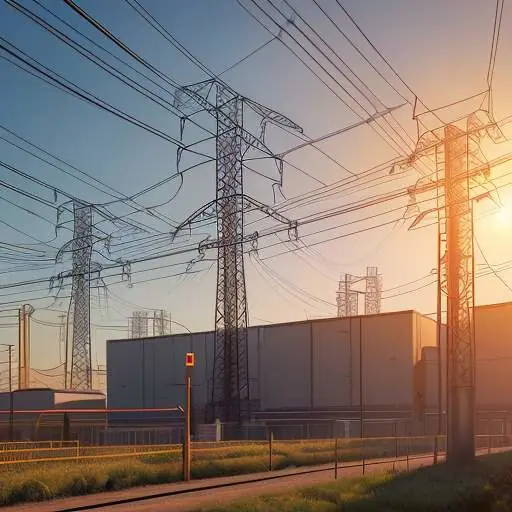
The sheer scale of Meta’s $95 billion plan highlights the immense capital required to compete in the current technological landscape. To remain competitive, Meta is significantly increasing its infrastructure capacity. The company plans to build four superclusters, each featuring more than one gigawatt of capacity. Furthermore, Meta expects to nearly double its total infrastructure capacity in 2026 compared to the previous year.
This expansion is not just about internal growth; it is a response to the broader requirements of modern technology. For instance, some experts suggest that AI is now essential infrastructure for modern business as companies integrate these tools into their core operations. Meta’s decision to pursue such a large equity raise reflects the reality that building the backbone for generative AI and superintelligence requires massive investments in computing power, data centers, and electricity infrastructure.
Strategic Partnerships and Chipmaker Interest
One of the most notable aspects of Meta’s announcement is the interest from major semiconductor companies. Nvidia, Advanced Micro Devices (AMD), and Broadcom have all indicated interest in purchasing up to $5 billion in shares. However, Meta clarified in a statement that this disclosure does not establish that these chipmakers have committed to the purchases; they remain expressions of interest at this stage.
The involvement of these three giants adds a new dimension to the funding landscape. As these companies provide the hardware necessary for any advanced ai model, their potential participation in Meta’s equity raise underscores the interconnectedness of the tech ecosystem. This collaborative atmosphere is emerging as many regions grapple with the global race for independent infrastructure. By securing capital and potentially aligning with key chipmakers, Meta aims to solidify its position in the development of advanced capabilities.
Financial Challenges and Investor Sentiment
While the move to raise $95 billion is a bold strategic play, it comes at a time of increased scrutiny regarding the cost versus the returns of such investments. Meta’s capital expenditure (CapEx) outlook has recently increased; the company now expects full-year spending between $135 billion and $145 billion, raising the lower end of its previous forecast from $130 billion.
This spike in spending has had a tangible impact on market perception. Despite reporting third-quarter revenue of $64.60 billion—a 26 percent increase year-on-year and above the analysts’ expectations of $63.37 billion—investors focused on the company’s negative free cash flow and the higher spending forecast. Following the announcement of the fundraising plan, Meta’s shares fell by 1.6 percent in morning trading on Monday. The challenge for Meta is to convince shareholders that this massive investment in ai infrastructure will eventually generate sufficient returns to offset the current costs.
A Competitive Landscape of High-Stakes Funding
Meta is not alone in its quest for capital to fuel AI growth. The tech sector is currently experiencing a scramble for funding to build out necessary capabilities. For example, Alphabet (the parent company of Google) announced in June that it would seek to raise $85 billion. Additionally, SpaceX recently closed $40 billion in debt financing specifically to purchase graphics processing units (GPUs).
The diversity of these deals shows how critical access to capital is for any company wanting to expand its capacity quickly. Other notable moves include Anthropic, the developer of Claude, preparing for an initial public offering. These varied paths—from debt financing to IPOs and equity raises—highlight the urgency of securing resources to build out the hardware and software required for modern AI. Some researchers even look toward how crowdfunding can kickstart business as a means for smaller entities to enter the market, though the scale of Meta’s operation is vastly different.

Practical Implications for the Tech Ecosystem
For the end-user or the business owner, Meta’s $95 billion move means that the tools they use—ranging from social media algorithms to advanced AI agents—are becoming more sophisticated. As Meta builds its superclusters and expands its data center business, it is laying the groundwork for a more integrated ai tool ecosystem.
However, this also means that the "cost of entry" for high-level AI capabilities is rising. As Meta and its competitors build out the necessary infrastructure, the concentration of power in the hands of those who can afford to build these massive systems becomes a central theme in tech policy. This creates a landscape where only the most well-funded entities can compete at the highest levels of superintelligence. For businesses, this means that AI is becoming essential infrastructure for their survival, necessitating a strategic approach to how they adopt these technologies.

Conclusion
Meta’s decision to pursue a $95 billion equity raise marks a pivotal moment in the race for technological dominance. By targeting massive expansion in its data centers and superclusters, Meta is positioning itself to lead in the development of advanced AI agents and higher-level capabilities. While the move has met with some investor hesitation due to the high capital expenditure and current negative free cash flow, it underscores the reality that building the next generation of ai infrastructure requires unprecedented amounts of capital. As Meta, Alphabet, and others compete for the resources needed to power the future of computation, the focus remains on whether these massive investments will ultimately deliver the promised returns in the realm of superintelligence.
Sources
- Meta’s $95bn equity raise draws chipmakers as AI race drives spending, businessday, 2026-10-26
- Meta eyes record $95 billion equity raise to fund AI infrastructure push, business-standard, 2026-10-26



















Recent Comments