
Google has officially reached a major milestone in its cosmic research journey with the successful activation of the Project Suncatcher prototype satellite. Launched on October 1, 2026, alongside more than 100 other spacecraft on a SpaceX Falcon 9 rocket, the satellite now serves as an orbital data center. This week, the project achieved its "Hello World" milestone: receiving the first-ever AI response from a data center class Tensor Processing Unit (TPU) in orbit.
The satellite is equipped with four Google TPUs and is capable of generating up to 1 kW of electricity. Due to these specific power demands, the hardware can currently only run one TPU at a time for approximately 20 minutes. This configuration is designed to pave the way for future networks of closely flying satellites that can perform large inference workloads in orbit. While users might be familiar with local data management through tools like Google Drive or searching for information via Google Search, Project Suncatcher represents a leap into decentralized, space-based computing.
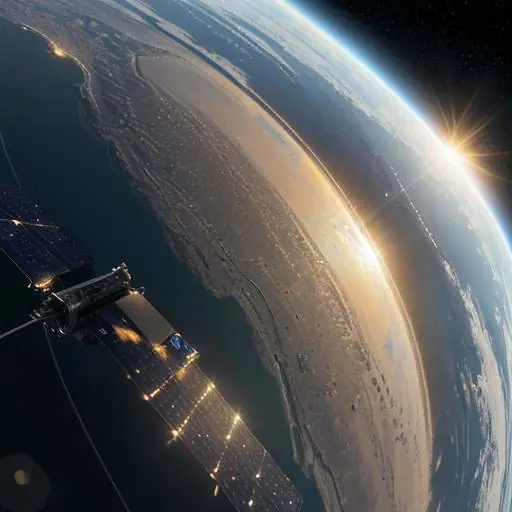
The Technical Architecture of Project Suncatcher
The core of Project Suncatcher lies in its ability to host advanced hardware typically reserved for massive terrestrial data centers. By bringing Google TPUs into orbit, the company is testing the feasibility of moving high-intensity computation away from Earth’s surface. This initiative aligns with broader trends in advancements in computer technology that seek to push the boundaries of where processing power can reside.
The satellite’s current configuration includes four TPUs, though the hardware constraints of space mean only one can be active during any given window. This is a critical test for managing power and heat in an environment where resources are limited. For users who rely on high-performance applications—perhaps even those requiring significant storage space or specialized processing for a generative ai model—the successful operation of these chips in orbit suggests a future where the "cloud" is literally in the sky.
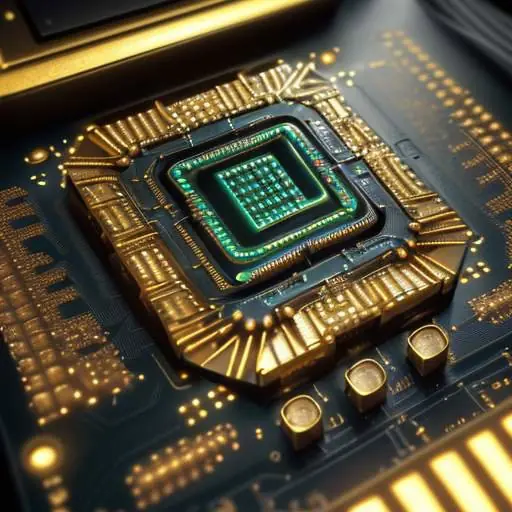
Breaking the Silence: The First Orbital AI Response
Following a three-week commissioning process to test all subsystems, the satellite was prepared for its first interaction. During a ground-station pass as the satellite passed near Svalbard, Norway, engineers on the ground sent a prompt to the onboard model. The system was running Google DeepMind’s Gemma 4, an open model pre-loaded onto the spacecraft.
The prompt asked the AI to write a haiku about being in space. The resulting output was: "Blue marble below / Data streams in silent grace / Starlight feeds my core."
In addition to this poetic output, the team used the connection to test space-themed limericks and request telemetry data. These telemetry prompts were essential for confirming that the payload systems were operating nominally. While many people use the Google Play Store to access mobile applications, the infrastructure supporting those apps is currently grounded; Project Suncatcher aims to move that foundation into a more expansive, orbital domain.

Testing Limits: Radiation and Thermal Stress
One of the primary goals of the Suncatcher project is to observe how high-performance hardware reacts to the harsh environment of space. While Google has previously tested its TPUs in particle accelerators on Earth to simulate radiation, real-world orbital conditions provide a different set of variables.
Specifically, the team is monitoring for "bit flips." A bit flip occurs when radiation causes a stored value in computer memory to change unexpectedly. These errors can corrupt data without triggering standard monitoring tools. While preliminary ground tests suggested that radiation might have a minimal impact on inference workloads (the process of running a pre-trained model), it was expected to be a more significant challenge for training a model. By operating the TPUs in orbit, Google can determine exactly how these dynamics play out in reality rather than in a simulation.
This rigorous testing is essential for any technology intended to support future infrastructure. Just as developers must ensure stability when deploying apps to the Google Play platform, space engineers must ensure that hardware can survive the "noise" of the cosmos.

Strategic Partnerships and the Future of Orbital Data
The development of Project Suncatcher does not exist in a vacuum; it is closely linked to the ambitions of other space leaders. Alphabet, the parent company of Google, holds a significant investment stake in SpaceX. Both companies are looking toward the future of heavy-lift rockets. To successfully launch and scale orbital data centers, both organizations will require Starship—the rocket currently under development by Elon Musk’s SpaceX—to be fully and rapidly reusable.
The roadmap for Project Suncatcher is ambitious:
- Current Phase: Testing a single prototype satellite with four TPUs (one active at a time).
- 2027 Goal: Launching two more satellites equipped with advanced chips that support higher power generation and inter-satellite optical links.
This vision for high-speed, interconnected links between satellites to support coherent distributed workloads distinguishes Suncatcher from other projects. For example, while SpaceX’s data centers are also expected to use laser links, they are projected to orbit too far apart to share processing effectively. In contrast, Suncatcher is designed for closer proximity to facilitate shared tasks.
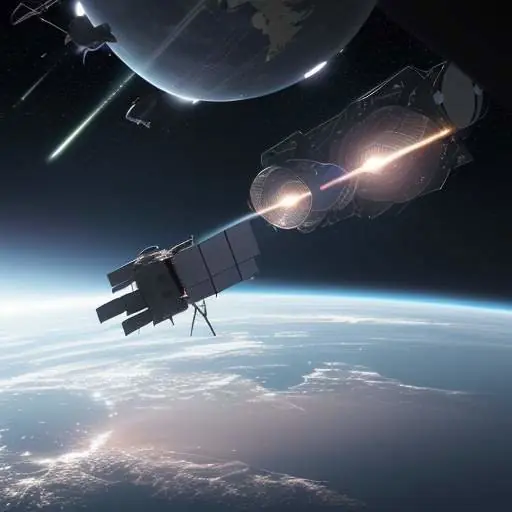
The Economic Landscape of Space Computing
The project is described as a "moonshot"—a term often used for ambitious, long-term projects with high risks but massive potential rewards. Google is focusing on designing infrastructure that will be economical in the 2030s. This long-term view is necessary because the infrastructure required to support advanced technologies, such as those found in Google Maps or other complex systems, requires massive scale.
However, this ambitious path is influenced by current market pressures. Alphabet reported a dip in stock value recently following reports that efforts to integrate AI into its search business have impacted ad revenue growth. Despite these immediate pressures, the investment in Project Suncatcher continues as a cornerstone of their long-term strategy to lead in the era of the AI industrialization wave.
While some competitors like Starcloud and Cowboy Space expect to perform inference loads on individual satellites, Google’s unique approach to interconnected satellite networks represents a distinct path toward a distributed orbital network. This move aims to provide the infrastructure needed for the next generation of computing, where the boundaries between ground-based systems and space-based processing begin to blur.
Conclusion
Project Suncatcher represents a significant leap in the capability of space-based hardware. By successfully running the Gemma 4 model on a TPU in orbit and receiving the first "space haiku," Google has proven that high-level AI inference can function outside of Earth’s atmosphere. While the current prototype is limited by power constraints, it serves as the essential first step toward a more robust, interconnected orbital network. As the team continues to monitor the effects of radiation and thermal stress on their hardware, they move closer to a future where the capabilities of advanced chips are no longer tethered to the ground.
The journey from a single satellite to a network of linked satellites in 2027 marks an ambitious timeline for orbital infrastructure. By pushing the limits of what is possible in space, Project Suncatcher is testing the very boundaries of modern computing. Whether it is the hardware that powers our daily interactions or the advanced chips designed for the next frontier, the quest for more powerful and accessible processing remains a primary driver of innovation in the 21st century.
Sources
- Google’s first data center satellite is online and writing poetry, techcrunch, 2026-10-30
- We’ve received our first response from the Project Suncatcher prototype satellite., google-blog, 2026-10-30


















Recent Comments