The landscape of artificial intelligence is undergoing a seismic shift. We are moving away from a world where AI simply answers questions and toward a world where AI takes actions. This evolution is defined by the rise of "Agentic AI"—systems capable of reasoning, planning, and executing complex multi-step tasks autonomously. At the forefront of this revolution, two global powerhouses have joined forces: NVIDIA, the titan of AI hardware and software infrastructure, and KAIST (Korea Advanced Institute of Science and Technology), South Korea’s premier research university.
The establishment of a joint AI research lab between NVIDIA and KAIST is not merely a corporate sponsorship; it is a strategic alliance aimed at accelerating the development of agentic systems. By combining NVIDIA’s unparalleled computational power with KAIST’s world-class academic research, this partnership seeks to push the boundaries of what autonomous agents can achieve in real-world applications, particularly within the high-tech manufacturing and robotics sectors that are cornerstone industries for the South Korean economy.
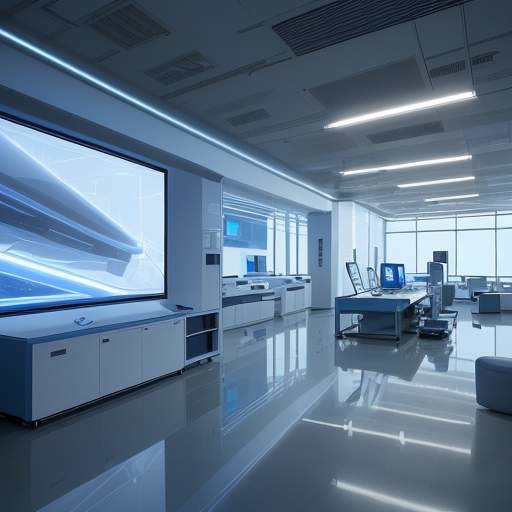
The Powerhouse Partnership: Why NVIDIA and KAIST?
To understand the significance of this collaboration, one must look at the unique roles both entities play in the global technology ecosystem. NVIDIA is the undisputed backbone of the modern AI era. Through its CUDA platform and a relentless pipeline of high-performance GPUs (such as the H100 and Blackwell architectures), NVIDIA provides the "engine" that allows massive models to be trained and deployed. Their expertise lies in making AI scalable, efficient, and accessible to developers through software stacks like NVIDIA NIM and TensorRT.
KAIST, on the other hand, represents the pinnacle of academic excellence in East Asia. It is a hub for innovation where researchers tackle the most complex problems in robotics, semiconductors, and materials science. By partnering with KAIST, NVIDIA gains access to a high-caliber talent pipeline and a fertile ground for fundamental research. For KAIST, the partnership provides students and researchers with direct access to cutting-edge hardware and the industrial expertise required to turn academic theories into market-ready products.
Together, they create a "virtuous cycle." NVIDIA provides the infrastructure and industrial perspective, while KAIST provides the intellectual depth and specialized research focus. This synergy is critical for the development of Agentic AI, which requires not just large models, but sophisticated reasoning layers that can navigate the complexities of the physical and digital worlds.
Decoding Agentic AI: From Chatbots to Autonomous Actors
The term "Agentic AI" is becoming the defining buzzword of 2024 and beyond. While the previous wave of AI was focused on Generative AI—models that can create text, images, or code based on a prompt—the next wave focuses on Agency. An agentic system does not just generate a response; it determines the steps necessary to achieve a goal.
For example, if you ask a standard LLM to "plan a trip to Seoul," it will provide an itinerary. An Agentic AI, however, would identify that it needs to check flight prices, book a hotel, cross-reference local events, and perhaps even suggest a route based on current traffic patterns—performing these actions by interacting with various APIs and tools.
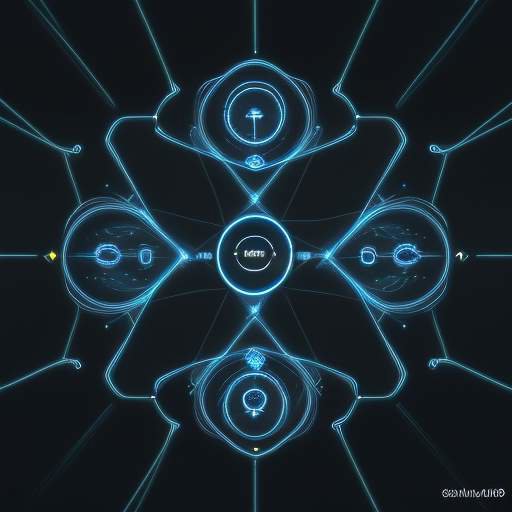
To achieve this, Agentic AI relies on three core pillars:
- Reasoning: The ability of the model to "think" through a problem using techniques like Chain-of-Thought (CoT) or Tree-of-Thoughts (ToT).
- Planning: Breaking down a high-level goal into a sequence of smaller, executable sub-tasks.
- Tool Use: The ability of the model to interact with external software, hardware, or environments (e.g., using a calculator, calling an API, or moving a robotic arm).
The joint lab between NVIDIA and KAIST is specifically designed to refine these three pillars, ensuring that AI agents are not just intelligent in their speech, but capable in their actions.
The Role of Infrastructure in Scaling Agency
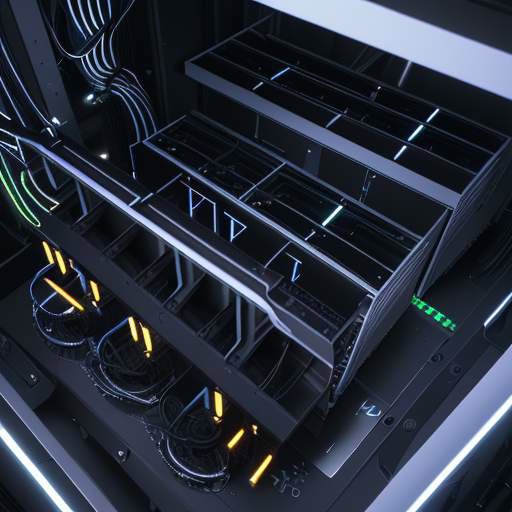
One cannot have agentic behavior without immense computational power. Agentic systems are often more computationally intensive than standard generative models because they may need to run multiple "loops" of reasoning or manage a "swarm" of smaller agents working in parallel. This is where NVIDIA’s hardware dominance becomes the critical enabler.
By utilizing NVIDIA’s advanced GPU architectures, researchers at KAIST can train and deploy models that have larger "context windows" and more sophisticated "memory" systems. A key component of agentic AI is long-term memory—the ability for an agent to remember past interactions and learn from previous mistakes. Implementing these features requires high-performance computing (HPC) environments where models can be updated and refined in real-time.
Furthermore, the integration of NVIDIA’s software stack allows for faster inference. For an agent to feel "autonomous" and responsive, its decision-making process must happen in milliseconds. The collaboration ensures that the research conducted at KAIST is optimized from day one for the best possible performance on NVIDIA’s hardware, bridging the gap between academic exploration and industrial deployment.
Impact on the South Korean Tech Landscape
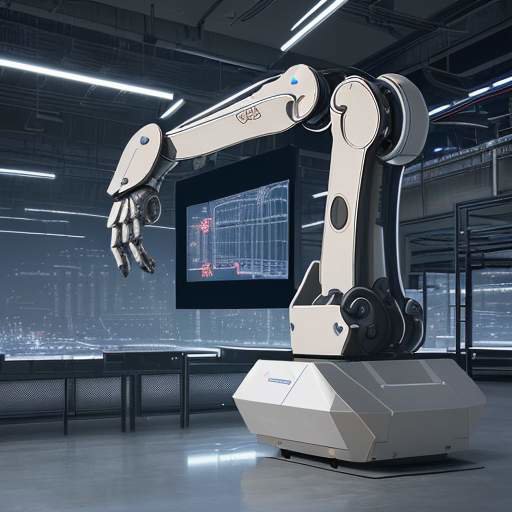
South Korea is a global leader in manufacturing, electronics, and robotics. The integration of Agentic AI into these sectors could be transformative. In a traditional factory setting, robots follow pre-programmed paths. In an "Agentic" factory, a robot equipped with an AI agent can perceive its environment, identify a problem (such as a misplaced part or a broken conveyor belt), and autonomously decide on a corrective action.
The partnership between NVIDIA and KAIST specifically targets these "embodied" applications. By developing smarter agents, South Korean manufacturers can achieve higher levels of automation and flexibility. This is particularly relevant for the production of semiconductors and automotive components, where precision and adaptability are paramount.
Moreover, this collaboration bolsters South Korea’s position as a global AI hub. By fostering a deep pipeline of talent at KAIST who are trained on NVIDIA’s ecosystem, the partnership ensures that the next generation of Korean engineers will be at the forefront of the agentic revolution, creating jobs and fostering innovation in the domestic tech economy.
The Research Roadmap: Multi-Agent Systems and Beyond
The joint lab will not just focus on single agents; it will dive into the complex world of Multi-Agent Systems (MAS). In a multi-agent environment, different AI entities are assigned specific roles—one might be the "planner," another the "executor," and a third the "critic" who checks the work for errors. This collaborative approach mimics human organizational structures and is far more effective at solving complex, large-scale problems than a single, monolithic model.
Key areas of research will likely include:
- Collaborative Robotics: Multiple robots working together in a warehouse to move goods, coordinated by a central agentic "brain."
- Autonomous Software Engineering: Agents that can write, test, and deploy code autonomously to build software systems.
- Complex Logistics Optimization: Agentic systems that manage supply chains by reacting in real-time to weather delays, fuel costs, and demand spikes.
By tackling these high-level problems, the NVIDIA-KAIST lab is moving toward a future where AI isn’t just a tool we use, but a teammate we collaborate with to solve the world’s most pressing challenges.
Conclusion: A New Era of Autonomy
The partnership between NVIDIA and KAIST marks a pivotal moment in the evolution of artificial intelligence in East Asia and beyond. By combining the world’s leading AI infrastructure with one of the world’s most prestigious research institutions, they are building the foundation for the next generation of technology: Agentic AI.
We are moving toward a reality where AI doesn’t just talk to us—it works for us. It plans our schedules, manages our supply chains, and operates our factories. This transition requires a massive leap in reasoning, reliability, and scale. With NVIDIA’s power and KAIST’s brilliance, the path toward truly autonomous agents is becoming clearer than ever. The fruits of this collaboration will not only be felt in the labs of South Korea but across every industry that seeks to harness the power of intelligent, capable, and autonomous machines. The era of the agent has begun.